
 1 month ago
43
1 month ago
43
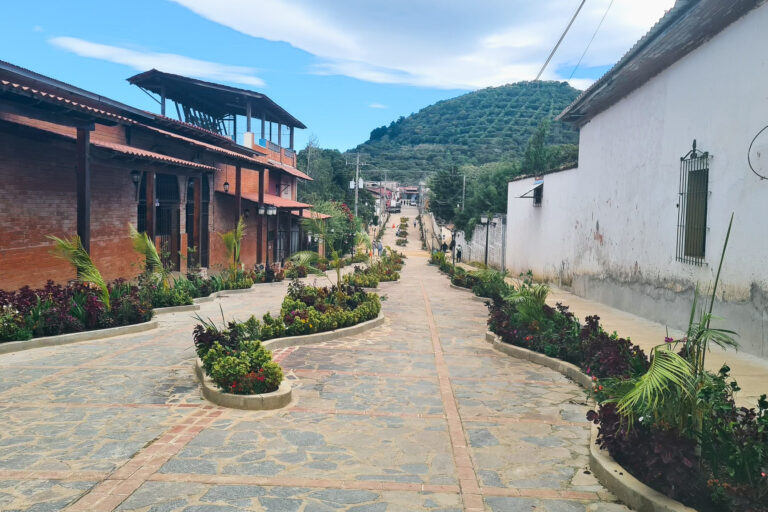
The Ruta de las Flores, or Flower Route, is one of El Salvador’s most picturesque road trips, weaving together a series of richly coloured colonial villages set within a lush highland coffee-growing region, framed by a dramatic volcanic backdrop.
Stretching just 35 km (21 miles), it’s easy to assume this is a short drive to quickly tick off your itinerary – a mistake I initially made myself. Interestingly, the colonial town of Juayua was my first stop in El Salvador, having crossed the border from Guatemala, and what an incredible first impression of the country this was.
I chose to stay here because it seemed like a popular choice, while being ideally located in the middle of the route. In my experience, I can now say that this was an excellent place to base myself while exploring the area.

From here, I got to experience the route on two wheels, and quickly realised it offered far more than a typical Central American road trip, rewarding those who slow down and savour each bend in the road.
Whether it was the dramatic volcanic viewpoints, the flower-lined roads, or the time spent wandering through each character-filled town, something about this journey stayed with me – and the coffee was certainly memorable too. It’s the kind of place where small moments – a coffee stop, a roadside view, a lively town square – come together to leave a lasting impression long after the ride is over.
Location and how to get there
The Ruta de las Flores is the stretch of scenic road between the larger towns of Sonsonate and Ahuachapán, which some people technically include to form the seven colonial towns. However, the five colonial towns of Ataco, Apaneca, Juayua, Salcoatitan, and Nahuizalco are much more impressive and the best ones to focus on.
Ahuachapán is just 20 minutes from the Guatemalan border and is often a good starting point if you are going north to south, while Sonsonate is where you can begin the route if you are going from south to north. In saying that, the route can also be completed as part of a loop, so you have plenty of options, whichever way you would like to experience it.
How to experience the Ruta de las Flores
As mentioned, there are a few ways you can experience this route, and one option is to base yourself in one of the towns as I did and visit various sections over a few days.
Think of it less like a road trip and more like a multi-day experience, meaning you will want to allocate more time than you first planned.
Here are some common route options:
- Classic point-to-point route: This is perhaps the most traditional way to experience the route, and is ideal if you are short on time or are relying on local transport. This is a great way to stop at each village on your way north towards Guatemala or south towards San Salvador or the Pacific coast (like I was). This is also very popular for those who choose guided tours or hire a car, too. I would suggest around 3-4 days for this, with overnights in the various villages en route. (See this route on Google Maps.)
- Section by Section: If you would rather do day trips to the other colonial villages from one spot, like Juayua or Ataco, for example, that is also an option. I based myself in Juayua (home of the incredible seven waterfalls) for 3 nights and used the days to explore the various attractions, towns and viewpoints along the way.
For me, this was a nice way to unpack and establish a base for a few days without having to consistently reorganise and repack the motorbike each day. It worked for me as a motorbike traveller with a dog, and I would likely choose this option again if I were to conquer the route again. - Adventure Loop: This is an ideal route for those who have their own set of wheels and want to incorporate the Ruta de las Flores into a great El Salvador itinerary. The route follows Sonsonate – Ruta de las Flores villages – Ahuachapán – Tazamal Ruins – Santa Ana – Cerro Verde National Park, and back to Sonsonate or San Salvador.
I would suggest around 7 – 10 days to enjoy this route, but the longer the better in my opinion, to allow for hikes, waterfall stops and notable Mayan ruins like Tazamal, which are situated along this route. (See this route on Google Maps.)

Getting around
Car/motorbike rental
Since I had my own set of wheels, I didn’t have to organise this side of things while visiting, but to make the most of the trip and enjoy the freedom to stop at the various viewpoints and random coffee stands along the way, I would highly suggest hiring your own set of wheels.
One of the highlights was the chance to stop for a cup of delicious coffee with a view whenever I spotted an idyllic place, and you can have the same experience if you are not relying on public bus schedules. It is best to hire a car from the bigger cities like Santa Ana or San Salvador, as options are limited along the route.
Local buses
This is probably the most budget-friendly and more authentic way to experience the route. Before travelling by motorbike, I would always take local chicken buses, whether I was in Asia, Africa or Central America.
 Typical bus in El Salvador called “chicken bus”
Travelling the way the locals do is one of the best ways to integrate; however, I have to say that motorbike travel is also incredibly popular in this region. Local buses are frequent along this scenic route, stopping at each village along the way, so it is relatively easy to organise.
Tip: One thing I have learned is to always find out when the last bus leaves, and then reconfirm this with someone else. This way, you won’t end up stranded along the way, which has happened to me on previous trips.
Guided tours
If guided tours are your thing or you are short on time, then you won’t have any problem finding one in this region. Whether you are starting from the capital, San Salvador, or coming from the Pacific coast, you can find a day tour that will include the major highlights.
Often, these tours last around 8 hours, but they don’t always stop at every town, so check in advance to see what exactly your itinerary includes.
For a guided experience, we recommend this full-day trip along the Ruta de las Flores (from San Salvador), which covers the kind of ground the region is known for: flower-lined colonial towns, local markets, and a visit to a working coffee farm. It runs around 9 hours, so you get a proper look at the route without having to piece together the transport yourself.
The colonial towns & where to stay
The beauty of Ruta de las Flores is that there are so many choices, not only for accommodation, but also a choice of colonial towns to call your home from home.
I will give you an overview of each town with a few great accommodations in each one, but I should mention that my hostel in Juayua was excellent value for money and incredibly welcoming. I also just loved Juayua as a hub, so for me it was a great place to settle for a few days.
Concepcion de Ataco
This is commonly referred to simply as Ataco, and is the first official colonial town if you are travelling south from Ahuachapán. This is arguably the most colourful town en route, and I was captivated by the incredibly vibrant murals and street art around the town, which was a nice contrast to the traditional cobblestoned streets.
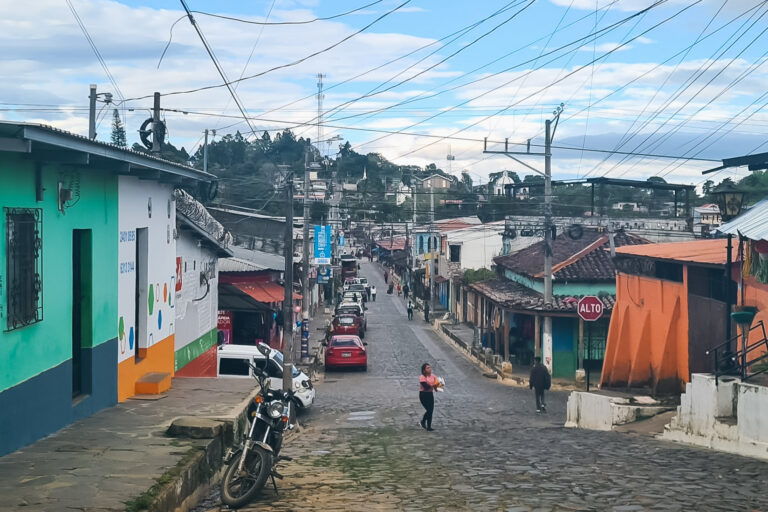
The town is small, and it takes just a few hours to explore, but you could easily spend much longer dipping in and out of the local shops, exploring the markets, and taking photos of the art.
$ Casaca Hostel – private rooms in a centrally located guesthouse and directly across the street from the market
$$ El Balcon de Ataco – a guesthouse/B&B set on a hillside with mountain views and breakfast included
$$$ Boutike Art & Wellness – an art‑themed loft features blending an artistic vibe, wellness amenities, great views, and a roomy loft feel
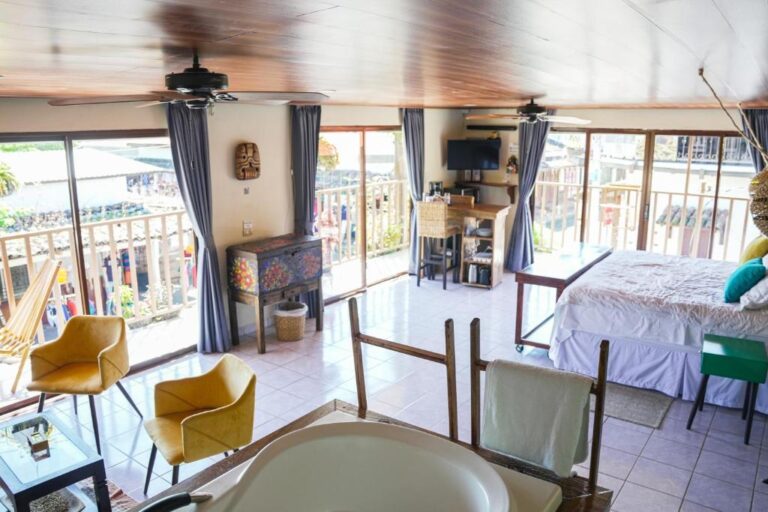 Sunlit Boutike Art & Wellness loft opening onto the heartbeat of the neighborhood
Apaneca
I found Apaneca to be one of the most tranquil yet striking colonial towns en route, not just because of its smaller size, but because of the landscape surrounding it, which was dotted with coffee plantations.
The town may be walkable in a short time and have a few beautiful murals and monuments to see, but Apaneca is also a hub for activities. From here, you can go ziplining, navigate the labyrinth or visit some beautiful waterfalls like Cascadas de Don Juan.
$$ Hotel Santa Clara B&B – a spotless, family-run stay just outside Apaneca, known for warm hospitality and generous breakfasts
$$ Casa Heidi Apaneca – a friendly family stay with outdoor space that’s about 5min away from town, and 10min from Cafe Albania
$$$ Casa Villas Suizas is a spacious holiday home ideal for groups/families, tucked inside a quiet villa community, with a lush private garden and fire pit
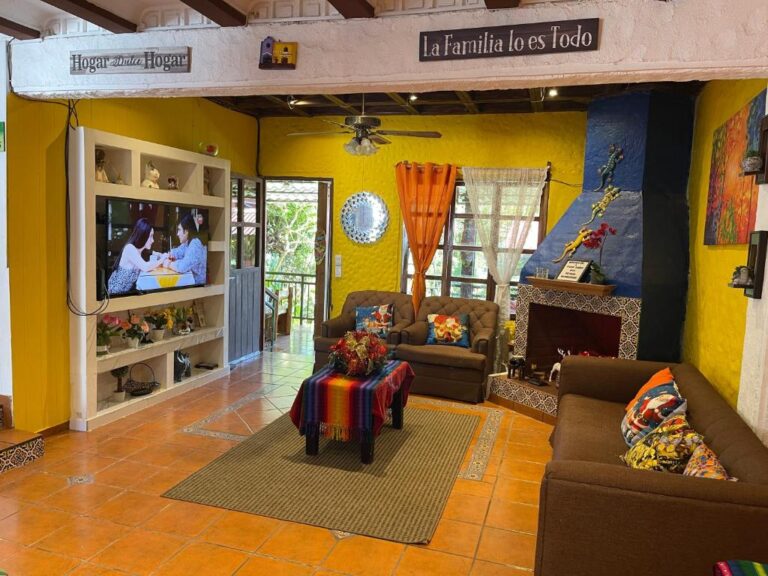 Casa Villas Suizas is a perfect cozy base for a Christmas in the mountains
Juayua
The beautiful town and (the largest en route) of Juayua is where I chose to base myself while exploring the Ruta de las Flores by motorbike.
As mentioned, this was my very first stop in El Salvador, and my first impressions were fantastic. From the friendly hosts at my hostel to the incredibly well-maintained town square, Juayua felt very welcoming and safe from the moment I arrived – even at night.
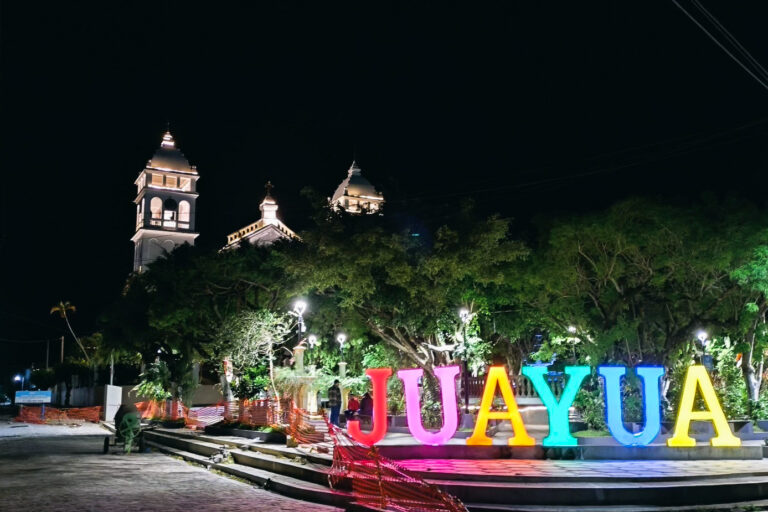
During my downtime, I enjoyed visiting a few great coffee shops in town and loved roaming around the quiet cobblestone streets and pristine Central Park. It seemed like I wasn’t the only one who chose to stay in Juayua, and I noticed quite a few others who looked like they were also happy with their choice.
$ El Pacifico Hostel (Where I stayed)
$$ Bourbon Hostel – a family-friendly hotel with an outdoor pool, garden, and terrace seating set right in Juayua
$$ Hotel Juayua – cozy mountain villas, each with a kitchenette, private terrace, and free parking, set amidst a garden with a pool
Tip: Juayua is smack bang in the middle of Ruta de las Flores, so it is a great place to stay if you want to have a base while exploring two towns to the north and two to the south.
Salcoatitan
Salcoatitan is a tiny village, which is just a few minutes from Juayua; in fact, it isthe most popular town to experience the Salvadoran coffee culture, which is best experienced at Telos Coffee.
Apart from cafe hopping and savouring delicious pupusas, you can get a feel for the local traditions and small-town appeal while wandering around Salcoatitan.
This is a fantastic town to visit, but it is worth noting that there are limited accommodation options in Salcoatitan, so it may be better to treat this cute town as an ideal spot for a brew and a ramble rather than as a base.
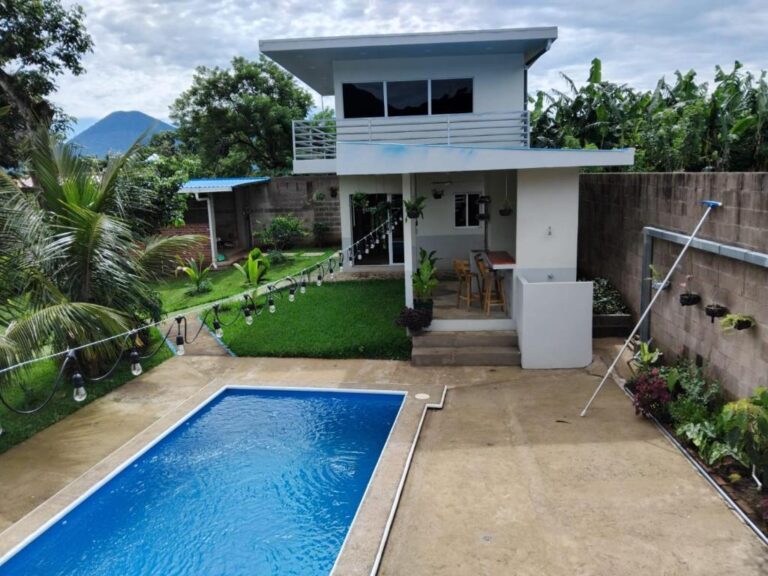
$$ Villa Oasis Verde – cozy mountain villas with a garden, outdoor pool, terrace and private parking
Nahuizalco
If you want a real, authentic Salvadoran experience, just wait until you get to Nahuizalco, where traditional clothing is the norm, and tourists are few and far between. My favourite thing about this town was the night market, so I made sure to leave this stop until the end of the day, when I could truly experience it.
There is a large population of indigenous people here, so if you are keen to dive deeper into Salvadoran culture, then you will love this place as I did. Think history, crafts, museums and seriously delicious food. The yuca pupusa is a local favourite, so keep an eye out for this at the food market.
$ Mi Pueblo Hostal – a colorful, budget‑friendly stay in the heart of town with an easy access to Nahuizalco’s night markets
$$ Habitacion Agua offers spacious, comfy rooms with garden views, just a short walk from town and weekend food festivals
 📍Habitacion Agua
Note: Both Ahuachapan and Sonsonate, which are almost like “bookends” of the route, have accommodation options and plenty of amenities. However, since they are not technically part of the five traditional towns or known for their colonial beauty, I would suggest choosing somewhere like Juayua instead, which will prove to be a more memorable base.
Things to see and do
The great thing about the Ruta de las Flores is that there is so much to do. Many who visit the area believe they have seen it all by visiting the colonial towns, but don’t forget about the activities and experiences for adrenaline seekers or culture enthusiasts, too.
Whether you prefer to strike a balance between relaxation and adventure as I do, or rather seek out the most thrilling activities, you will find plenty of fun ways to spend your time. Truthfully, I could have spent the entire time just eating local food and taking photos of colourful buildings!
Concepcion de Ataco
| Walk up to the Mirador de la Cruz | The best view over the town |
| Visit Fray Rafael Fernandez Park | The vibrant heart of the town with murals, fountains and when I was there, it was beautifully decorated for Christmas. |
| Take photos of the murals and street art | This is Ataco’s claim to fame, and what makes it the most colourful town on the route. |
| Take a coffee tour | I can highly recommend El Carmen Estate, which is a very popular spot for coffee enthusiasts. The tour is incredibly informative, and the coffee was also some of the best I’ve had in El Salvador. Editor here! The same guided tour we recommended before takes you through a coffee farm to get a behind-the-scenes look before you finally sip your cup. |
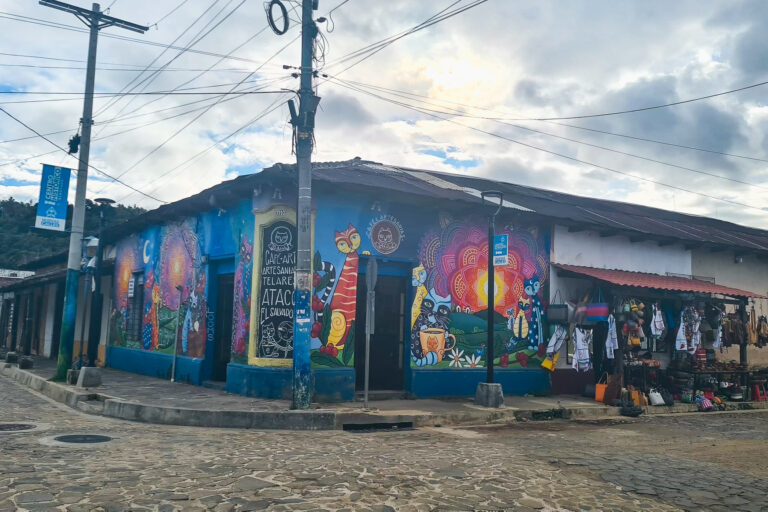 Axul Artesanías – the craft shop and café that sparked the town’s mural movement.
 Inspired by “Day of the Dead” style skeletons
Apaneca
| Visit Cafe Albania | A hub of activities for adventure seekers, but you can also enjoy a cocktail with a great view. |
| Laguna Verde & Laguna Las Ninfas | Beautiful crater lakes not far from town, with great nature walks and birdlife. This was high on my list, but unfortunately, I ran out of time. |
| Apaneca Central Park | This is the heart of town, but it is also home to a rather impressive church that is well worth a photo stop. |
Juayua
| La Feria Gastronomia | A food festival is held every weekend from 11-5 pm, and is a fantastic place to indulge in the best local delicacies. As a real foodie, I loved this element. |
| The 7 Waterfalls Hike | This is one of the top attractions along the entire route and is a stunning albeit challenging hike to 7 waterfalls. Be prepared for slipping, sliding and plenty of climbing – take a guide as I did, since it is easy to get lost. |
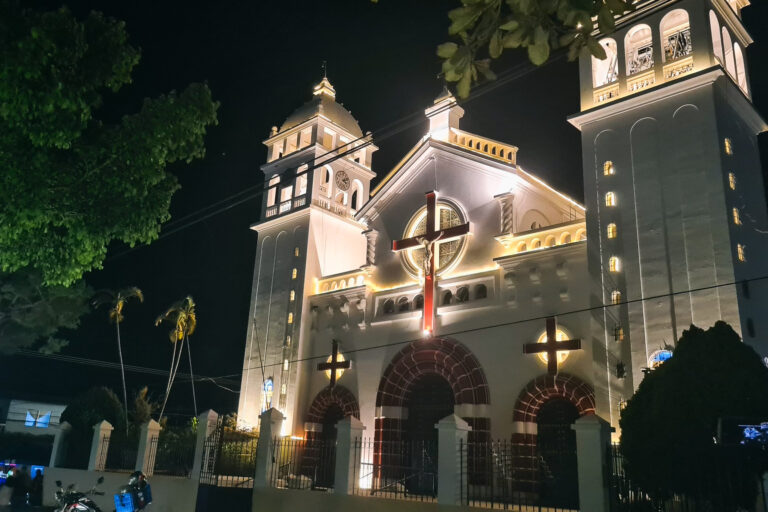
| Visit Iglesia Santa Lucia | This beautiful church dominates the skyline in Juayua and was probably my favourite church along the route. |
Salcoatitan
| Explore the town | It may be small, but it is a lovely place for a short ramble around. I loved the tranquil vibe here, which was a nice change from the busier towns in the area. |
| Taste the local cuisine | Salcoatitan is best visited at weekends, when the food culture comes alive. During the week, there are limited options, but during the weekends, the town hosts a traditional food festival serving typical Salvadoran foods like tamales and pupusas. |
| Visit the La Ceiba Tree | At the entrance to the town, you will find the 400-year-old La Ceiba Tree, which is just as majestic as it is legendary. Locals like to embrace the tree and give thanks in their native language. |
Nahuizalco
| What to do? | Why? |
| Visit the night market | Leave visiting Nahuizalco until later in the day so you can enjoy the night market. This is a great place to enjoy some local dishes after a day of activities. |
| Shop for artisan products | As the most traditional town on the Ruta de las Flores, I found this to be the perfect place to pick up authentic souvenirs and traditional items like woven baskets. Even if you’re not buying, it is fun to discover local products and mingle. |
| Cascada La Golondrinera | Just outside of town lies a stunning waterfall, which we found out about from a local. The trail can be hard to find and follow, so it’s best to hire a local guide. |
Tip: If you are looking for a place to relax after a long day, or perhaps you just want to make the most of the volcanic landscape, there are a few hot springs near Ahuachapan, which I was recommended.
While I did not get a chance to visit, a few people I met said they really enjoyed them, and the best part is that there is a cheap (Termales de Alicante) and a more luxurious spa-like option (Termales Santa Teresa) side by side.
Where to eat
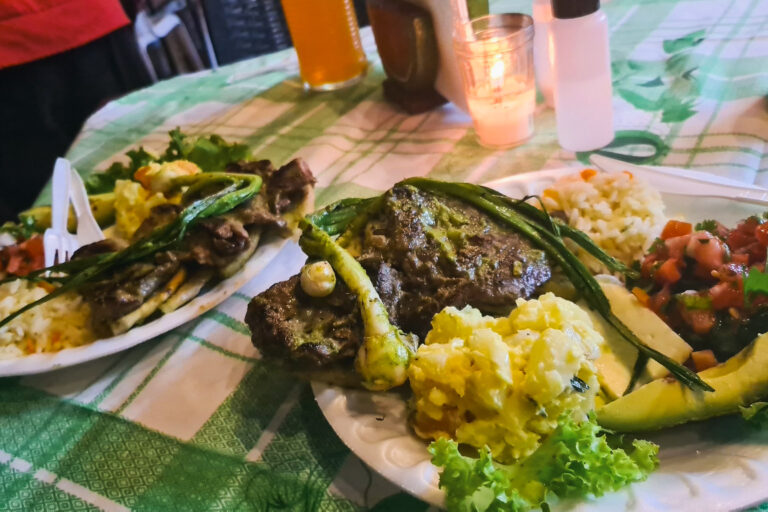
From bakeries and restaurants to cafes that take their coffee very seriously, you will discover a lot of unique places to stop for a bite to eat or a drink while exploring. Because the route is so well known for its market stalls, coffee shops and local food, I would suggest trying as many local places throughout the day, if your budget allows.
Some of my favourites included:
- Bloom Coffee (Juayua)
- Bourbon Coffee Roasters (Juayua) – this was my first ever taste of Bourbon coffee, and it was incredible.
- Restaurant San Jose (Juayua) – delicious food, I ate here most nights.
- Pupusería y Taquería Doña Cony – the best place for pupusas.
- The night market (Nahuizalco)
Other great options along the Ruta de las Flores:
- Cafe Albania (Apaneca)
- Axul Cafe (Apaneca)
- Pupusería Cielito Lindo (Ataco)
- El Brasero de Ataco (Ataco)
- Panaderia Vickys (Juayua)
Best time to visit & how long to spend there
November to April is the dry season in El Salvador, and my visit fell right in the middle of the Christmas holidays. As well as getting to experience these ultra colourful colonial towns in all their glory, I also got to see the towns come alive with festive spirit.
My dog was a great sport and even let me take a photo of him in Santa’s sleigh. I would say this is definitely the best time to visit in terms of weather, but November to January is when the flowers are in full bloom, which is what gives the route its name.
As you may have noticed, there were a few attractions and activities that were recommended to me, which I didn’t have time to do.
I assumed I would get to experience this short 35 km road trip in a few days, but I did not account for all the great foody spots, tours and surrounding attractions that also make this route so special. From my experience, I would suggest a minimum of 3 days in total to visit each town; however, if you want to incorporate more activities, then I would say 5 days is ideal.
 (RenataTyburczy/iStock)
Final thoughts
While the Ruta de las Flores is technically a 35km road trip through a variety of colonial towns, I quickly came to realise that it was much more than that. This was not your typical point A to point B journey; in fact, I was surprised by the array of things to see, do and eat along the way that I wished I had allocated more time.
I absolutely loved the combination of scenic roads made special by the volcanic backdrop and cobblestoned streets with colourful murals and quirky eateries, all of which made this route feel so wholesome. For my return trip, I will make sure to enjoy the activities I missed out on and to savour the flavours of the best coffee in the region.











 English (US) ·