
 1 month ago
61
1 month ago
61
I’ve been travelling to Italy for over thirty years, and for most of them I treated Naples as a place you pass through rather than stay. The station, the port, a quick espresso, and onwards to somewhere tidier. Then Jess and I gave the city four nights, ate our way down Via dei Tribunali, climbed up to Castel Sant’Elmo, and came away a little embarrassed it had taken us so long.
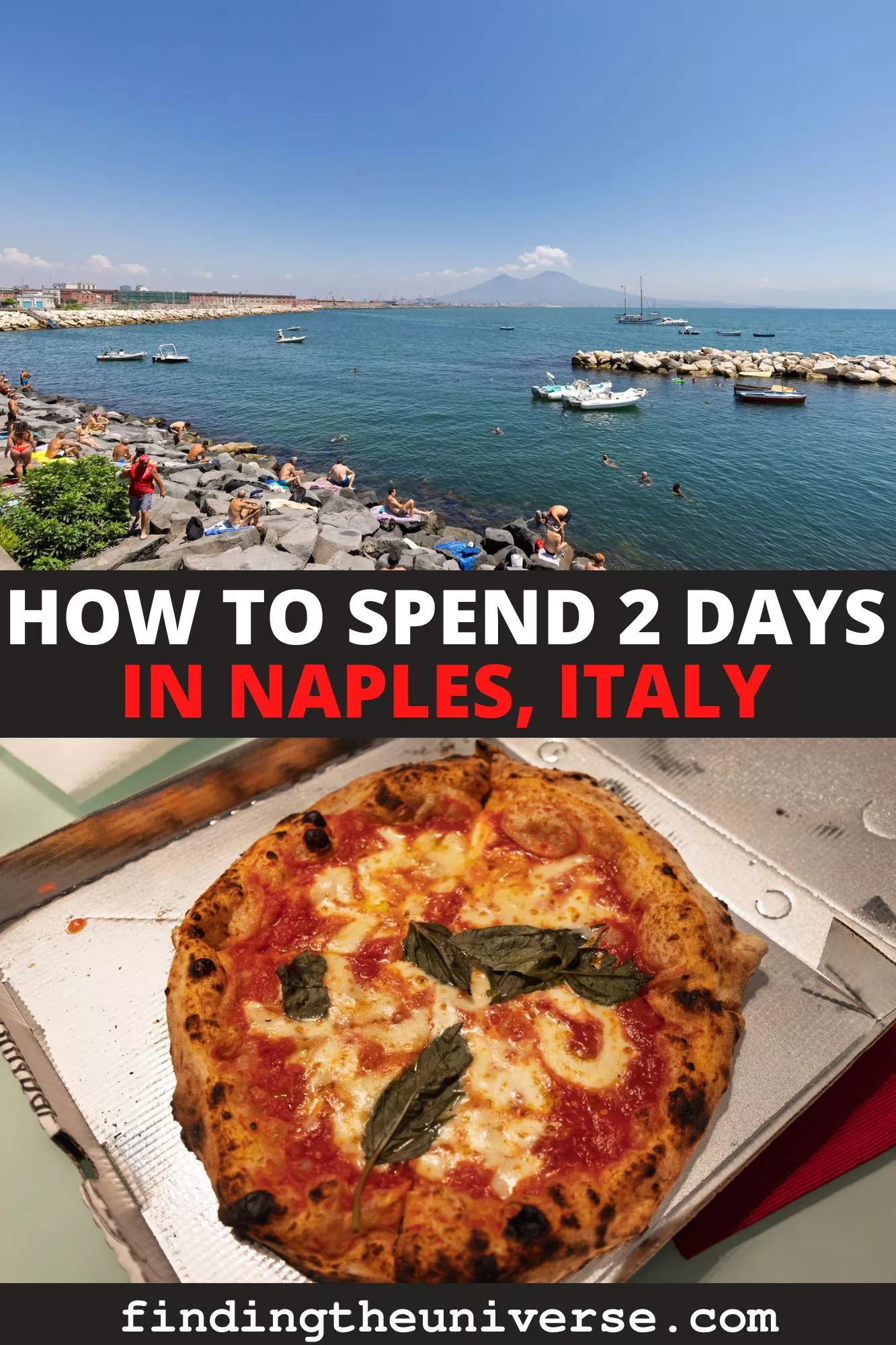
So let me answer the question up front. Yes, Naples is worth visiting. Two days is enough to see the best of the city itself, eat the pizza that was invented here, and stand on a terrace looking at Vesuvius across the bay. It is loud, it is scruffy in places, and the traffic operates on principles science has yet to explain. It is also one of the most alive cities in Europe, and it will feed you better than almost anywhere for less money than almost anywhere.
This guide is about Naples, Italy, by the way. If you were looking for Naples, Florida, you’re in the wrong hemisphere, though I hear the golf is good.
Below is exactly how we’d spend 2 days in Naples, plus where to stay, where the pizza queues are actually worth your time, and a straight answer on whether to squeeze Pompeii into a short visit (short version: probably not, and I say that as someone who went).
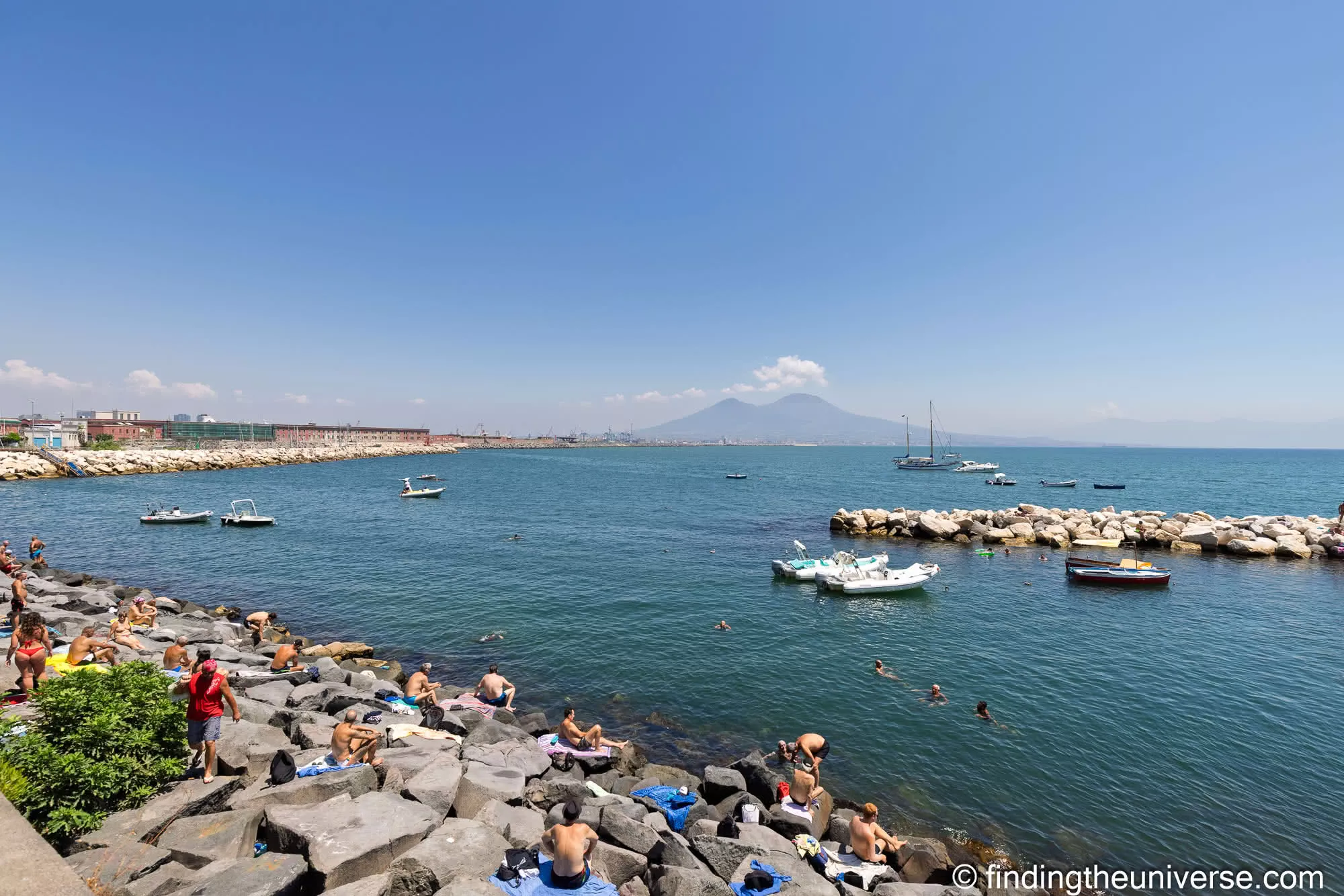
Is Naples Worth Visiting?
Naples has a reputation, and you’ve probably read some version of it: dirty, chaotic, a place to survive on the way to Pompeii or the Amalfi Coast. I want to deal with this before we get to the itinerary, because it’s the question most people are quietly asking.
Here’s what we actually found. The historic centre is a working, living neighbourhood rather than a museum quarter. Washing hangs between buildings above streets that have followed the same lines since the Greeks laid them out, which is why UNESCO listed the Historic Centre of Naples as a World Heritage Site back in 1995.
There’s rubbish in some corners and graffiti on most surfaces, and ten metres later there’s a baroque chapel containing one of the finest sculptures ever carved. That contrast is the city. If you need your destinations pressure-washed, Naples will annoy you. If you can take a city on its own terms, it’s a joy.
The food alone justifies the trip. Naples is the birthplace of modern pizza, and that’s an official position rather than local bragging, backed by an EU Traditional Speciality Guaranteed registration in 2010 and a UNESCO listing for the art of the Neapolitan pizzaiuolo in 2017. A margherita at one of the famous places costs about €5. I have paid four times that in London for pizza half as good.
And the setting is ridiculous. You get a curving bay, a brooding volcano, castles on hills and islands on the horizon, all stacked behind one of the densest historic centres in Europe. For photographers especially, Naples gives you more per square metre than any Italian city I can think of.
Is Naples Safe?
Broadly, yes. We walked the Centro Storico, the Spanish Quarter’s edges, Vomero and the waterfront at various hours across four days, cameras on shoulders, and had no trouble at all. The real risk is the same as Rome or Barcelona: pickpockets in crowds and on busy transport. Keep your phone out of your back pocket on Spaccanapoli, keep bags zipped on the metro and the Circumvesuviana, and you’ve dealt with most of it.
A couple of practical notes from our stay. The area around Napoli Centrale station is grittier than the rest of the tourist-facing city, fine in daylight and a bit bleak at night, which matters for where you stay (more on that below). And the scooters really do not stop, so cross roads like a local: pick a gap, walk steadily, don’t hesitate. Hesitation confuses everyone.
Where to Stay in Naples
Naples neighbourhoods have very different personalities, and picking the wrong one is the easiest way to have a worse trip than you should.
| Centro Storico | The heart of it. Ancient streets, churches, pizzerias, noise. Atmospheric day and night. | You want to be in the thick of things and don’t mind some evening din. |
| Chiaia | Elegant, calmer, seafront promenade, smarter shops and restaurants. Pricier. | You’d like Naples with the volume turned down a few notches. |
| Vomero | Residential hilltop district with the best views, reached by funicular. Quiet at night. | You value calm and panoramas over rolling out of bed into the sights. |
| Near Napoli Centrale | Convenient for trains, cheap, and noticeably rougher around the edges. | You’re mainly using Naples as a day-trip base and prioritise the station. |
We actually stayed near Centrale ourselves, in an apartment, mostly because we needed to do laundry and the location made our Pompeii and Vesuvius logistics easy. It did the job, and it put us near a fried pizza place we still talk about. But I wouldn’t recommend it for a first visit. You’ll spend your evenings commuting back to a corner of the city with the least charm, and first impressions matter.
For a first trip to Naples, stay central. Somewhere in or on the edge of the Centro Storico puts everything in this itinerary within walking distance, and the evening atmosphere in the old town is half the reason to come.
If you’re a more nervous traveller, or this is your first time in Italy, that central-but-considered approach still beats retreating to the station district; pick a hotel on one of the larger streets near Via Toledo or towards Piazza Bellini rather than deep in the alleys, and you’ll get the location without feeling swallowed by it.
Chiaia is the other option I’d happily point first-timers at, especially if a quieter, seafront-flavoured Naples sounds appealing and the 20 minute walk or short metro hop into the old town doesn’t put you off.
Some places to start your search:
- Hotels in the Centro Storico, for being in the thick of it
- Hotels in Chiaia, for a calmer seafront base
- All Naples hotels on Booking.com, to browse the lot
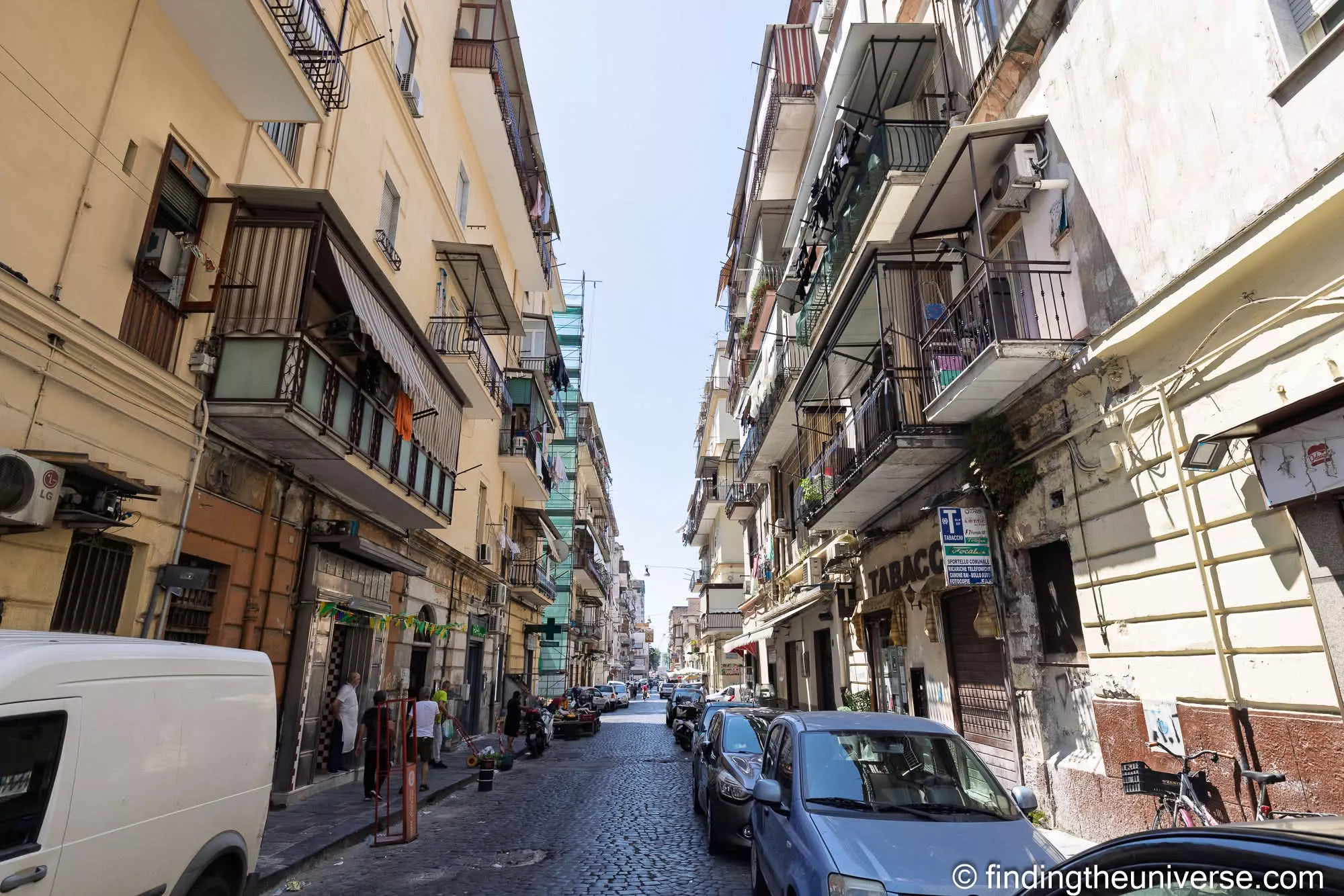
Getting to and Around Naples
Getting here is pretty easy. High-speed trains from Rome take just over an hour into Napoli Centrale, and the airport is a short hop from the centre on the Alibus shuttle, which runs to both Centrale and the port.

Once you’re here, the city itself is mostly a walking proposition, with public transport filling the gaps. The ANM network covers the metro, buses, trams and, my favourite bit, four funiculars that haul you up to Vomero. A single integrated ticket costs around €1.70 and is valid for 90 minutes, but the simpler option for this itinerary is the €4.50 day ticket, which covers the lot.
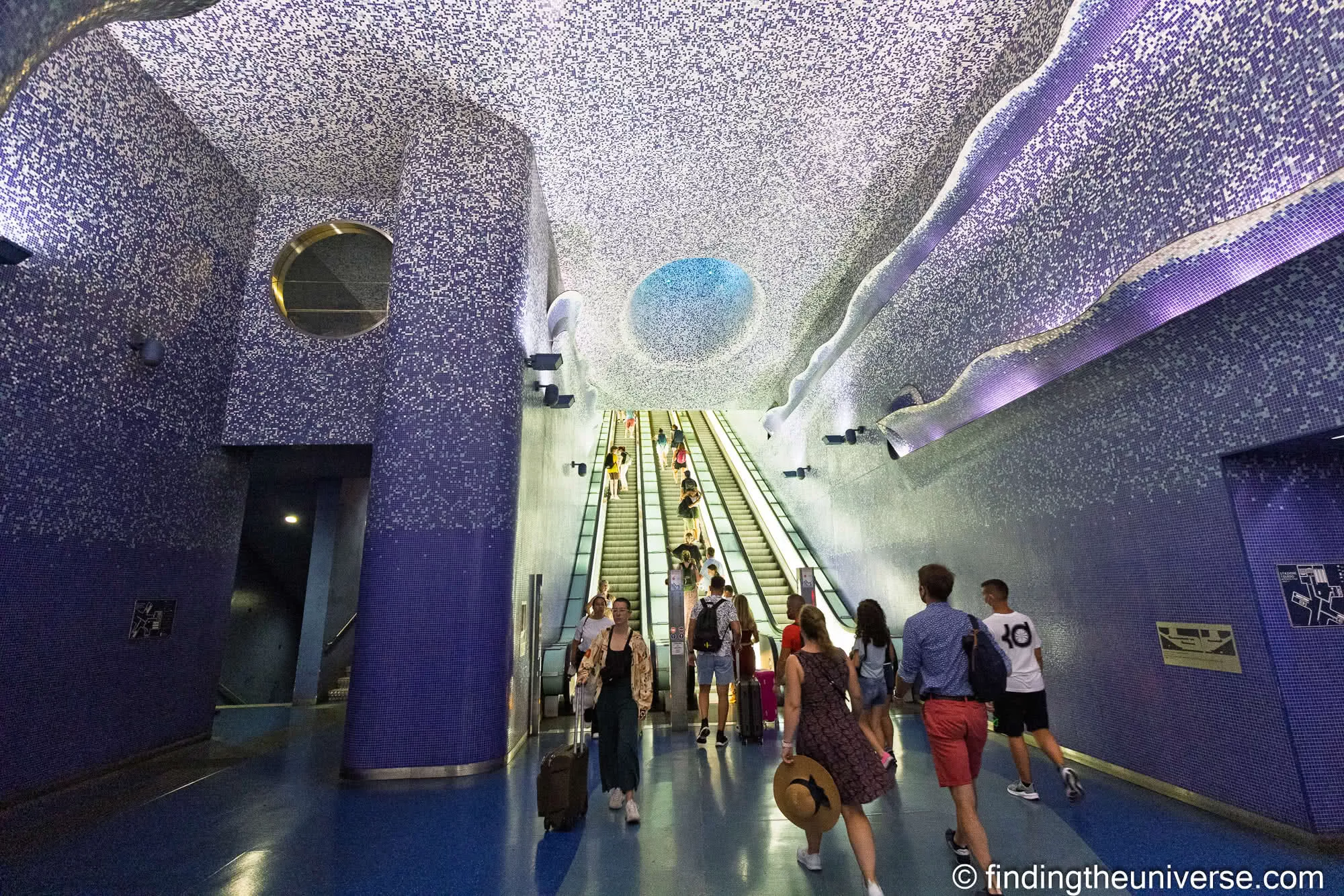
Metro Line 1 is worth riding for its own sake; the stations were designed as public art installations, and Toledo station regularly tops lists of the most beautiful metro stops in Europe.
One warning: do not bring a car. Naples has restricted traffic zones, scarce parking, and a driving culture best appreciated from the pavement. If your wider Italy plans need a car, collect it when you leave the city, like we did on a recent trip to Naples.
Is the Campania ArteCard Worth It?
Naples has an official regional pass, the Campania ArteCard, and unlike a lot of city passes it’s actually a sensible product. There are two versions that matter, and one question picks between them: are you leaving the city or not?
For this 2-day city itinerary, the Napoli 3-day card (€27) is the one to look at. You get your first 3 sites free, up to half off after that, and 72 hours of urban transport thrown in. Price up your plans first though: if you’re only doing, say, MANN (€20) and one or two cheaper sites plus a day ticket, it’s marginal.
If you’re extending your trip to Pompeii, Herculaneum or Vesuvius, switch to the Campania 3-day card (€41). It includes 2 site entries chosen from the big regional hitters, Pompeii included, and it covers the regional Circumvesuviana trains as well as city transport. The Napoli card doesn’t, and that’s the detail that catches people out.
The Tuesday Problem (and Three Other Planning Traps)
A few things will quietly wreck a short Naples visit if nobody warns you. Consider yourself warned.
1. Tuesday is museum blackout day. As of mid-2026, the three headline indoor sights all close on the same day: MANN, the Cappella Sansevero and the Certosa di San Martino are all shut on Tuesdays. The Certosa only moved to Tuesday closing at the end of June 2026, so older information still says Wednesday. If your two days include a Tuesday, make it your street-food-terraces-and-waterfront day (Castel Sant’Elmo stays open all week) and shift the museums to the other day.
2. The Veiled Christ sells out. Entry to the Cappella Sansevero is by timed ticket, booking is mandatory, and slots go on sale 60 days ahead. Book as soon as your dates firm up. This is the one booking on this itinerary you can’t wing.
3. The famous pizzerias have famous queues. An hour-plus wait at peak times is normal at the big names. Go at noon when doors open, go mid-afternoon, or have a second pick ready. Full pizza strategy below.
4. A day trip costs you half your city time. Pompeii, Vesuvius and Capri are all doable from Naples, and all of them eat the better part of a day. With only two, I’d keep both for the city. My reasoning, and the logistics if you overrule me, are further down.
Day 1 in Naples: The Centro Storico
Day one is all about the old town, and it’s almost entirely on foot. Here’s the day at a glance, followed by the detail. You can swap the two days freely, of course, and if one of your days is a Tuesday, you’ll need to.
| 09:00 to 10:00 | Cappella Sansevero | Timed entry, pre-booked. Closed Tuesdays. |
| 10:00 to 11:30 | Spaccanapoli and Via dei Tribunali walk | Santa Chiara cloister, San Gregorio Armeno. |
| 11:30 to 12:15 | Duomo di Napoli | Free entry. Aim for the morning window. |
| 12:30 to 13:45 | Pizza lunch | Queue strategy applies. See the pizza section. |
| 14:00 to 16:00 | Napoli Sotterranea | English tours every 2 hours. Book online. |
| 16:15 to 17:30 | Piazza del Gesù and a slow wander | Gesù Nuovo’s odd studded facade. |
| 18:30 onwards | Aperitivo and dinner | Piazza Bellini for drinks, then eat nearby. |
Start with the big one. The Cappella Sansevero (€12, open 9am to 7pm, closed Tuesdays) is a small baroque chapel holding Giuseppe Sanmartino’s Veiled Christ, a marble figure under a marble shroud so fine that your brain refuses to accept it’s stone. Photos aren’t allowed inside, which turns out to be a gift; everyone actually looks at the thing. Book the 9am slot if you can get it and you’ll share the room with far fewer people. If tickets have sold out for your dates, a guided tour with entry included is the reliable back door.
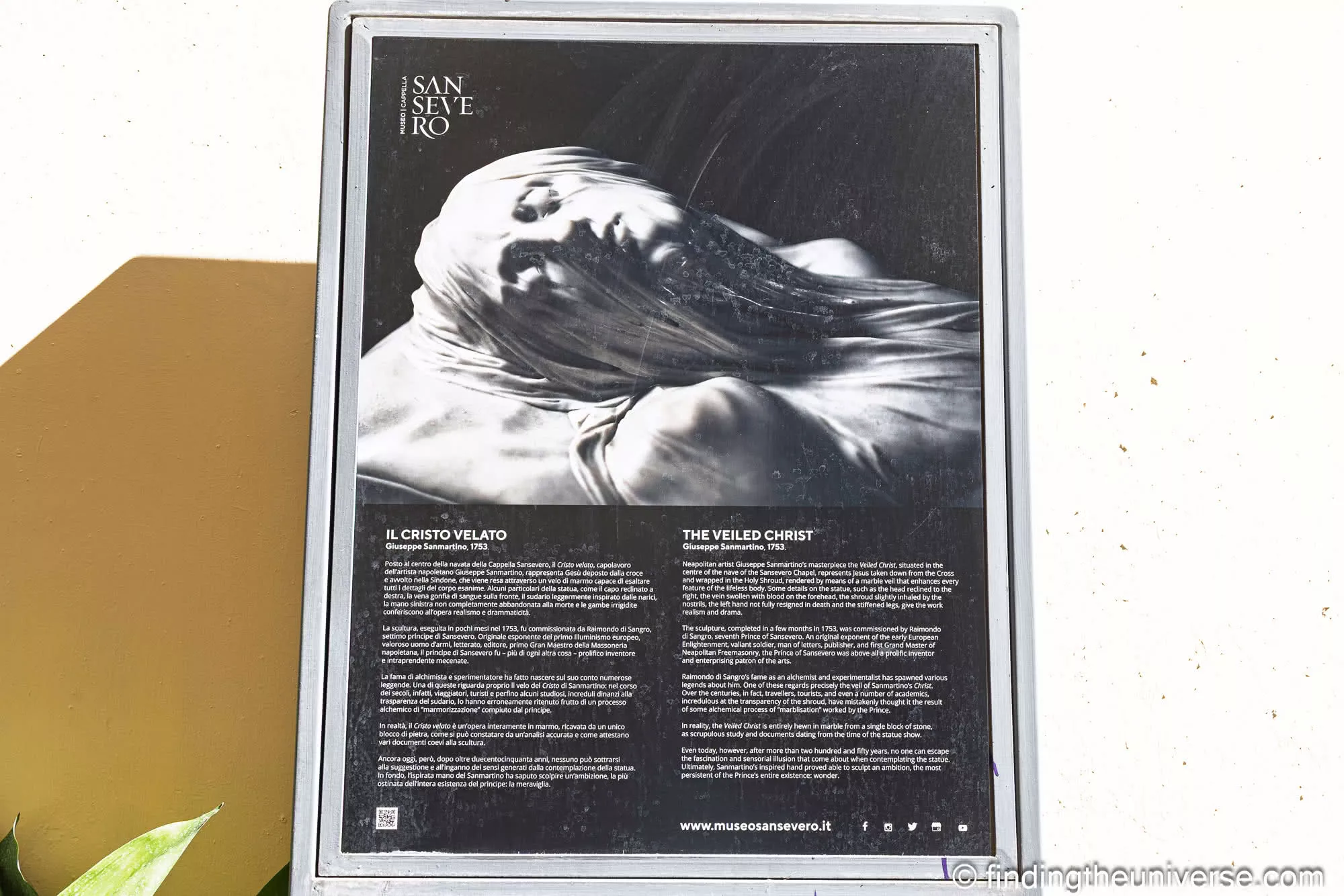
From the chapel you’re steps from Spaccanapoli, the arrow-straight street that splits the old town, and Via dei Tribunali running parallel. Give this stretch a slow 90 minutes. The Santa Chiara cloister is an unexpectedly peaceful courtyard of hand-painted majolica tiles hiding behind one of the plainest church fronts in the city, and San Gregorio Armeno is the street of the presepi makers, where artisans sell nativity scene figures year-round alongside caricatures of footballers and politicians, because Naples sees no contradiction there.
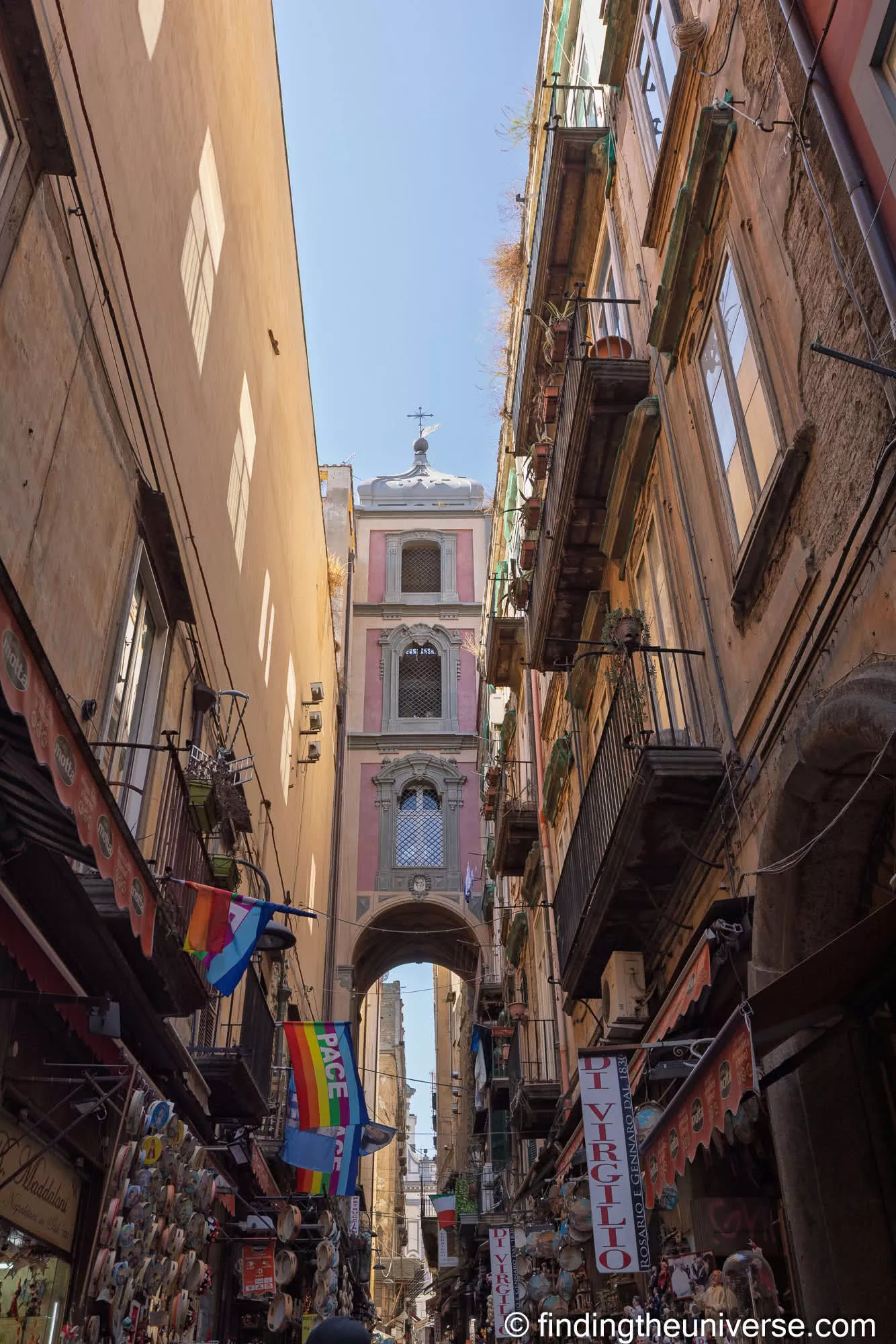
Carry on to the Duomo (free entry), home of the chapel of San Gennaro, the city’s patron saint, whose dried blood is said to liquefy three times a year in front of a packed congregation. The cathedral typically keeps mornings-and-late-afternoons hours with a midday break, so it slots best right here in the day. If you want the full treasury, the Museo del Tesoro di San Gennaro next door is a separate ticket at €15, worth it if baroque goldwork is your thing.
Then lunch, which in Naples on day one can only mean pizza. I’ve given the pizzerias their own section below because they deserve it; the short operational note here is to arrive just before noon or accept a queue.
Afterwards, walk it off 40 metres underground. Napoli Sotterranea (€13, tours from Piazza San Gaetano) runs guided visits into the Greek-Roman aqueduct system and wartime air-raid shelters beneath the old town, roughly 2 hours, with English tours every 2 hours through the day. The 2pm slot fits this plan. There’s one narrow candle-lit passage that anyone claustrophobic can skip, and should. You can also book it as a guided package via GetYourGuide.
Finish the afternoon at Piazza del Gesù, where the Gesù Nuovo church wears a facade of studded volcanic stone pyramids that looks more like a fortress than a place of worship (it was originally a palace wall, which explains a lot). Then find a table on Piazza Bellini for an aperitivo among the students and the ruins of the actual Greek city walls, and stay in the old town for dinner. You will not run out of options.
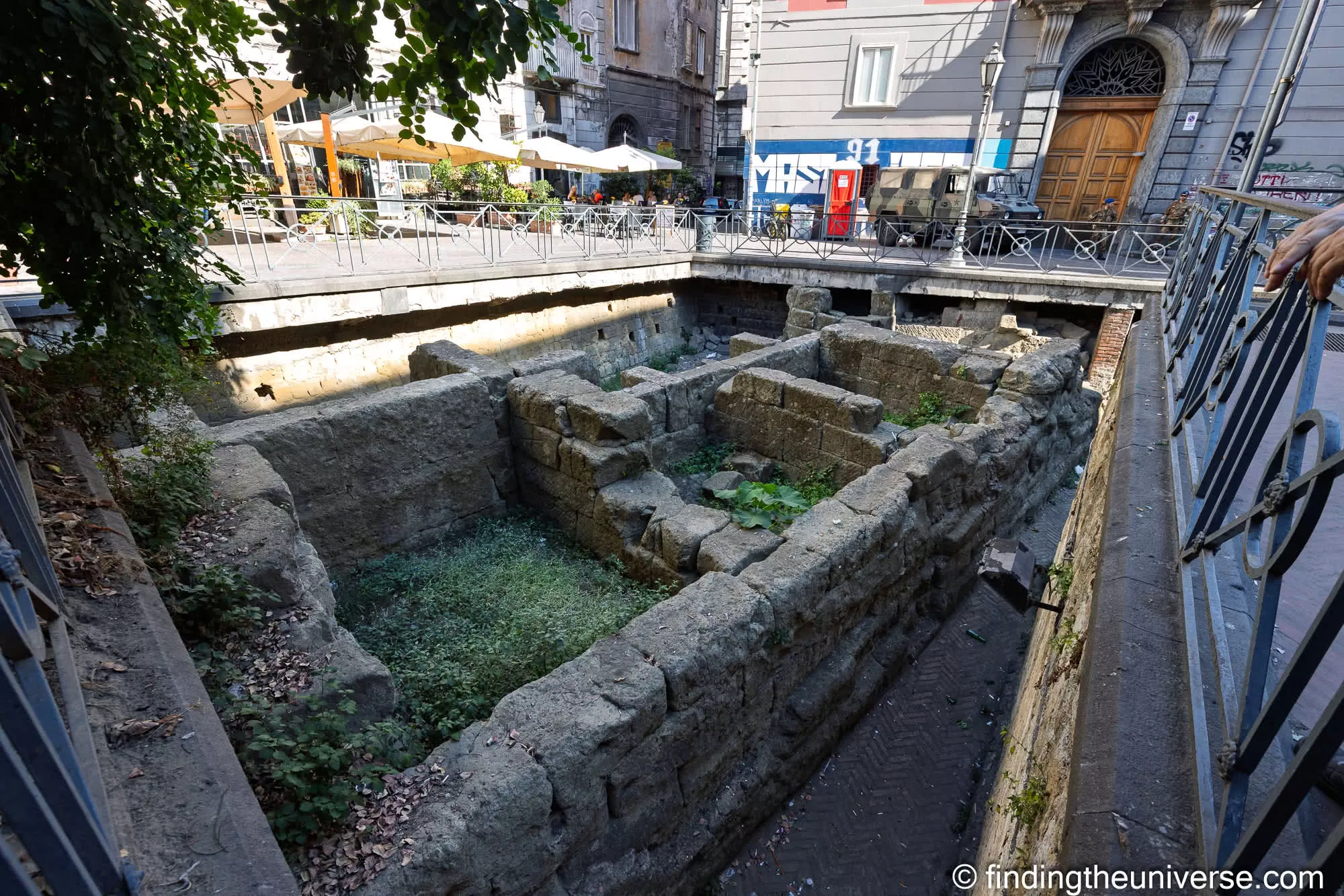
Day 2 in Naples: MANN, Vomero and the Waterfront
Day two adds altitude and sea air, plus one of the world’s great museums.
| 09:00 to 11:30 | MANN archaeological museum | Closed Tuesdays. Do it first, fresh. |
| 11:45 to 12:00 | Metro Line 1 to Vanvitelli (Vomero) | Or funicular from Montesanto. |
| 12:00 to 14:00 | Certosa di San Martino and Castel Sant’Elmo | Certosa closed Tuesdays; the castle is open daily. |
| 14:00 to 15:00 | Late lunch in Vomero | Local, unhurried, cheaper than downhill. |
| 15:15 to 16:45 | Funicular down, Toledo station, Galleria Umberto I, Piazza del Plebiscito | The grand 19th-century city in one stroll. |
| 17:00 to 18:30 | Lungomare and Castel dell’Ovo (exterior) | Golden hour over the bay. Castle currently closed. |
| 19:30 onwards | Dinner in Chiaia or Borgo Marinari | Seafood territory. |
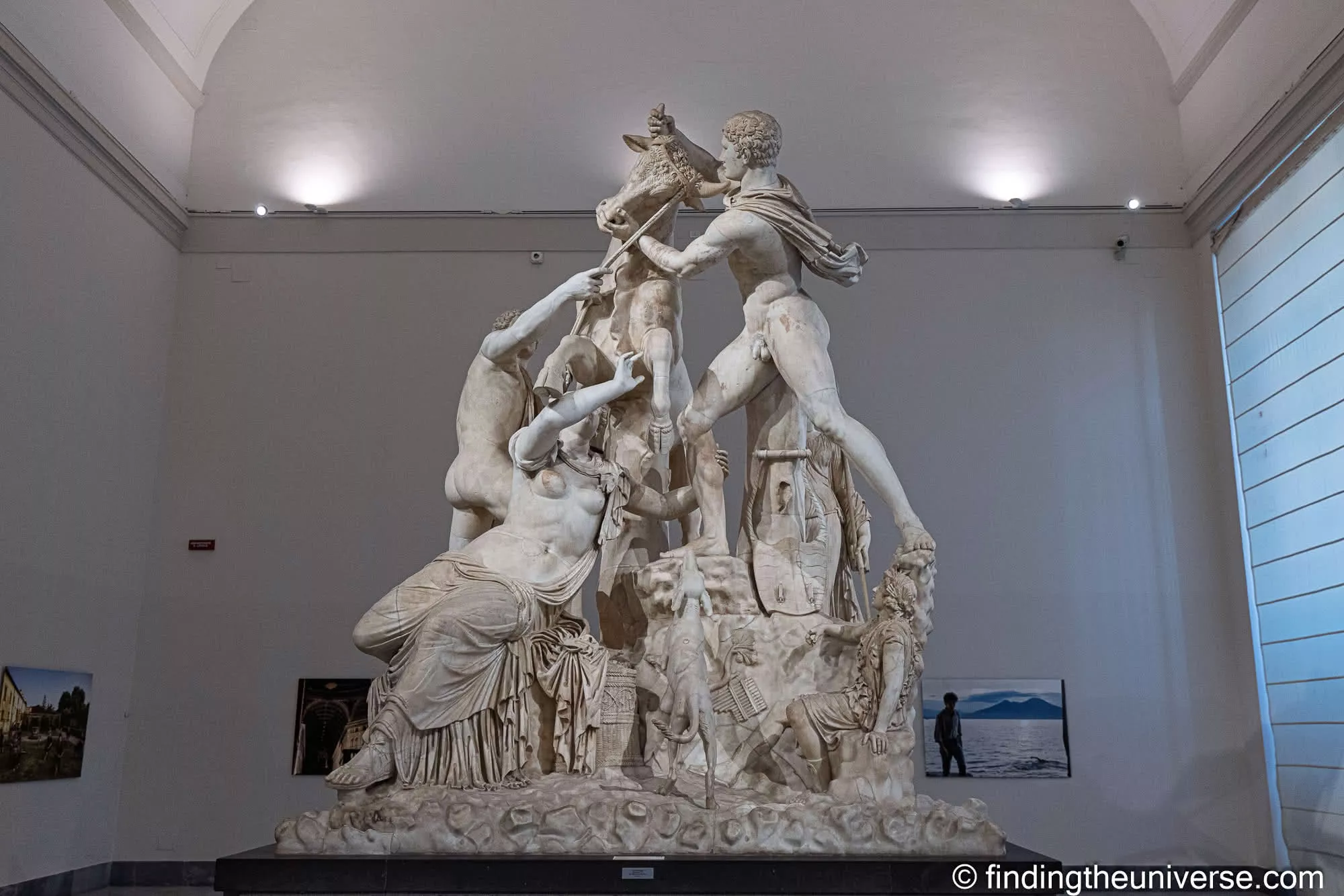
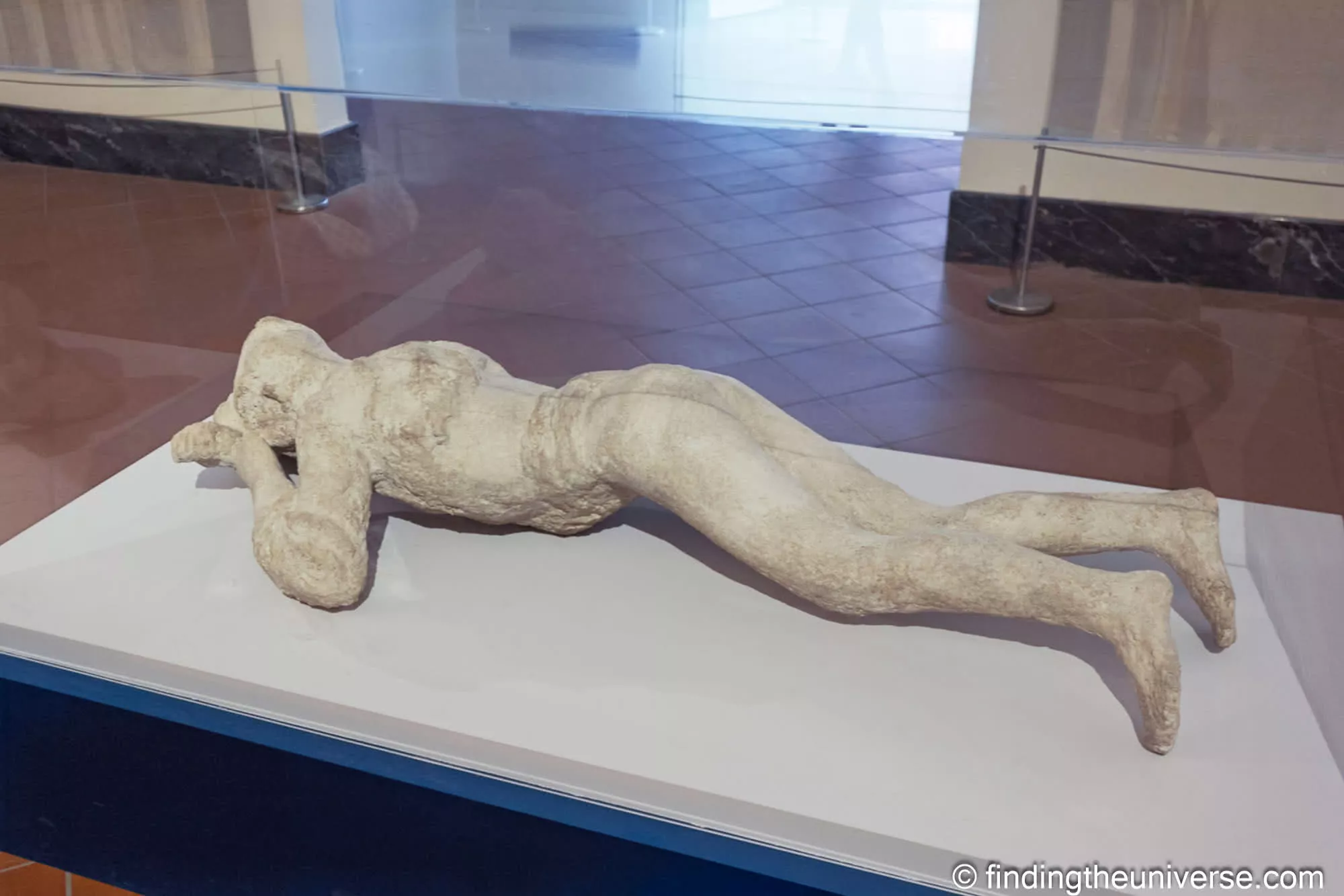
The National Archaeological Museum, universally shortened to MANN (€20, open 9am to 7.30pm, closed Tuesdays), holds the Farnese collection of classical sculpture and the best of everything excavated at Pompeii and Herculaneum: the mosaics, the frescoes, the household objects.
Most first-time visitors have this backwards: the treasures aren’t at Pompeii, they’re here. If you only have two days, two and a half hours at MANN gets you closer to Roman daily life than a rushed half-day at the site itself, and it pairs perfectly with a full Pompeii visit on a future trip. The Alexander Mosaic alone, assembled from more than a million tiny tiles, is worth the ticket.
From the museum, hop on Metro Line 1 four stops to Vanvitelli and you’re in Vomero, the hilltop district where everyday Naples gets on with life a hill above the crowds. (If you’d rather ride a funicular up, and you should at some point, the Montesanto line is a 15 minute walk from MANN.)
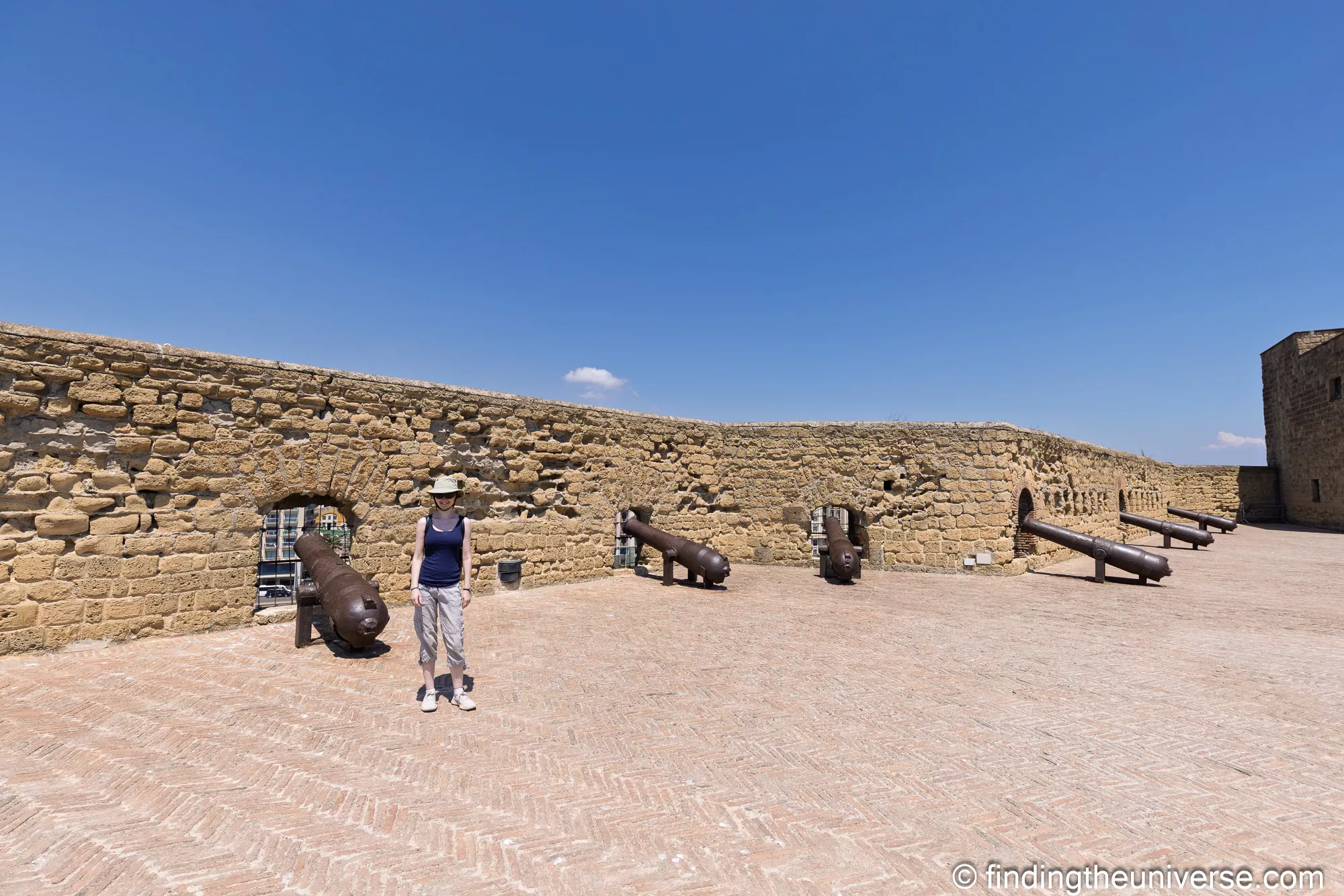
Up here, the Certosa di San Martino (€6, closed Tuesdays), a former monastery, has ornate cloisters and the best collection of those presepi nativity scenes you saw being carved yesterday. Next door, Castel Sant’Elmo (€5, or €9 combined with the Certosa, open daily) is a star-shaped fortress whose ramparts give you the definitive view of Naples: the whole city tipped out beneath you, Spaccanapoli slicing through it in a dead straight line, Vesuvius across the water. It’s the photo of the trip, and we spent quite a lot longer up there than planned.
Have a late lunch in Vomero where prices drop and menus lose their English translations, then take the Funicolare Centrale down towards Via Toledo. Three quick stops as you stroll south: pop into Toledo metro station to see its blue mosaic escalator shaft even if you’re not riding anywhere, walk the marble floors under the glass dome of the Galleria Umberto I, and cross the vast colonnaded sweep of Piazza del Plebiscito, which after the alleys of the old town feels like someone suddenly turned the lights on.
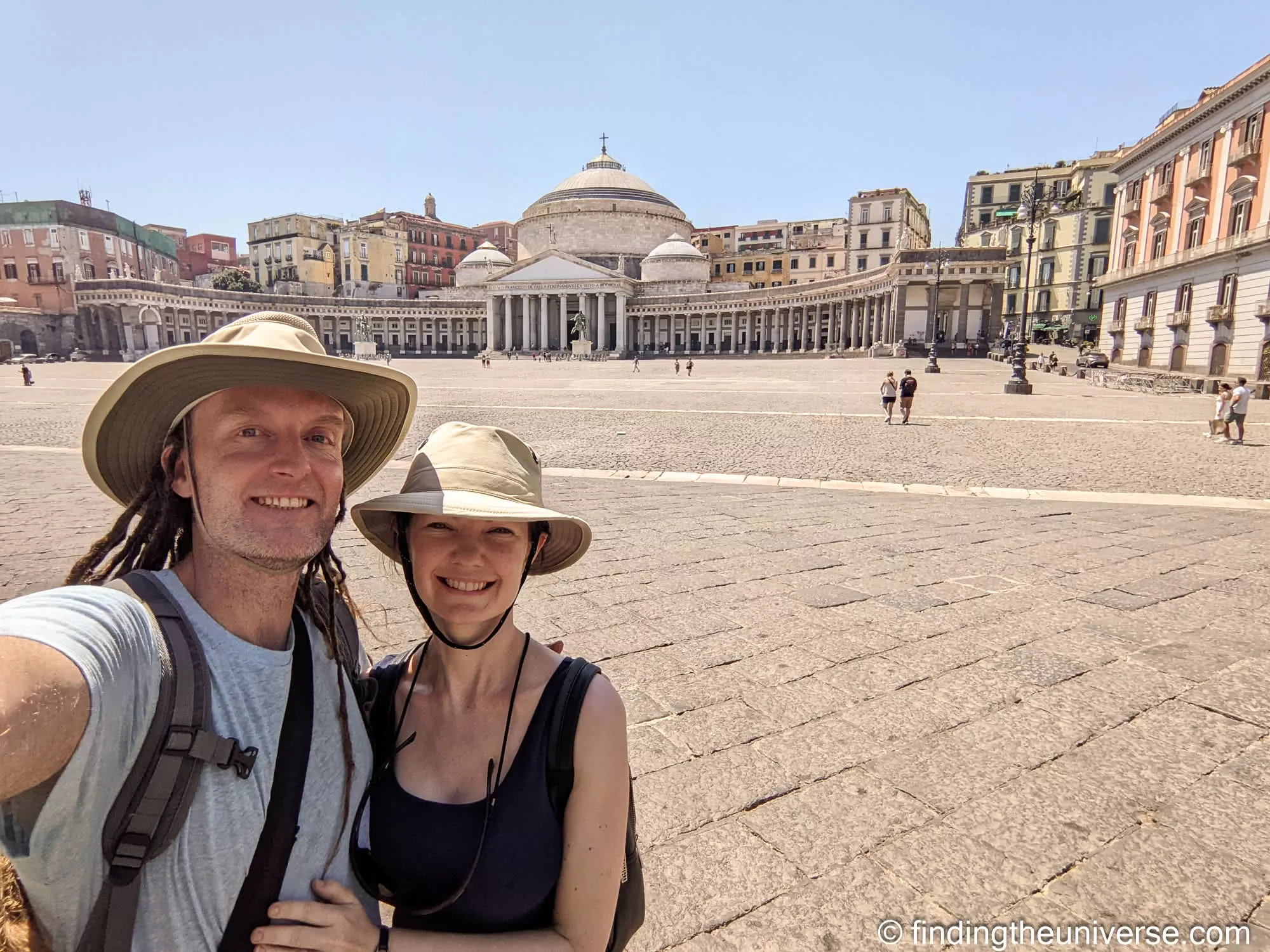
A couple of minutes east of Piazza del Plebiscito, on the way down towards the port, stands Castel Nuovo, the moated medieval fortress everyone calls the Maschio Angioino, its blunt dark towers framing a dazzling white marble triumphal arch. You can head inside to the civic museum, but even a look from the drawbridge is worth the short detour before you drop down to the water.
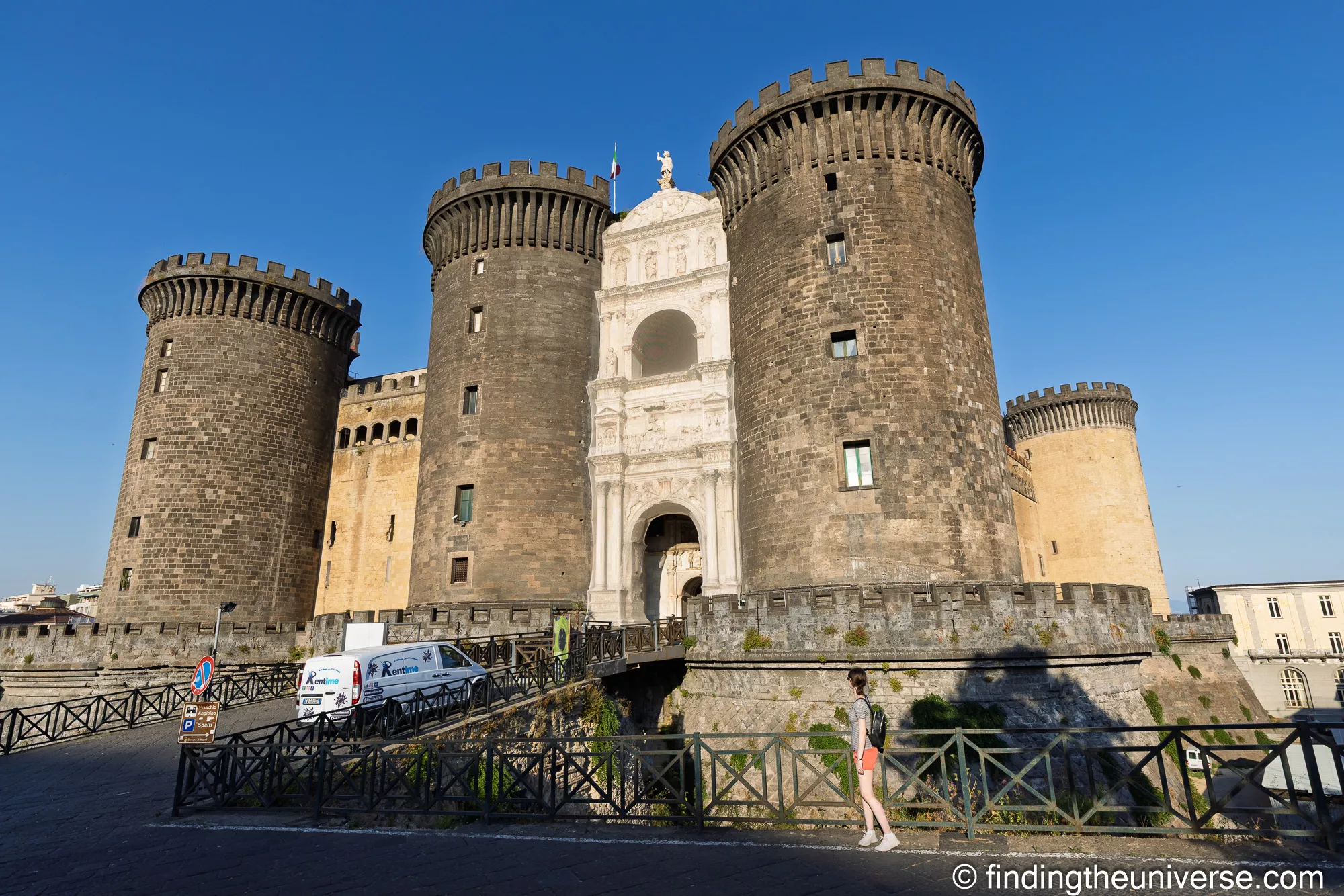
End the day on the Lungomare, the seafront promenade, timed for golden hour. Castel dell’Ovo, the fortress on its little island, is currently closed to visitors for restoration, with no reopening date announced.
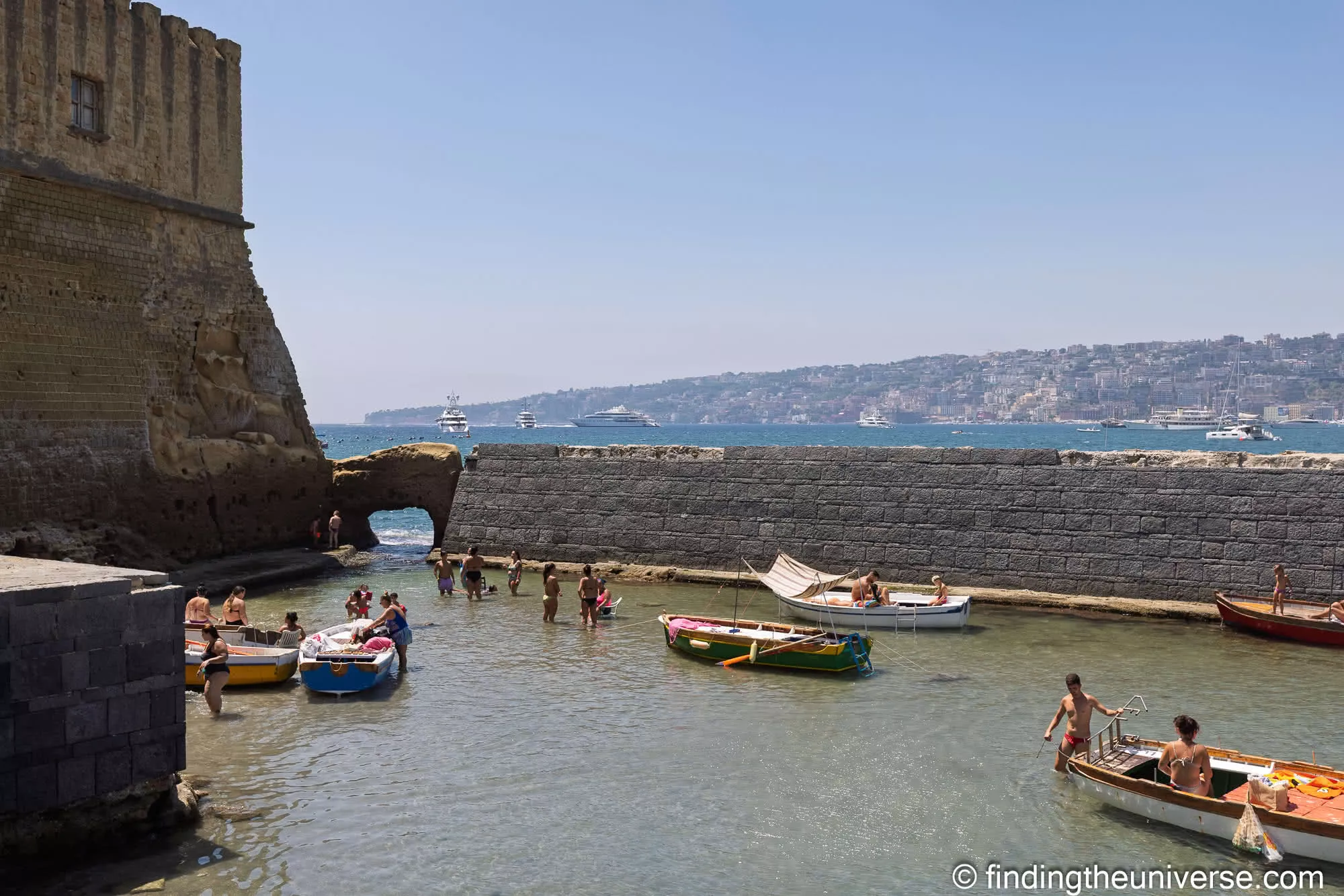
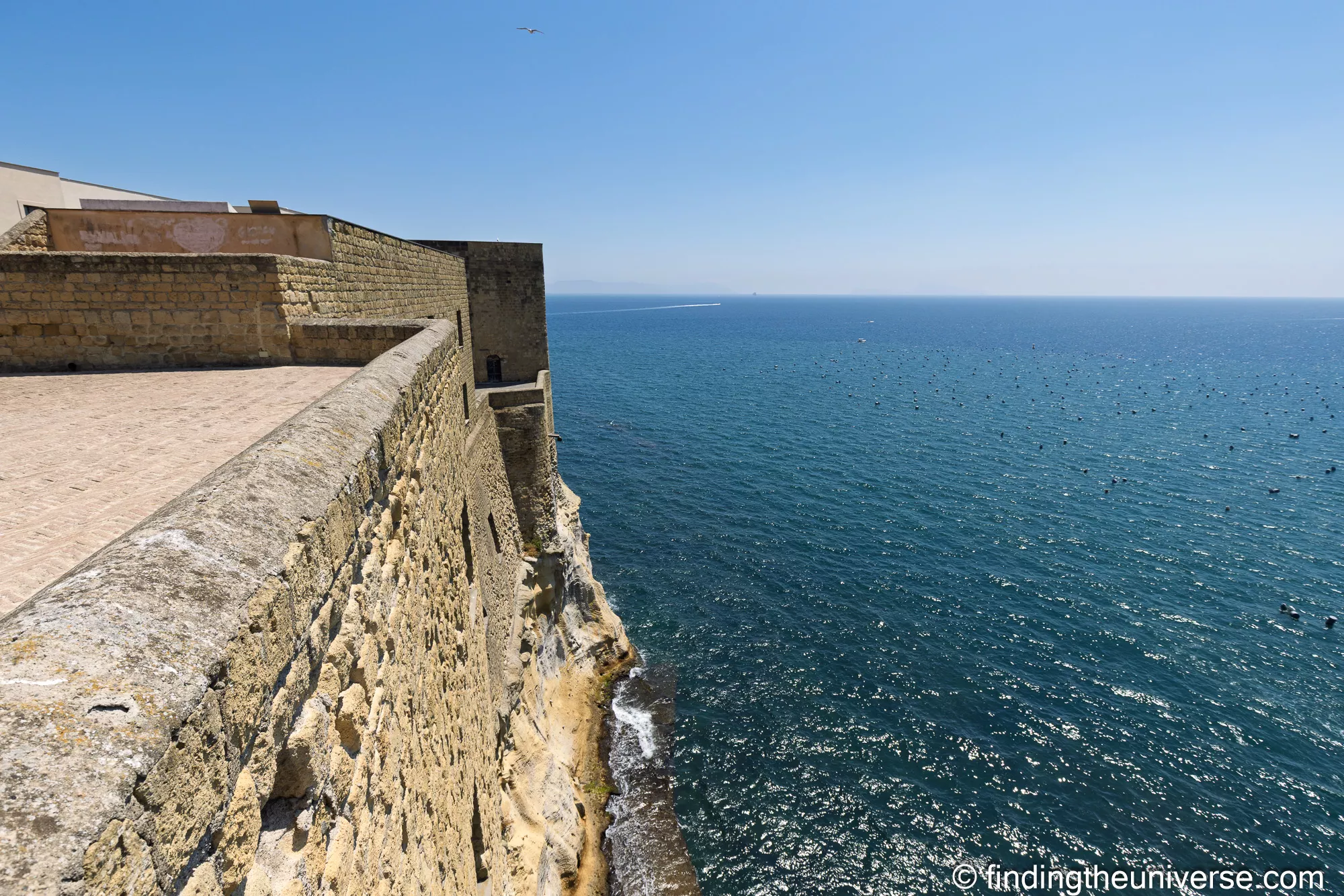
We climbed its ramparts on an earlier trip, before the current closure, and the views back over the bay are terrific, so it’s worth checking whether it has reopened by the time you travel. Even shut, the castle was always best appreciated from outside, and the Borgo Marinari harbour at its feet is as photogenic as ever with Vesuvius glowing pink behind the masts. Stay for a seafood dinner here or walk 10 minutes into Chiaia.
One sight this two-day plan deliberately leaves out is the Museo di Capodimonte, the former Bourbon palace on the hill north of the centre that now holds one of Italy’s great painting collections: Caravaggio, Titian, Bruegel, and Naples’ own Farnese pictures, hung through a string of gilded royal apartments.
It’s a proper half-day once you factor in the trip up, which is why it doesn’t fit a first 48 hours, but if you have a third day, or MANN leaves you wanting more, this is where we’d send you next. Jess could happily have stood in front of its stormy paintings of Vesuvius erupting all afternoon.

Where to Eat Pizza in Naples
Right. The section you actually came for. Pizza as the world knows it was invented in Naples, the EU and UNESCO have both formalised what locals never doubted, and eating it in situ is a legitimate reason to visit the city on its own. Over four days we ate a lot of research. These are the calls I’d make.
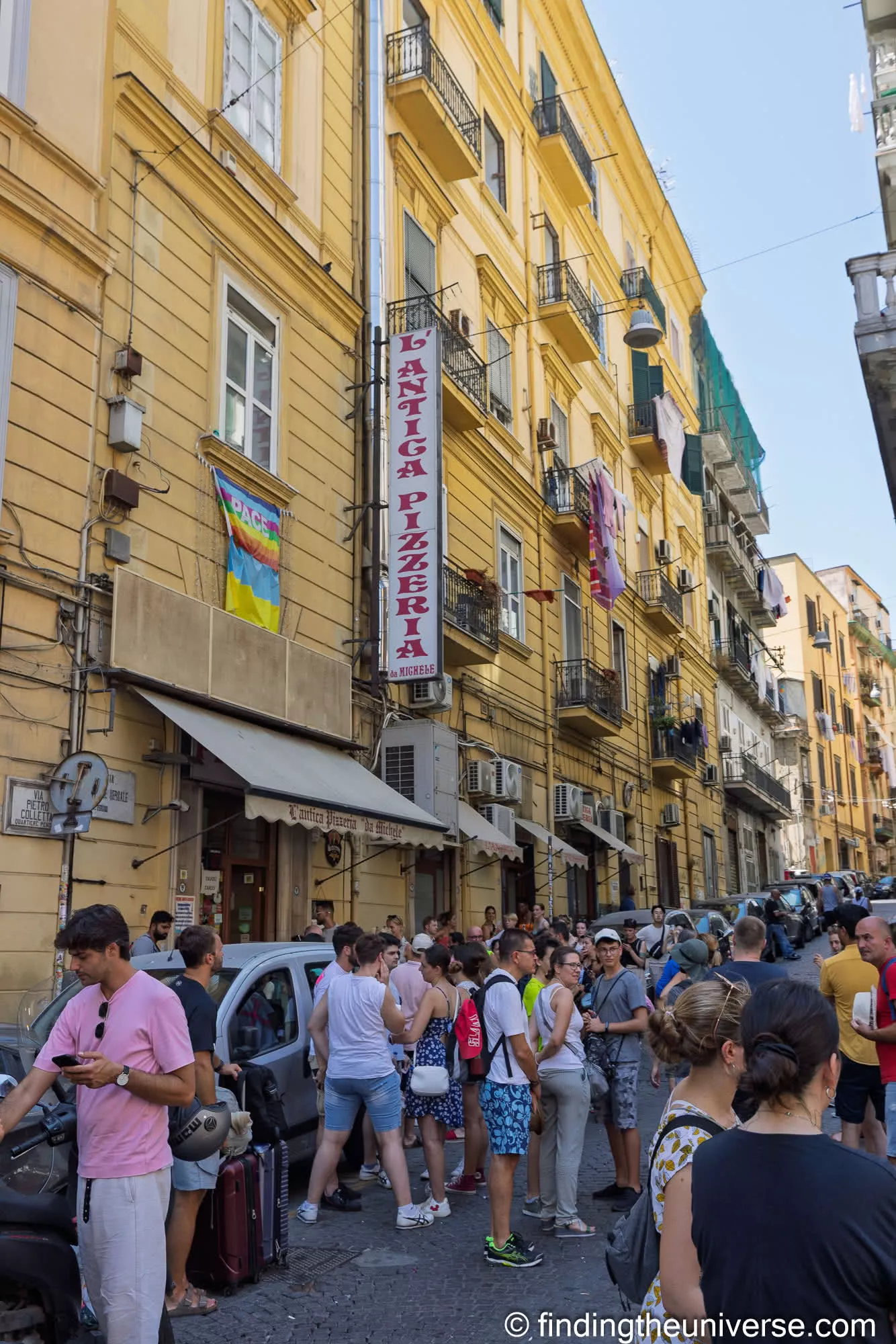
L’Antica Pizzeria da Michele (Via Cesare Sersale 1) is the purist’s temple: open since 1870, two pizzas on the menu (margherita and marinara), plus a handful of variations they’d rather you didn’t order. It’s the full experience, ticket-number queue and all. Go at opening or brace for a long wait. Personally we didn’t think it was worth the wait, and other pizza we had in Naples was better. But not including it would be sacrilege, so here we are.
Gino Sorbillo (Via dei Tribunali 32) is the famous name on the pizza street itself, with a puffier, more blistered crust and toppings da Michele would consider reckless. Note the address: there are several Sorbillo-named pizzerias on this street thanks to a sprawling family of pizzaioli, and number 32 is the one the queue is for.
Di Matteo (Via dei Tribunali 94) is my tactical recommendation, because it solves the queue problem: the street window sells pizza a portafoglio, a whole small pizza folded into quarters and handed over wrapped in paper for pocket change. Eating one standing in the street while the Tribunali crowds flow around you is, for my money, the most Neapolitan food experience of the lot.
Those three are the famous names, and they earn it. But the best pizza we ate in Naples came from a less-touristed corner. Pizzeria Carmnella (Via Marino Cristoforo 22) is a four-generation, 1892-vintage place in the Borgo Sant’Antonio Abate district near the station, with no queue worth the name and a faultless margherita made by people who have been doing exactly this for over a century. If you’re staying near Centrale, or you simply want the pizza without the pilgrimage, go here.

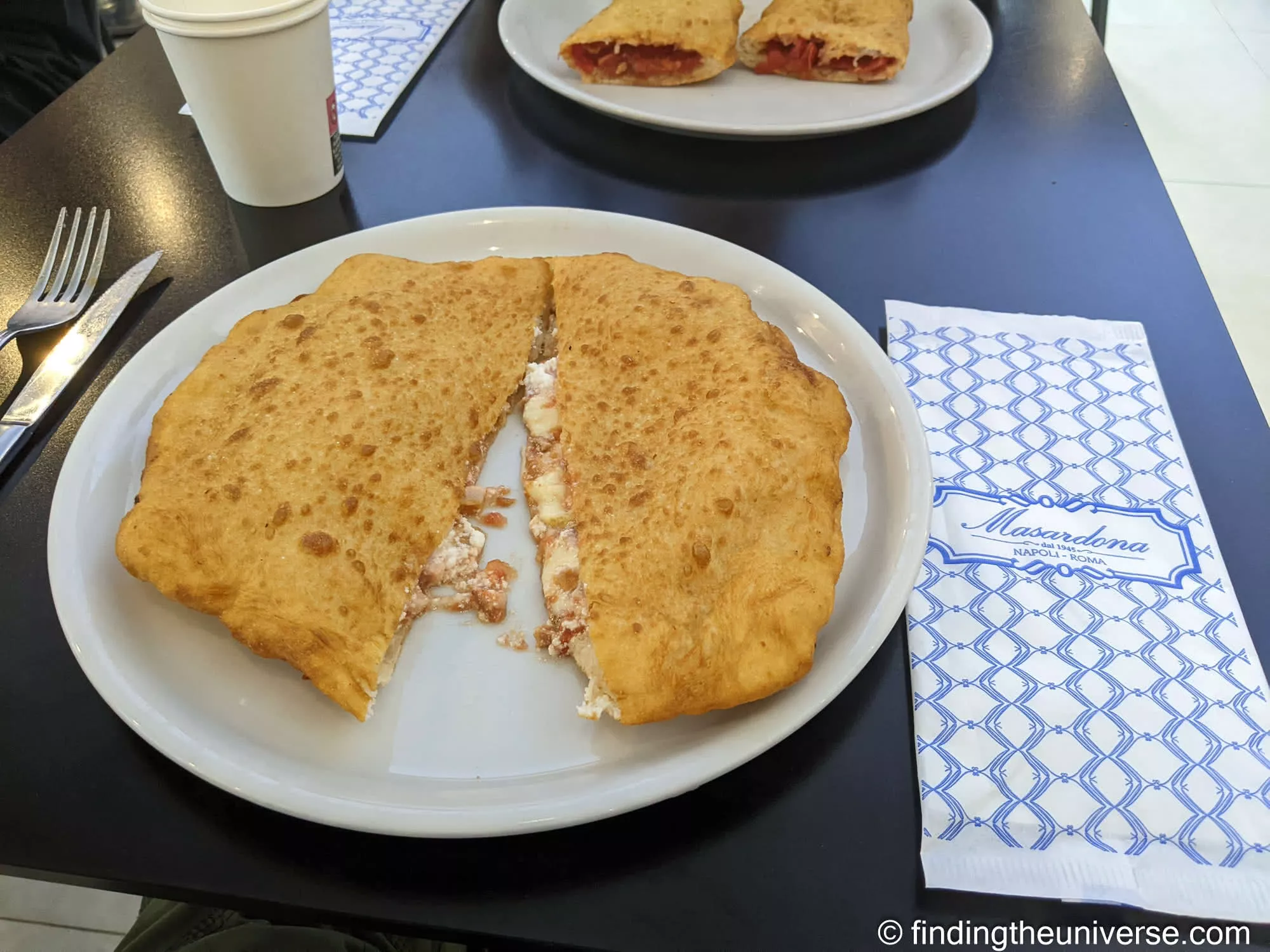
Beyond the classics, do not leave without trying pizza fritta, the deep-fried, folded cousin of the classic. It sounds heavy, and it is, and we liked it even more than we expected to.
The best we had was La Masardona, frying since 1945 at its original location on Via Giulio Cesare Capaccio, a couple of minutes from the station, and it was one of the best things either of us ate all trip.
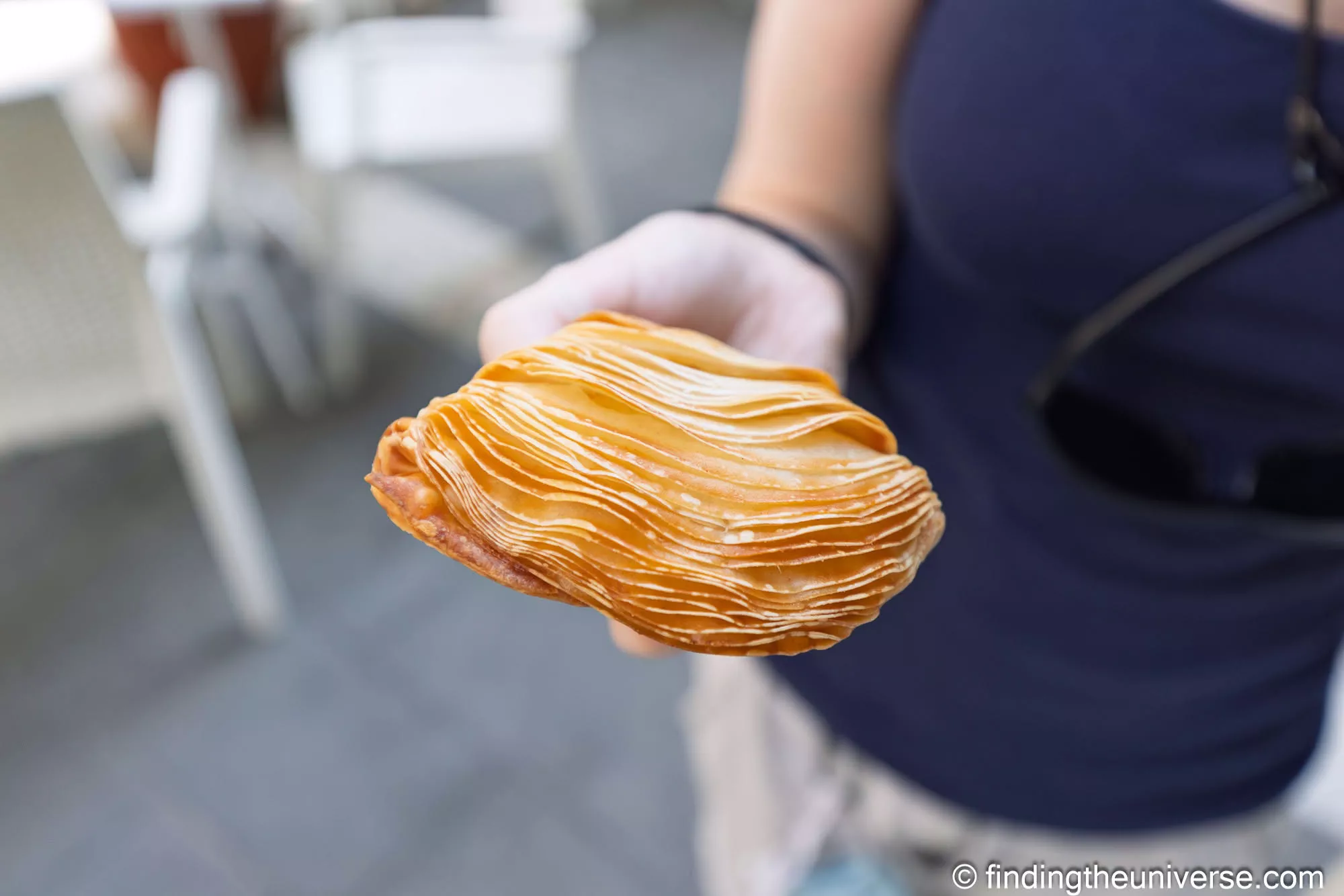
Balance the books afterwards with a sfogliatella, the crackly shell-shaped ricotta pastry, and a coffee drunk the local way: standing at the bar, quickly, and never a cappuccino after a meal unless you enjoy being visibly forgiven by the barista.
If you’d rather graze your way through all of this with someone who knows the alleys, a guided street food walk covers fried pizza, sfogliatelle and the rest in one evening.

Should You Do a Day Trip From Naples?
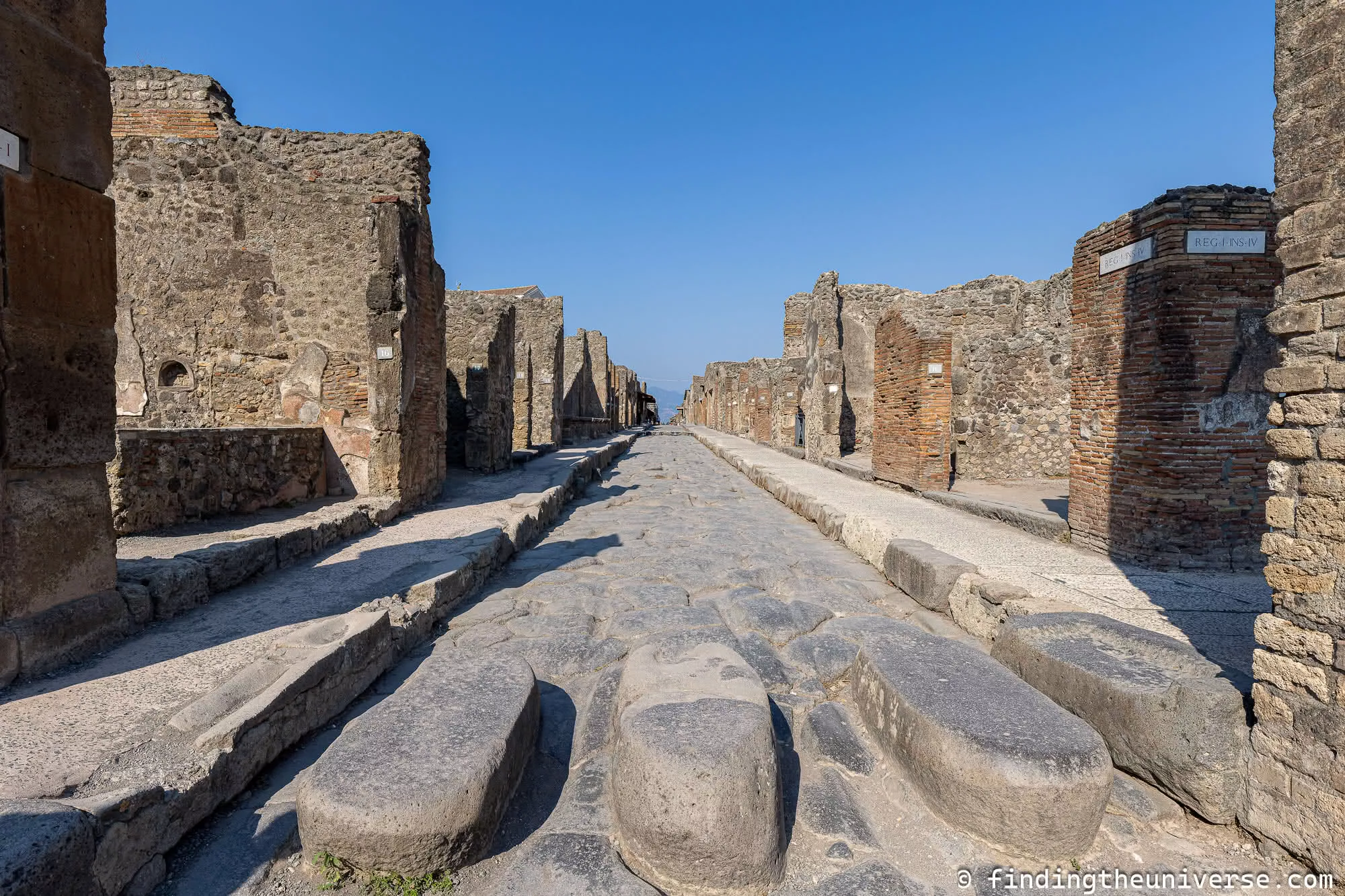
Naples sits in the middle of an absurd concentration of day-trip material: Pompeii, Herculaneum, Vesuvius, Capri, Sorrento and the Amalfi Coast are all within easy reach. Which creates the central dilemma of a 2-day visit. The obvious move is to cram Pompeii into day two, and I’m going to advise against it.
If you have exactly two days, spend both in Naples. We did Pompeii, Herculaneum and Vesuvius from the city, and I’m glad we did, but we had four nights to play with. Any of them costs you the better part of a day once you’ve added the Circumvesuviana ride, the queues and the walking, and the price is paid in the city itself: the itinerary above doesn’t survive losing half of it. Naples deserves its own 48 hours, and the ruins will keep for a longer trip.
If you have three days or more, or you’re simply not to be talked out of it, here’s the lie of the land:
Pompeii and Herculaneum are reached on the Circumvesuviana regional line from Napoli Garibaldi (a few euros each way; the €5 top fare gets you all the way to Sorrento in about 70 minutes). Pompeii is the overwhelming, full-day epic; Herculaneum is smaller, better preserved and kinder to a half day. Everything you need to plan either, tickets to routes, is in our full guide to visiting Pompeii. If you’d rather have the logistics handled entirely, a guided day tour from Naples bundles transport, entry and both headline sights.
Vesuvius can be combined with Herculaneum: Circumvesuviana to Ercolano Scavi, then a shuttle up the mountain and a 20-odd minute walk to the crater rim. Crater entry is €10 and a timed slot booked in advance on the official Vivaticket page is mandatory; there are no tickets at the gate.
Capri runs from Molo Beverello, right by the city centre: hydrofoils take 45 to 50 minutes and cost roughly €25 to €29 each way with several operators competing. In summer, book the morning boat out rather than turning up hopeful. It’s a long day but a doable one, and a guided Capri day trip sorts the boats and timing for you.
Sorrento and the Amalfi Coast deserve more than a day trip full stop. That same €5 Circumvesuviana gets you to Sorrento, on the coast’s doorstep, and our Amalfi Coast itinerary covers how we’d structure a longer visit. If you’re building a longer trip around all of this, our 10 day Italy itinerary is the place to start.
When to Visit Naples
Naples is a year-round city in a way the nearby coast simply isn’t; it doesn’t shutter in winter like Positano does. Even so, the sweet months are April to June and September to October, when it’s warm enough for the Lungomare at golden hour and cool enough to enjoy being wedged into a pizzeria.
July and August are seriously hot, and the dense old town holds the heat; if summer is your only window, structure your days like this itinerary does, with the indoor and underground stops in the early afternoon.
Winter is quiet, cheap and still perfectly workable, with the museums to yourself on the drizzly days. The Tuesday rule applies whatever the season, of course.
Photographing Naples
A few notes with my photographer hat on, because Naples spoils you.
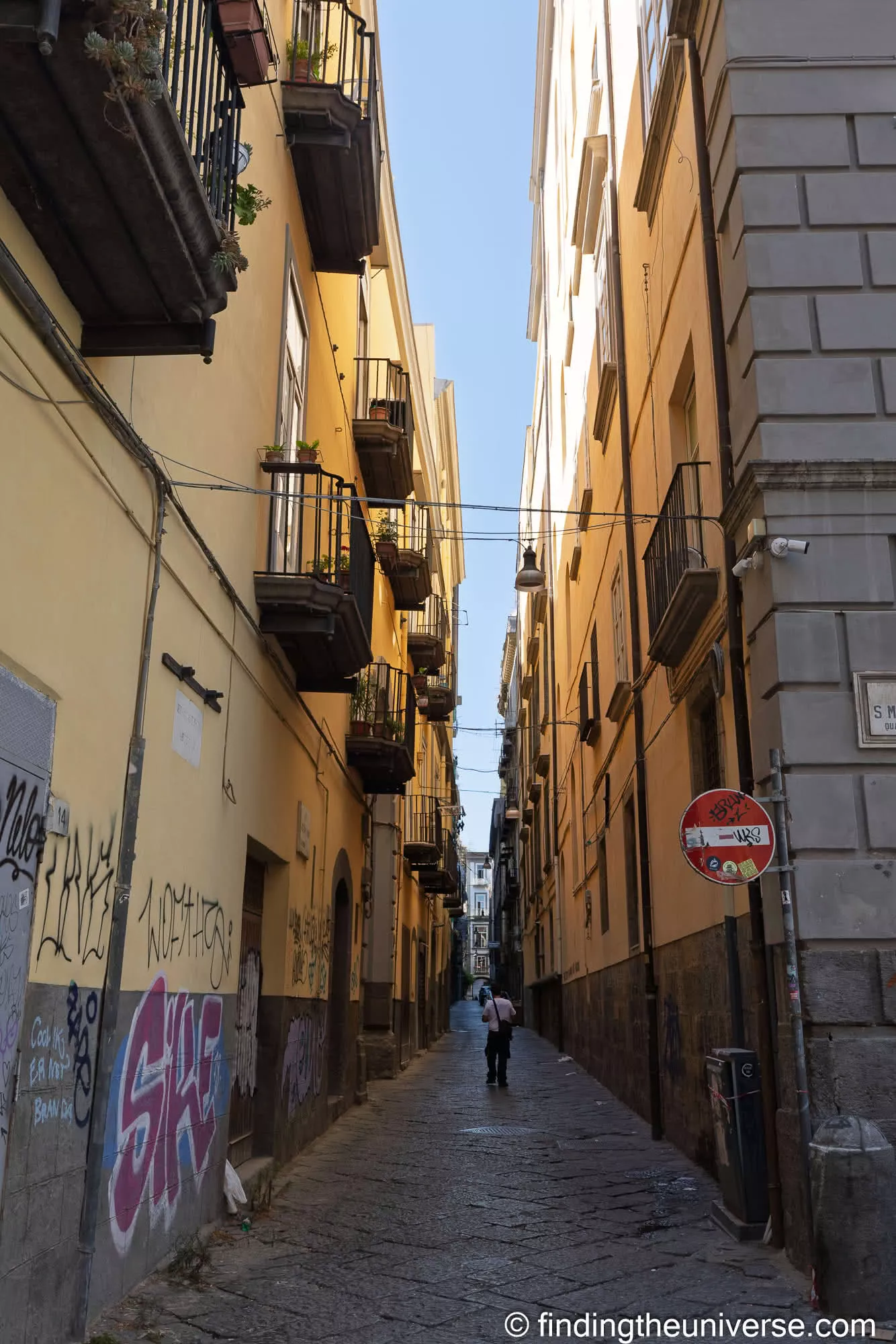
The single best viewpoint is the ramparts of Castel Sant’Elmo, ideally late afternoon when the light rakes across the city and Vesuvius holds its shape against the haze. The classic frame is the view along Spaccanapoli, cutting through two thousand years of buildings.
On the street, the Centro Storico is all about layers: washing lines, shrines, scooters, faces. The alleys are surprisingly dark even at midday, so something fast helps, and you’ll use a wide angle far more than a long lens.
Toledo station’s escalator shaft is the one interior everyone shoots, and it earns it. And golden hour belongs to the Lungomare, shooting back across the harbour to Castel dell’Ovo with the volcano behind. Sunset from up at Sant’Elmo is glorious too, but check closing times against your season, and remember the pizza queues you could be standing in instead.
For more general technique, my travel photography tips apply everywhere the scooters aren’t actively aiming at you.
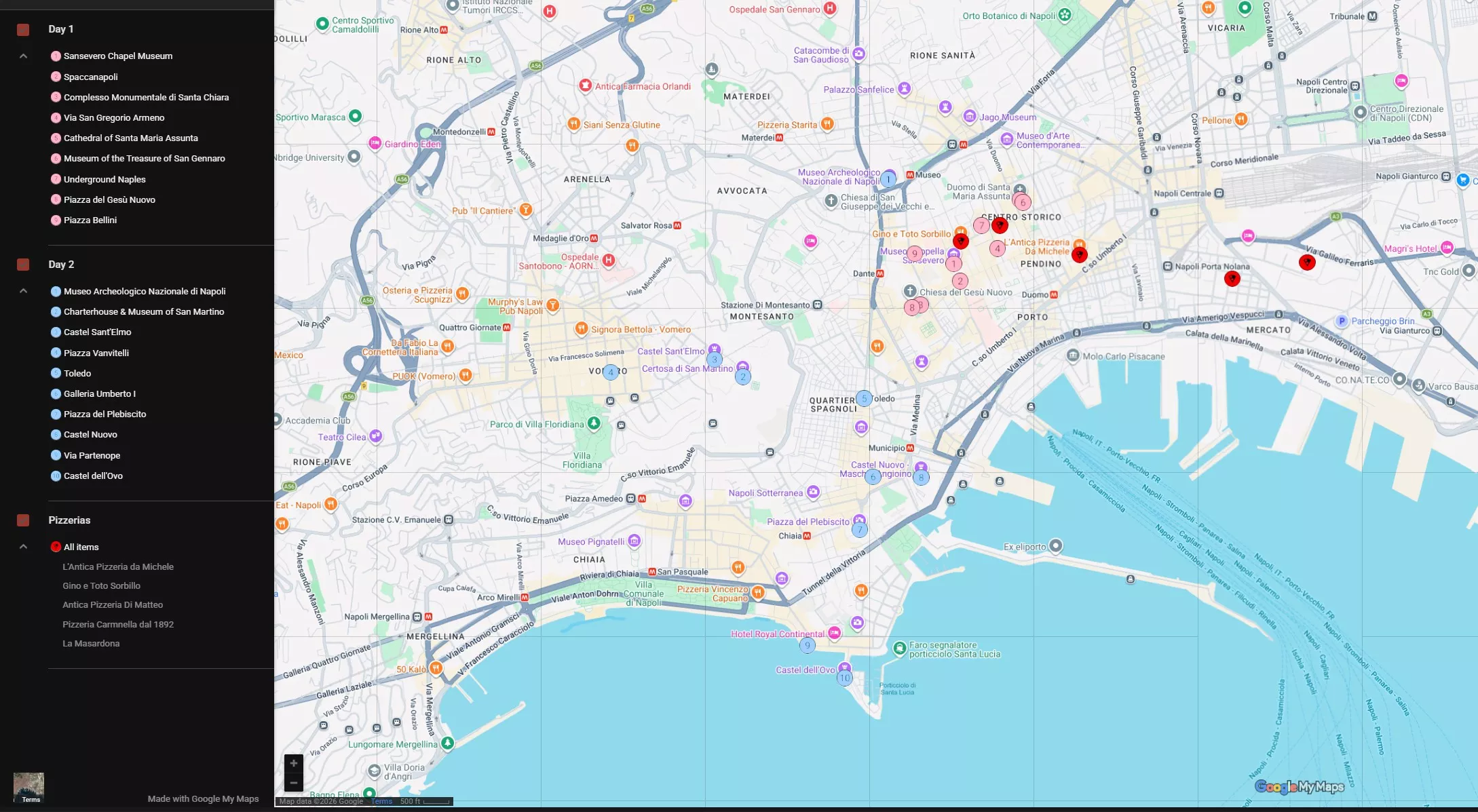
Map of This Naples Itinerary
Every stop in this guide, day by day, plus the pizzerias, is on the map below. You can also see this map on Google Maps here.
Frequently Asked Questions About Visiting Naples
Is 2 days enough for Naples?
Yes, for the city itself. Two full days covers the Centro Storico, the Cappella Sansevero, MANN, Vomero’s castle viewpoint and the waterfront at a civilised pace, with time to do the food justice.
What two days doesn’t cover is the surrounding region. Pompeii, Vesuvius or Capri each need most of an extra day, so if those are on your list, plan three or four days with Naples as your base.
Is Naples worth visiting?
We think so, emphatically. It’s the birthplace of pizza, home to one of the world’s great archaeological museums, and the most characterful big city in Italy, all with a volcano across the bay.
It is rougher and louder than Florence or Rome. If you can accept a city that hasn’t been polished for visitors, it repays you with food, atmosphere and prices the polished cities can’t match.
Is Naples safe for tourists?
Yes, with normal big-city awareness. The main tourist areas are busy and well-trodden at all hours, and violent crime against visitors is rare.
The realistic risk is pickpocketing in crowds, on the metro and on the Circumvesuviana. Keep phones and wallets zipped away in the busy alleys and you’ve addressed most of the problem. We wandered widely with camera gear over four days without any issues.
Can you do Pompeii as a day trip from Naples?
Yes, easily. The Circumvesuviana train from Napoli Garibaldi drops you at the entrance in well under an hour, and guided day tours bundle transport with entry and a guide.
On a 2-day visit we’d still recommend against it, because it costs you half your city time. Our Pompeii guide has everything you need if you go, or for a future trip.
Where should I stay in Naples for a first visit?
Stay central, in or on the edge of the Centro Storico, which puts the whole itinerary on foot and gives you the old town’s evening atmosphere. Pick a hotel on a larger street near Via Toledo or Piazza Bellini if you’d like a calmer base.
Chiaia is the best alternative: elegant, quieter and on the seafront, about 20 minutes’ walk from the old town. We’d avoid basing a first visit around Napoli Centrale station.
What is the best pizzeria in Naples?
For the benchmark margherita, L’Antica Pizzeria da Michele. For the famous name on the pizza street, Gino Sorbillo at Via dei Tribunali 32. For skipping the queues entirely, the street window at Di Matteo selling pizza a portafoglio.
All three are in the Centro Storico. Arrive at opening time or mid-afternoon to keep waits short.
What day are museums closed in Naples?
Tuesday. MANN, the Cappella Sansevero and the Certosa di San Martino all close on Tuesdays as of 2026, so don’t plan your museum day for one.
Castel Sant’Elmo stays open daily, and the Duomo, the streets and the food scene don’t take days off, so a Tuesday in Naples still works fine; just structure it around the outdoor sights.
Is the Campania ArteCard worth it?
Often, yes. The Napoli 3-day card (€27) includes 3 site entries and 72 hours of city transport, which roughly pays for itself with MANN, one more paid site and your transport.
If you’re adding Pompeii, Herculaneum or Vesuvius, get the Campania 3-day card (€41) instead. It’s the only version that covers the Circumvesuviana regional trains along with 2 major site entries.
How do I get from Naples airport to the city centre?
The Alibus shuttle runs from directly outside arrivals to Napoli Centrale station and on to the port, taking around 20 to 30 minutes depending on traffic. It’s the simplest option.
Official taxis operate fixed tariffs to the centre; confirm the fixed rate is being applied before you set off.
Do you need a car in Naples?
No, and we’d actively recommend against one. The centre is walkable, the metro and funiculars cover the hills, restricted traffic zones make driving a legal minefield, and parking is scarce.
Every day trip in this guide is reachable by train or ferry. If your wider Italy itinerary needs a car, pick it up on your way out of the city.
Further Reading and Planning Resources
Hopefully this has helped you plan your own two days in Naples! We have plenty more Italy content to help with the rest of your trip:
- Our full 10 day Italy itinerary, for fitting Naples into a bigger trip
- Our detailed guide to visiting Pompeii, and our Amalfi Coast itinerary for the coast beyond
- City guides for the classic trio: 3 days in Rome, 2 days in Florence and 2 days in Venice
- Still eating? Our guide to the best food tours in Rome continues the theme
- Combining countries? See our 10 day Europe itinerary
- For a guidebook in your bag, we like Rick Steves Italy, which covers Naples and the whole peninsula in practical depth
And that’s our take on two days in Naples: chaotic, delicious, occasionally exasperating and completely worth it. If you’ve been, or you’re planning a trip and have questions, let us know in the comments below, we always enjoy hearing from you!
















 English (US) ·