
 3 weeks ago
38
3 weeks ago
38
Vicenza is the Veneto city I’d push you towards if you care even slightly about architecture, and it’s the one most visitors skip on the train between Venice and Verona. I’ve been coming back to this part of Italy for thirty years, and Jess and I finally gave Vicenza a full day and a night of its own.
We walked the whole Palladio circuit, had the Teatro Olimpico almost to ourselves, timed Villa Rotonda for a weekend so we could get inside, and sorted the ticket question at the box office rather than guessing. So this is how I’d actually plan you a day here, tickets and timing and all.
Here’s the good news up front. Vicenza is one of the lowest-stress day trips in the Veneto, because almost nothing here needs booking ahead. The Teatro Olimpico, the oldest surviving covered theatre in the world and the reason most people come, is walk-up, with no timed slot or reservation. You buy a ticket at the door. That makes it a far easier day than nearby Padua, where the Scrovegni Chapel forces your whole day around a pre-booked slot.
The only two decisions that really matter in Vicenza are which Palladio ticket to buy, and, if you want to get inside Villa Rotonda, going on the right day of the week. I cover both below.
Quick Take: Visiting Vicenza
Is Vicenza worth visiting? Yes, if you have any interest in architecture. This is the home city of Andrea Palladio, the most copied architect in history, and a UNESCO World Heritage site built almost entirely around his work. If grand buildings leave you cold, it’s a pleasant half-day rather than a headline, and I’d point you at Verona instead.
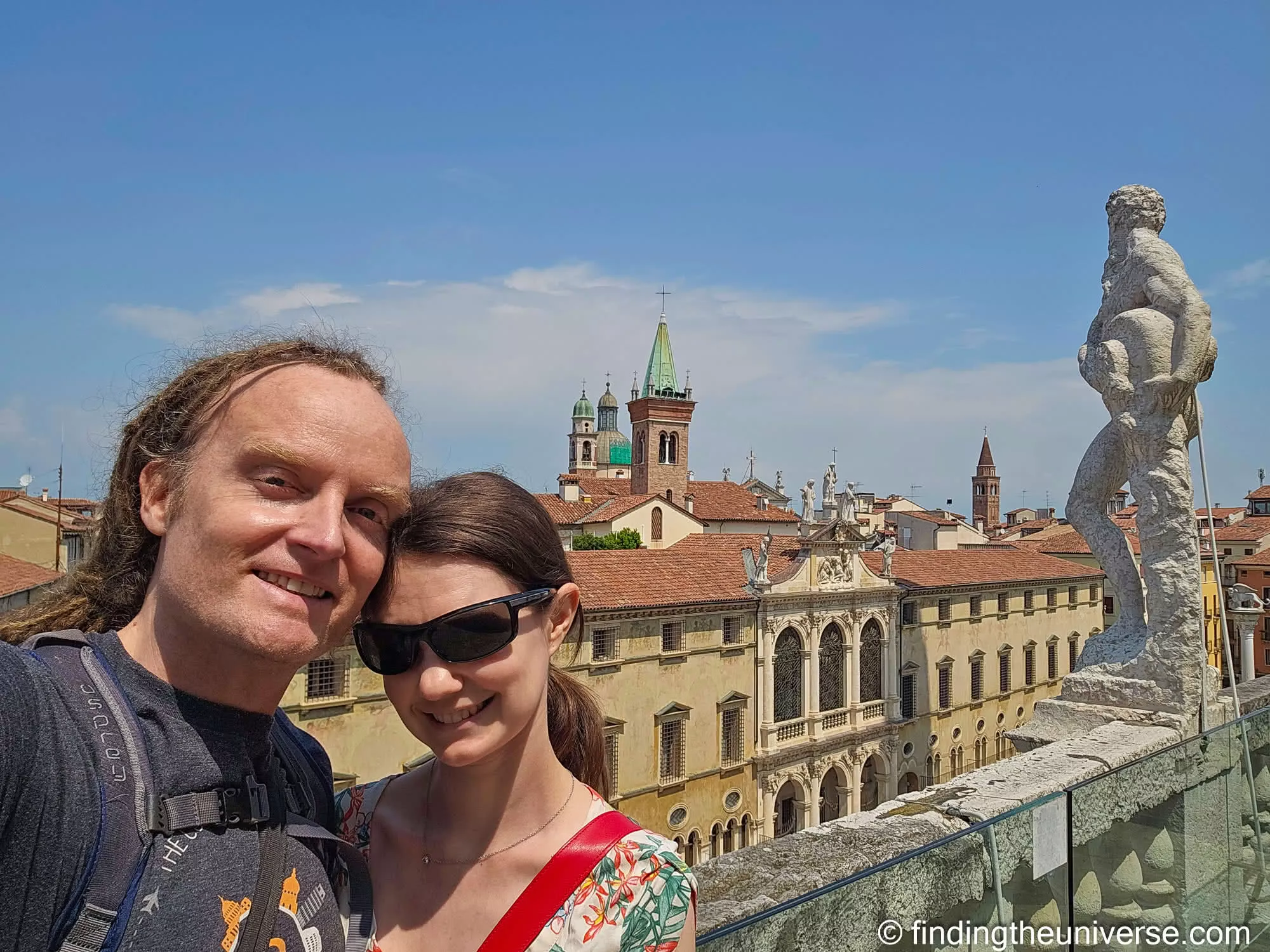
How long do you need? A full day covers the centre at a comfortable pace, and the Palladian villas just outside push it towards a day and a half. We stayed overnight and were glad of it, because it let us reach Villa Rotonda without rushing the city.
What do you need to book? Almost nothing, which is the quiet joy of Vicenza, and a refreshing break from, well, almost everywhere else these days.
The Teatro Olimpico is walk-up, and so is everything else in town. The two decisions to make before you go are which Vicenza Card or single tickets suit your day, and, if Villa Rotonda’s interior is on your list, going on a weekend, because it’s shut Monday to Thursday for most of the year.
And the decision that actually sets your budget: which Palladio ticket do you buy? Single tickets, the SILVER card, or the GOLD card? It comes down to how many sights you’re doing, and I run the full maths further down.
Vicenza at a Glance
Here’s the day at a glance, with current 2026 prices and how long to give each sight. I go through them in turn below.
| Teatro Olimpico | Palladio’s theatre, the oldest surviving covered theatre in the world | About 45 min | €12, or on a Vicenza Card | No, walk-up |
| Palazzo Chiericati | Palladio palace, now the civic art gallery | 45 to 60 min | €8, or on a card | No |
| Basilica Palladiana | Palladio’s marble loggias over a medieval hall, plus a rooftop terrace | 30 min | Loggia and square free; terrace around €6 | No |
| Piazza dei Signori | The main square, under the Basilica and the Torre Bissara | 20 min | Free | No |
| Corso Palladio | The old town’s main street, lined with Palladian and Renaissance palazzi | 30 to 45 min on foot | Free | No |
| Santa Corona | Gothic church with a Bellini and a Veronese altarpiece | 30 min | Around €3 to €4 (ticketed) | No |
| Villa Rotonda | Palladio’s perfect domed villa, just outside town | 60 to 90 min | €15 (interior included) | No, but open Fri to Sun only |
| Villa Valmarana ai Nani | Tiepolo frescoes, a short walk from Villa Rotonda | 45 to 60 min | €15 (park only €8) | No |
| Basilica di Monte Berico | Hilltop sanctuary with the city panorama | 45 min | Free | No |
Is Vicenza Worth Visiting?
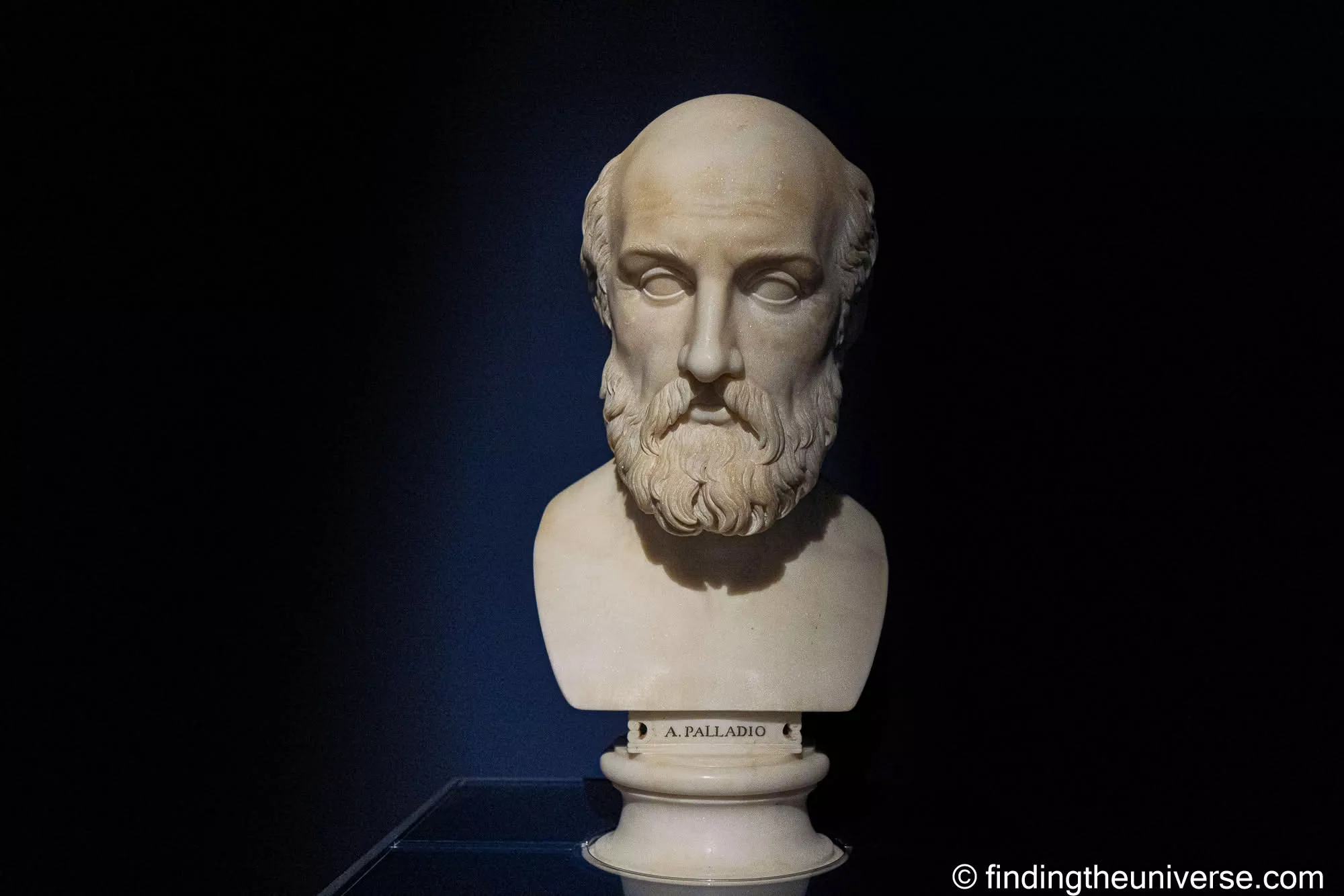
Vicenza is worth visiting, and for one reason above all the others: Palladio. Andrea Palladio reshaped European architecture from this one provincial city in the 16th century, and his fingerprints are everywhere, from the theatre to the basilica on the main square to the villas on the hills outside.
Walk Corso Palladio end to end and you’re walking through the source code for half the grand buildings you’ve ever seen, from English country houses to the White House. For anyone who likes architecture, it’s one of the most rewarding small cities in Italy.
But I’ll be straight with you about where it sits. Vicenza doesn’t have Venice’s drama or Verona’s polish, and it sees a fraction of their visitors, and that’s part of the appeal. You can stand alone in the Teatro Olimpico looking at a 440-year-old stage set, then have lunch on a market square without queuing for anything.
If you’re an architecture lover, give it a full day. If you’re not, it’s an easy half-day stop on the train line and I wouldn’t build a trip around it. If you’re choosing between the Veneto’s day trips, I’ve ranked the lot in our guide to day trips from Venice, and Vicenza and Padua are the two I’d send an architecture fan to first.
Which Palladio Ticket Should You Buy?
This is the decision that saves you real money, and it’s worth making before you arrive rather than at the first box office. The town’s main sights run as a single civic-museum network, sold either as single tickets or as one of two cards.
The rule is simple: one site, buy a single ticket; two or more, a card almost always wins, because the SILVER card already costs less than the two headline tickets bought separately. From there it’s only SILVER or GOLD: four sites or fewer, the SILVER card; five or more, the GOLD. Here are the 2026 figures, from the Vicenza civic museums.
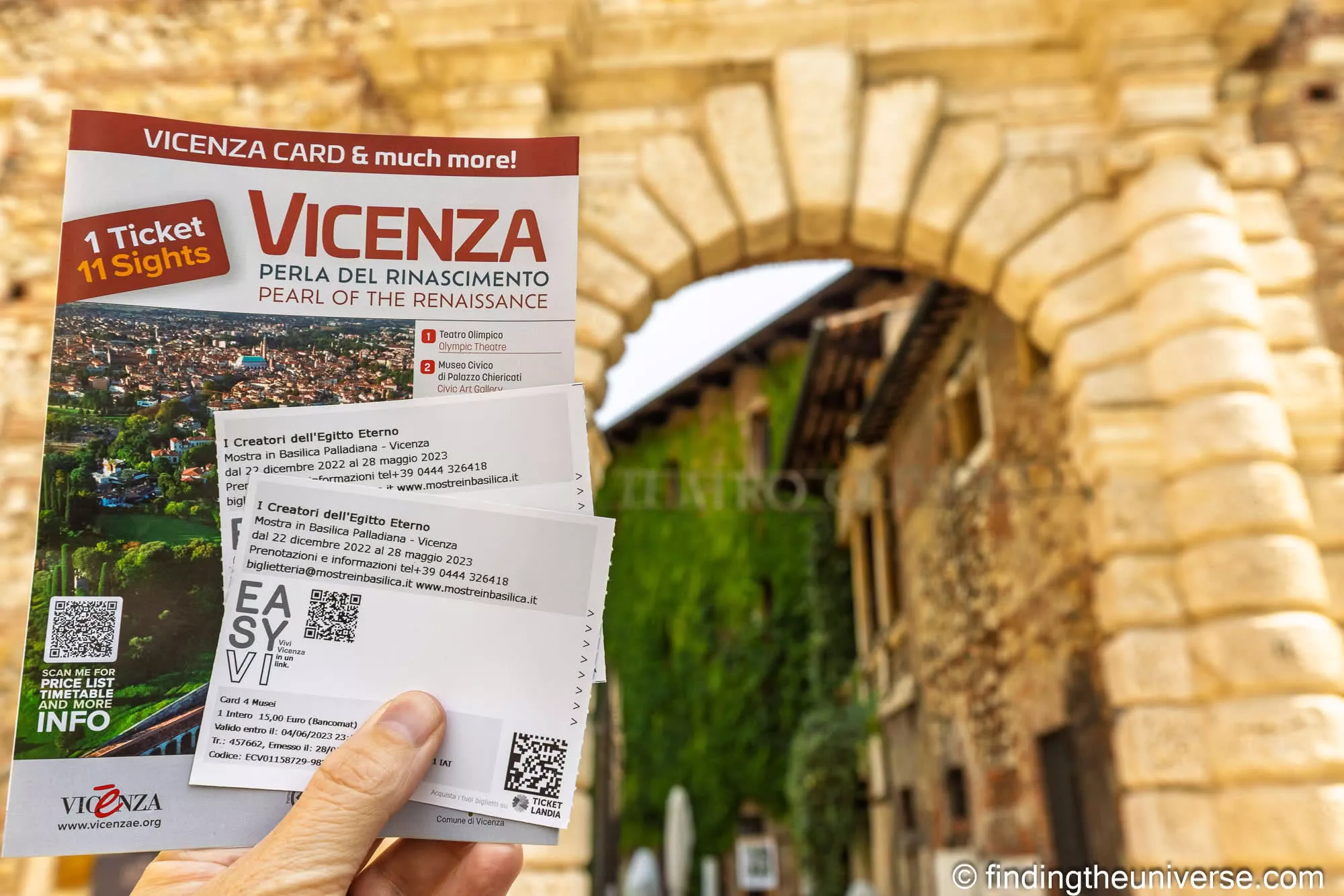
Here are the numbers. A single Teatro Olimpico ticket is €12 and Palazzo Chiericati is €8. The SILVER card is €16 and gets you into any four of the eleven network sites over eight days. The GOLD card is €22 and covers all eleven sites over twelve days. So two single tickets to the theatre and Chiericati already cost more than a SILVER card that throws in two more sites on top.
| Just the two big interiors: Teatro Olimpico and Palazzo Chiericati | SILVER card | €16 (vs €20 in singles) | Buy the SILVER card. It’s cheaper than the two singles and leaves you two more sites spare. |
| A proper Palladio half-day: the theatre, Chiericati, Santa Corona, plus one more | SILVER card | €16 | Buy the SILVER card. Four sites for €16 is the sweet spot for most day-trippers. |
| The full circuit: five or more civic sites in town | GOLD card | €22 | Buy the GOLD card. Past four sites it pays for itself, and it runs 12 days if you’re staying over. |
| A guided day trip from Venice instead of doing it yourself | Do it yourself by train | Train from about €6 to €7 each way, plus tickets | Skip the private tour. Vicenza is so walkable and low-stress that a €200-plus guided excursion is money you don’t need to spend. |
One catch the cards don’t make obvious: the two famous villas, Villa Rotonda and Villa Valmarana ai Nani, are privately owned and sit on neither card. You pay €15 at each, on the door, separately. We bought a card for the sights in town and paid at the villa gates, which is how most people will do it.
If you’d rather have a guide, GetYourGuide lists a handful, from a small-group walking tour of the centre for around €50 to private Palladio day trips out of Venice. For most people none of it is necessary. The Teatro Olimpico needs no skip-the-line ticket because there’s no line to skip, and the centre is small enough to read off a map.
The Villa Rotonda Problem, and How to Plan Around It
If there’s one thing that catches people out in Vicenza, it’s Villa Rotonda’s opening days. Palladio’s most famous building, the one on the back of half the architecture textbooks, is closed Monday to Thursday for most of the year. It opens Friday to Sunday from April to October, and Saturday and Sunday only in March and November. Turn up on a Tuesday and you’ll be admiring it over the fence.
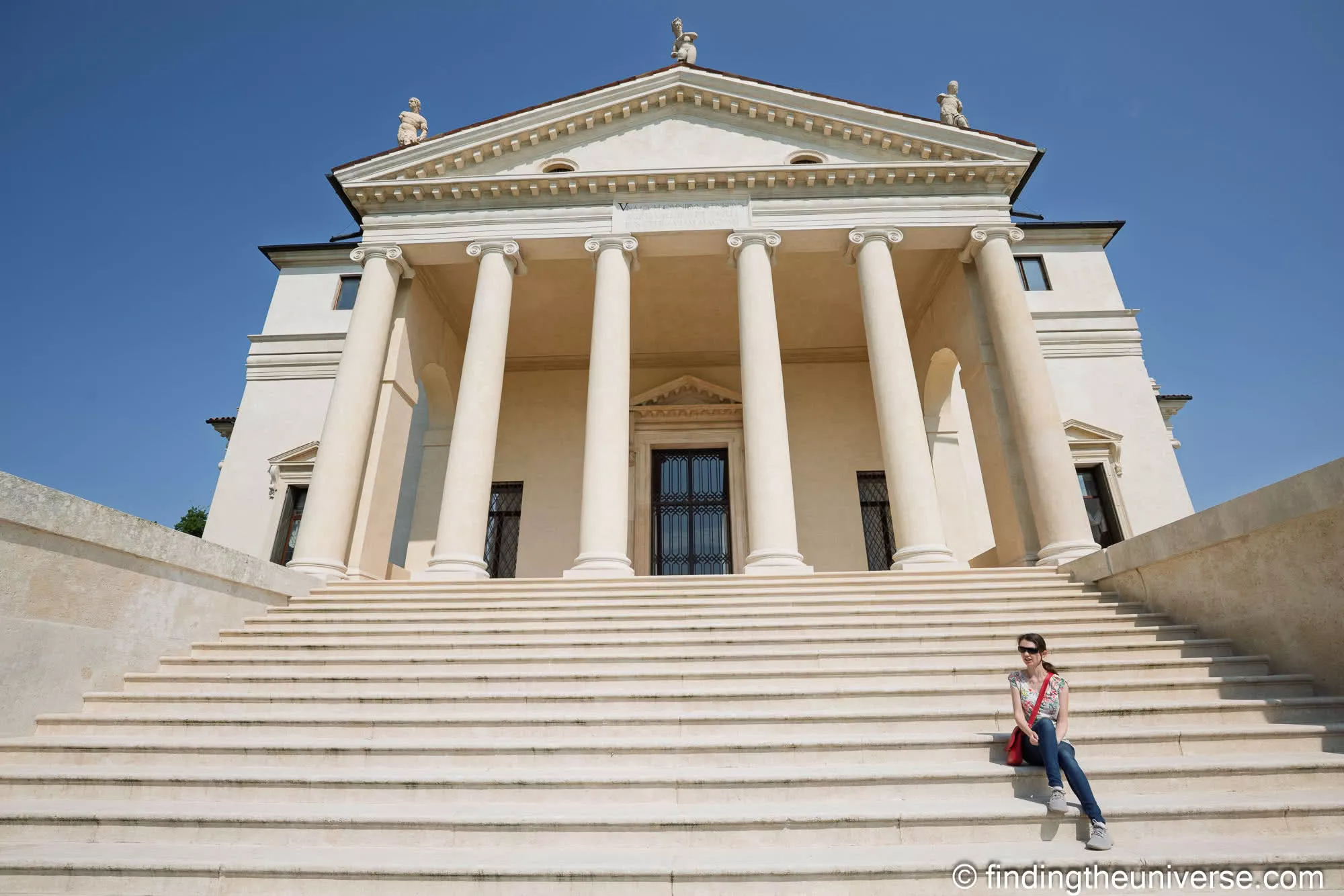
So if getting inside the Rotonda matters to you, build your visit around a weekend. That’s the single most important piece of planning for a Vicenza trip, and it’s the reason we came on a Saturday and stayed the night. Everything else in town is open Tuesday to Sunday and needs no forethought at all. Plenty of people are happy to see the Rotonda from the road, in which case the day of the week stops mattering and you’ve nothing to plan around.
Getting to Vicenza
Most people reach Vicenza by train, and it’s the easy part. The city sits on the main Milan to Venice line, halfway between Padua and Verona, so trains are frequent in every direction.
From Venice you’ve got two choices. The regional train takes about an hour to an hour and twenty from Venezia Santa Lucia and costs from around €6 to €7 one way, with a ticket you can buy on the day. The high-speed Frecciarossa and Italo trains cut it to roughly 25 minutes to Venezia Mestre, or about 45 minutes to Santa Lucia, but cost more and the fares move around, so book those ahead if you want the lower price.
For a relaxed day trip the regional is the obvious value pick. Book either through Trainline, or direct on Trenitalia and Italo if you’d rather book at source.
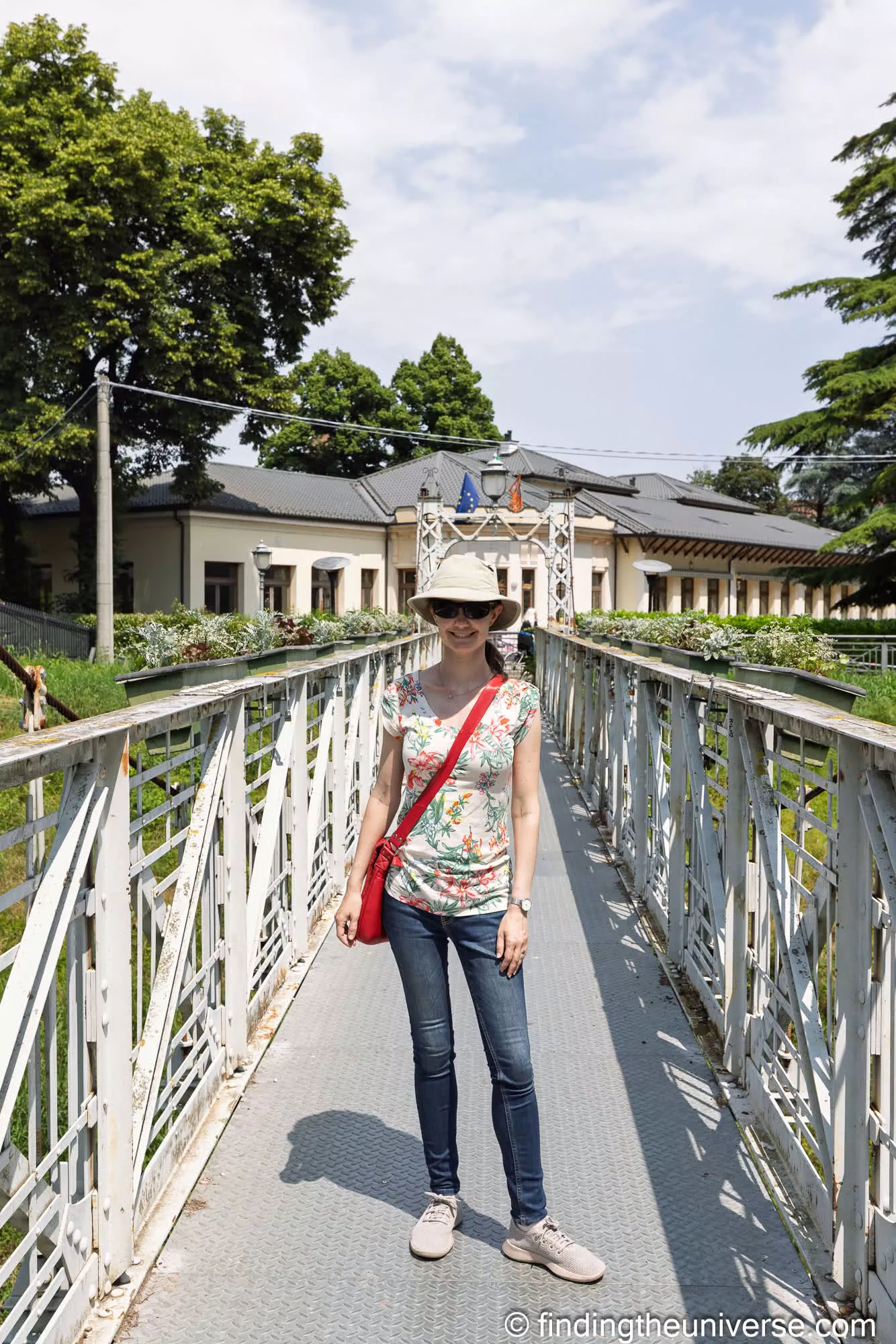
Because Vicenza sits where it does, it’s just as easy to fold in from elsewhere in the region. Padua is under 20 minutes away by fast train, Verona about the same in the other direction, which makes Vicenza a simple stop on a wider Veneto trip rather than only a Venice day out. The station sits a 10 to 15 minute walk south of Piazza dei Signori, and the whole centre is flat and walkable from there.
A Walking Route for One Day in Vicenza
Vicenza’s centre is compact, and you can cross it on foot in 15 minutes, so the route below is a loose morning, midday, and afternoon rather than a stop-by-stop clock. The one fixed point is Villa Rotonda’s weekend opening, so I’ve written it for a Saturday or Sunday, when you can fit the villas in. On a weekday, drop the villas and give the centre and Monte Berico more time instead.
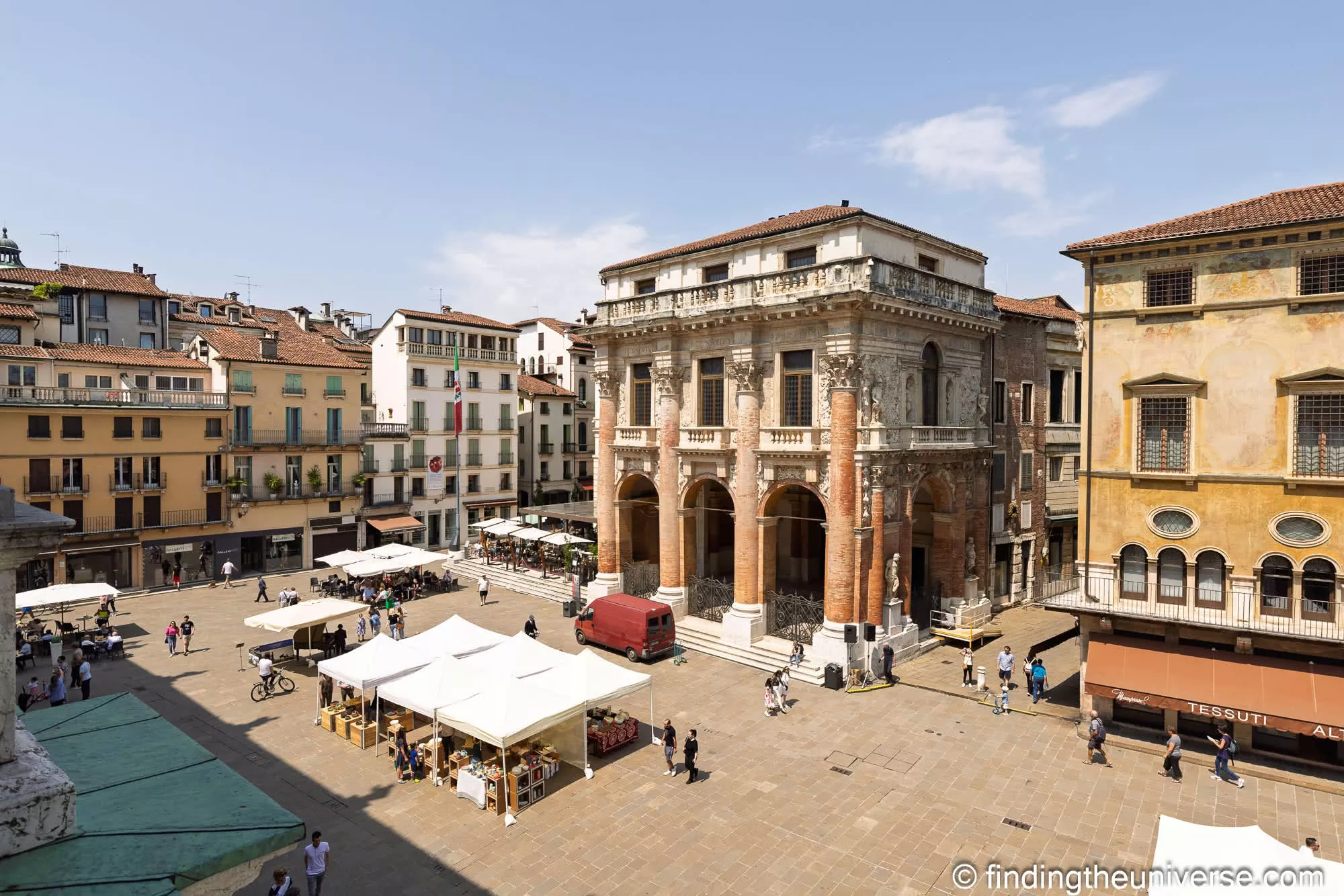
Start your morning at the Teatro Olimpico, near the eastern end of Corso Palladio, and walk straight in. Palazzo Chiericati is a couple of minutes away across the same square, so pair the two while you’re there. Then walk the length of Corso Palladio into the old town, looking up at the palace facades as you go.
By midday you’ll reach Piazza dei Signori, with the Basilica Palladiana’s loggias along one side. Climb to the Basilica terrace if it’s open, then stop for lunch on or near the square, where Vicenza does its eating and its evening spritz. Santa Corona is a short walk north and worth squeezing in for its two great altarpieces.
In the afternoon, head out to the villas. It’s about a 25-minute walk south of the centre to Villa Rotonda, or a short bus ride, with Villa Valmarana ai Nani a few minutes further along the same walled lane. If you’d rather stay in town, swap them for the climb up to Basilica di Monte Berico, where the whole city lays out below you. Finish with an aperitivo back in the squares before your train, or, if you’ve a night here, a slow dinner once the day-trippers have gone.
The Best Things to Do in Vicenza
Here are the sights I’d actually prioritise, in the order they sit on the walking route, starting in the centre and finishing with the villas outside it.
Teatro Olimpico
The Teatro Olimpico is the one sight I’d never skip, and it’s the reason to put Vicenza on your list. It’s the oldest surviving covered theatre in the world, designed by Palladio in 1580, the year he died, and finished by his pupil Vincenzo Scamozzi. The best part is still in place: Scamozzi’s wooden stage set of the streets of Thebes, built for the opening in 1585, with a forced perspective that fakes long receding avenues on a shallow stage. It’s the oldest surviving stage set anywhere, and it has stood there for over four centuries. I photographed it for a good half hour, and it’s the image I’d pick for the whole city.
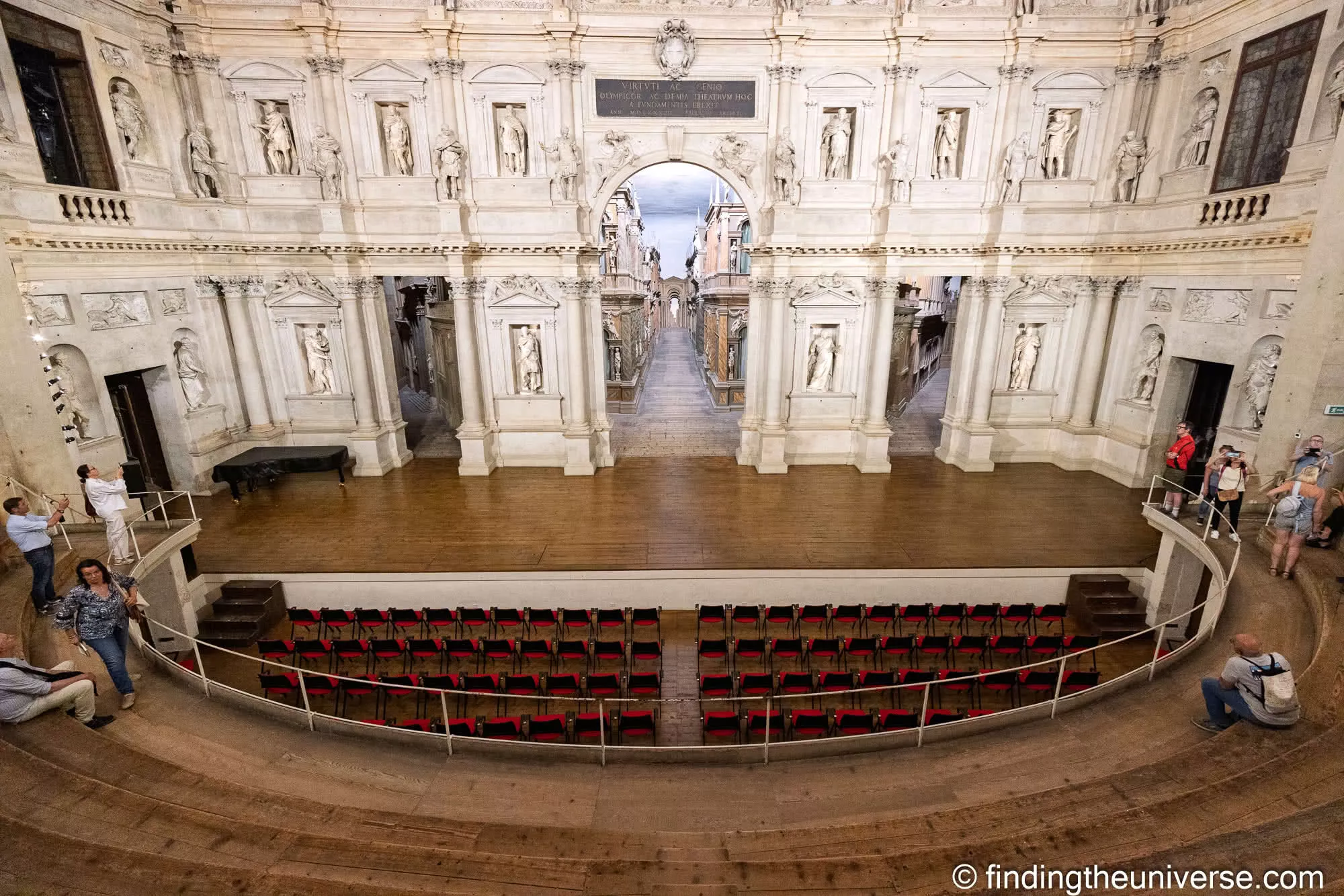
Entry is €12, or it’s covered by either Vicenza Card. You don’t need to book: individual visitors just buy a ticket at the box office and walk in, Tuesday to Sunday, with the theatre closed on Mondays. You can check current hours on the official Teatro Olimpico site. Give it 45 minutes.
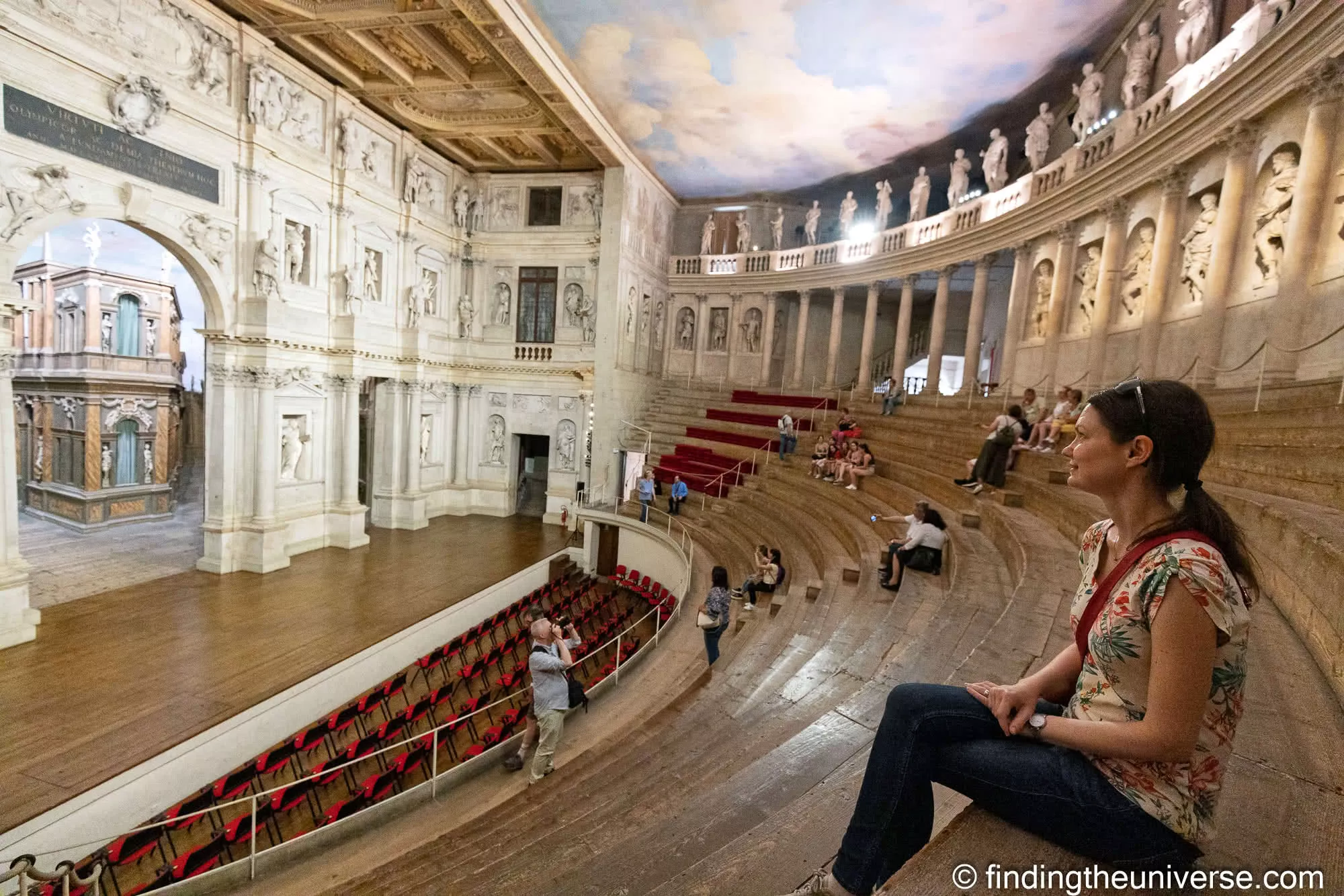
Palazzo Chiericati
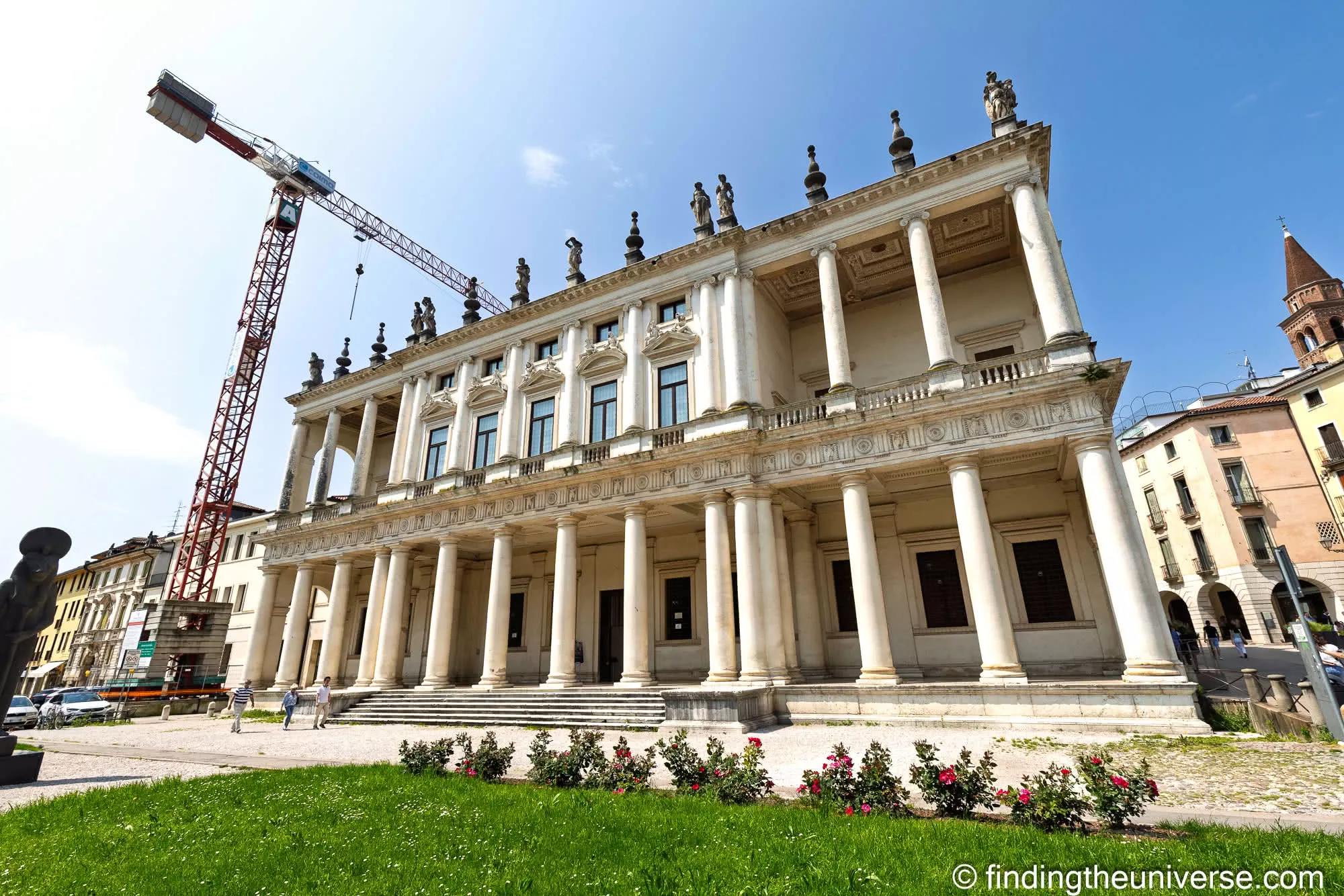
Directly across the square, Palazzo Chiericati is a Palladio palace that now holds the civic art gallery, the Pinacoteca. The building is the draw as much as the collection, an early Palladio design with a long colonnaded front, though inside you’ll find Veneto paintings across several centuries and some grand frescoed ceilings. It’s €8 on a single ticket, or on either card, and open Tuesday to Sunday. Pair it with the theatre and you’ve done the two big Palladio interiors in a single stop.
Basilica Palladiana and Piazza dei Signori
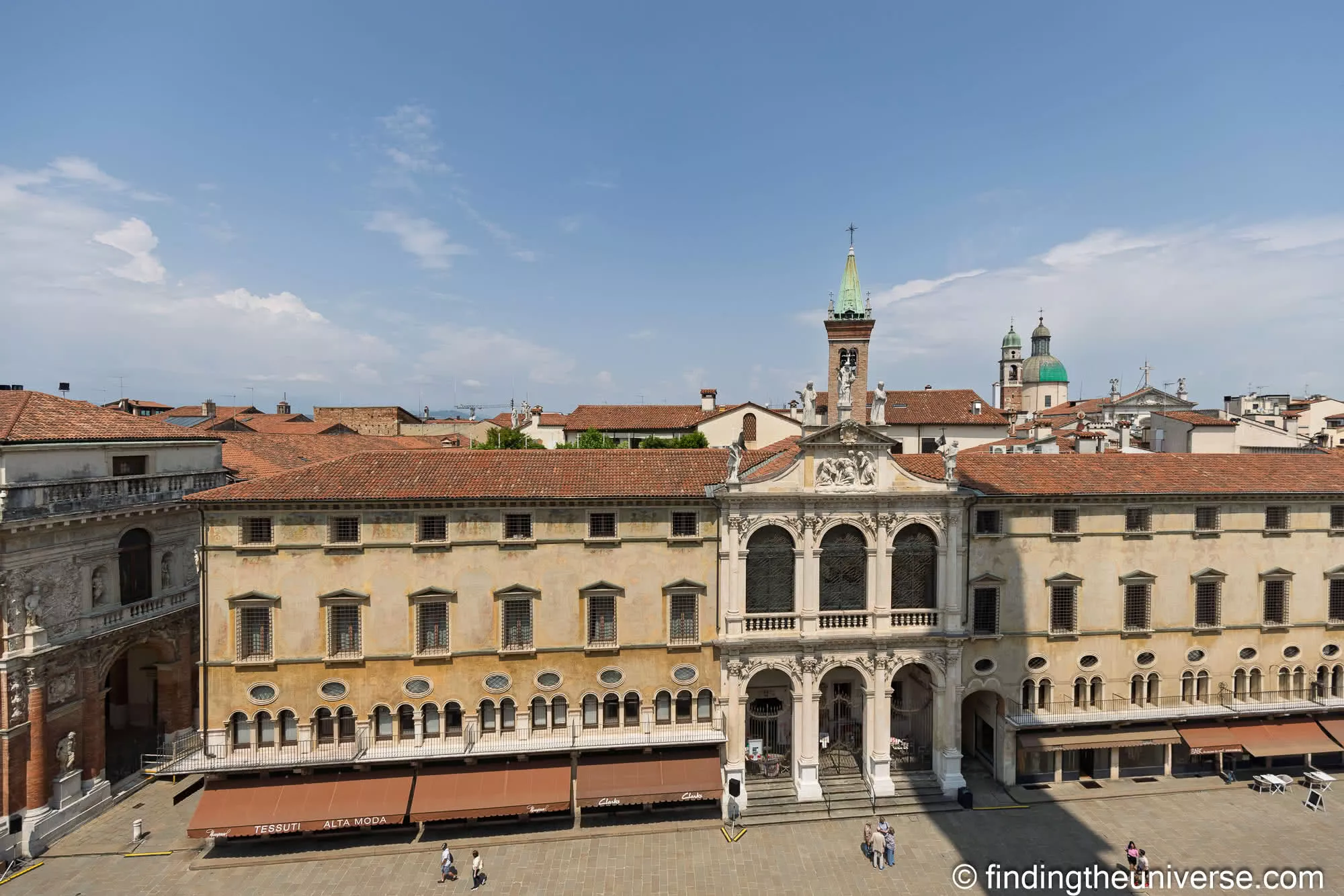
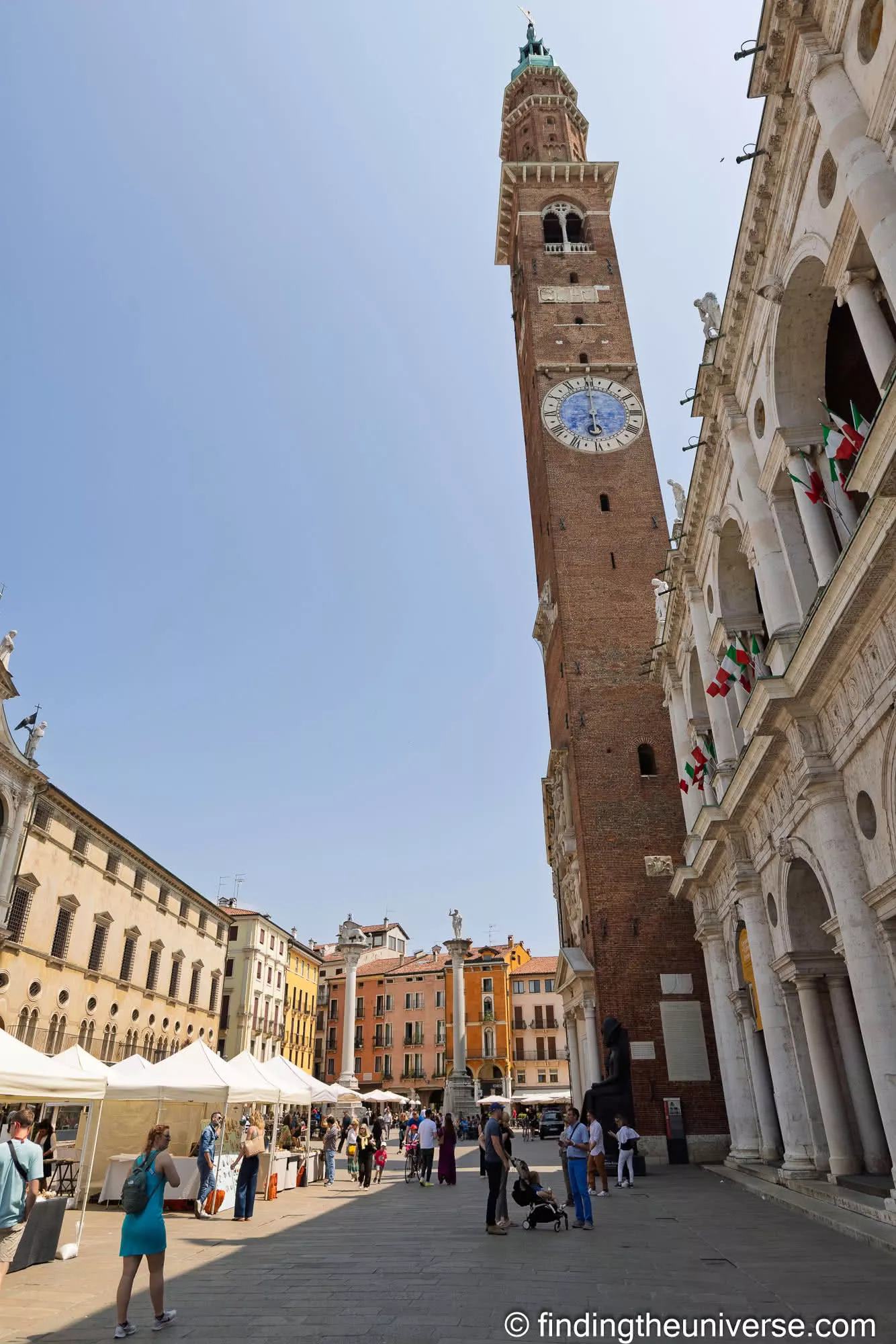
Piazza dei Signori is Vicenza’s living room, and the Basilica Palladiana is the building that wraps one side of it. It isn’t a church, despite the name. It’s the old medieval town hall, which Palladio clad in a double tier of white marble loggias early in his career, and the result made his reputation. Standing in the square looking up at it costs nothing, and the loggias and the piazza are free to wander. The rooftop terrace is ticketed, usually around €6, or about €15 when there’s a big exhibition on inside, which there often is. The slim tower beside it is the Torre Bissara, the tallest thing in the old town.
Corso Palladio
Corso Palladio is the straight street that runs the length of the old centre, and it’s a free open-air museum of 16th-century architecture. Palladio and his followers lined it with palaces, and you can walk it end to end in half an hour, pausing at the ones that catch your eye. It’s also where Vicenza shops and strolls in the evening, so it’s pleasant to walk twice, once for the buildings and once for the passeggiata.
Santa Corona
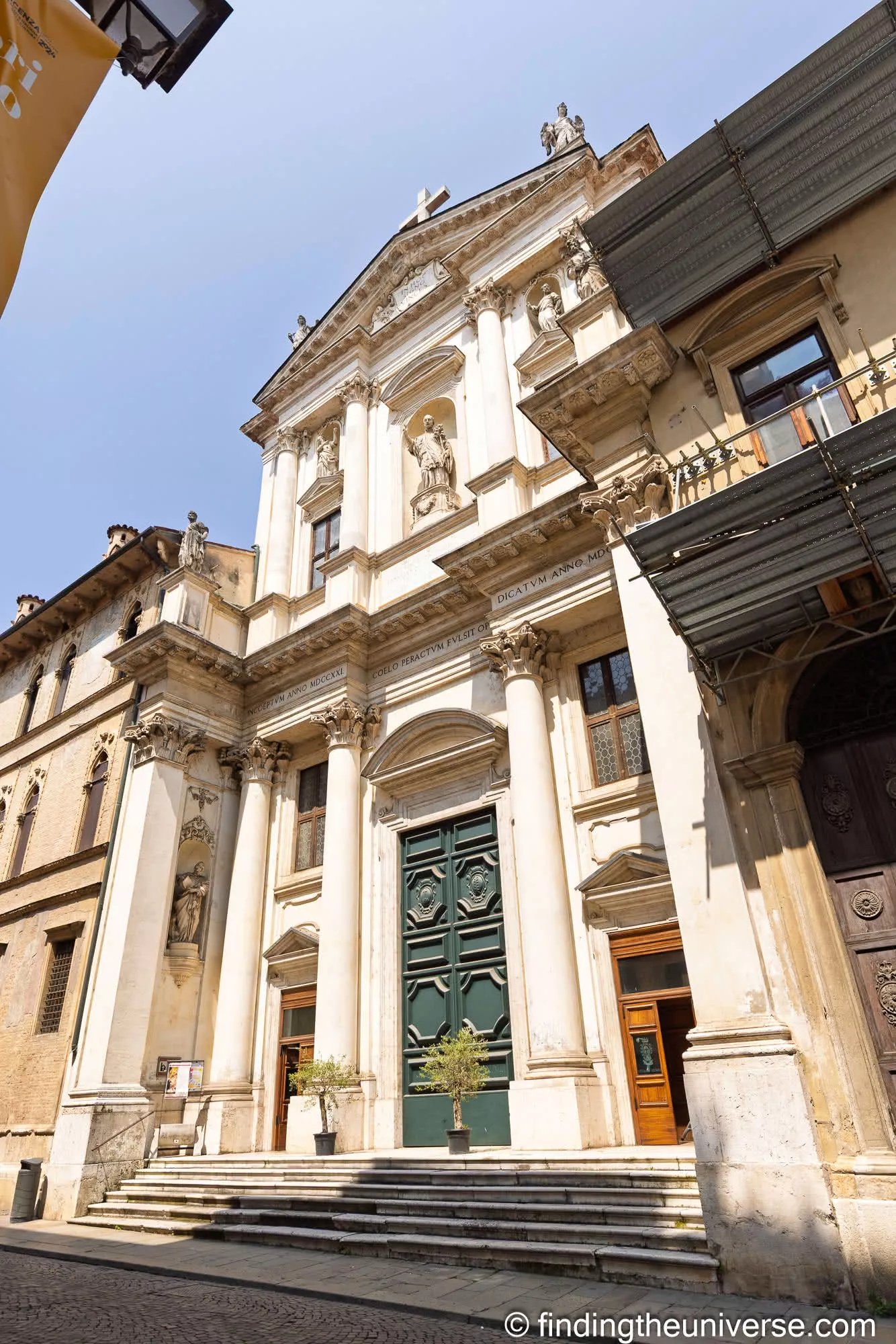
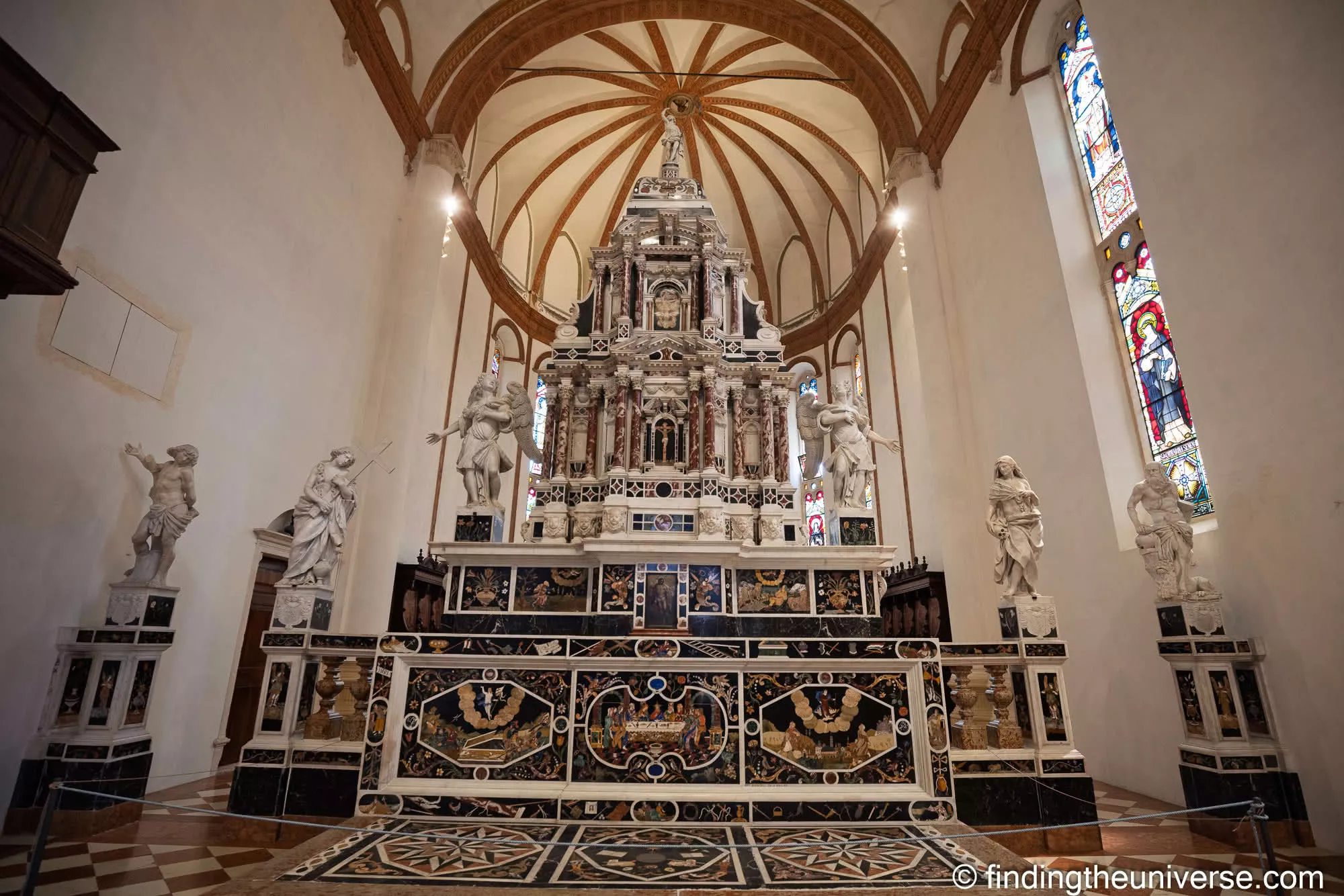
Santa Corona is a Gothic church a short step off Corso Palladio, and it punches well above its size for art. It holds Giovanni Bellini’s Baptism of Christ and Paolo Veronese’s Adoration of the Magi, two altarpieces that would be headline works in most cities. One thing to know: it’s a ticketed civic site now, not a free church, costing around €3 to €4, and it’s on both Vicenza Cards. For two paintings of that quality it’s the easiest yes in town.
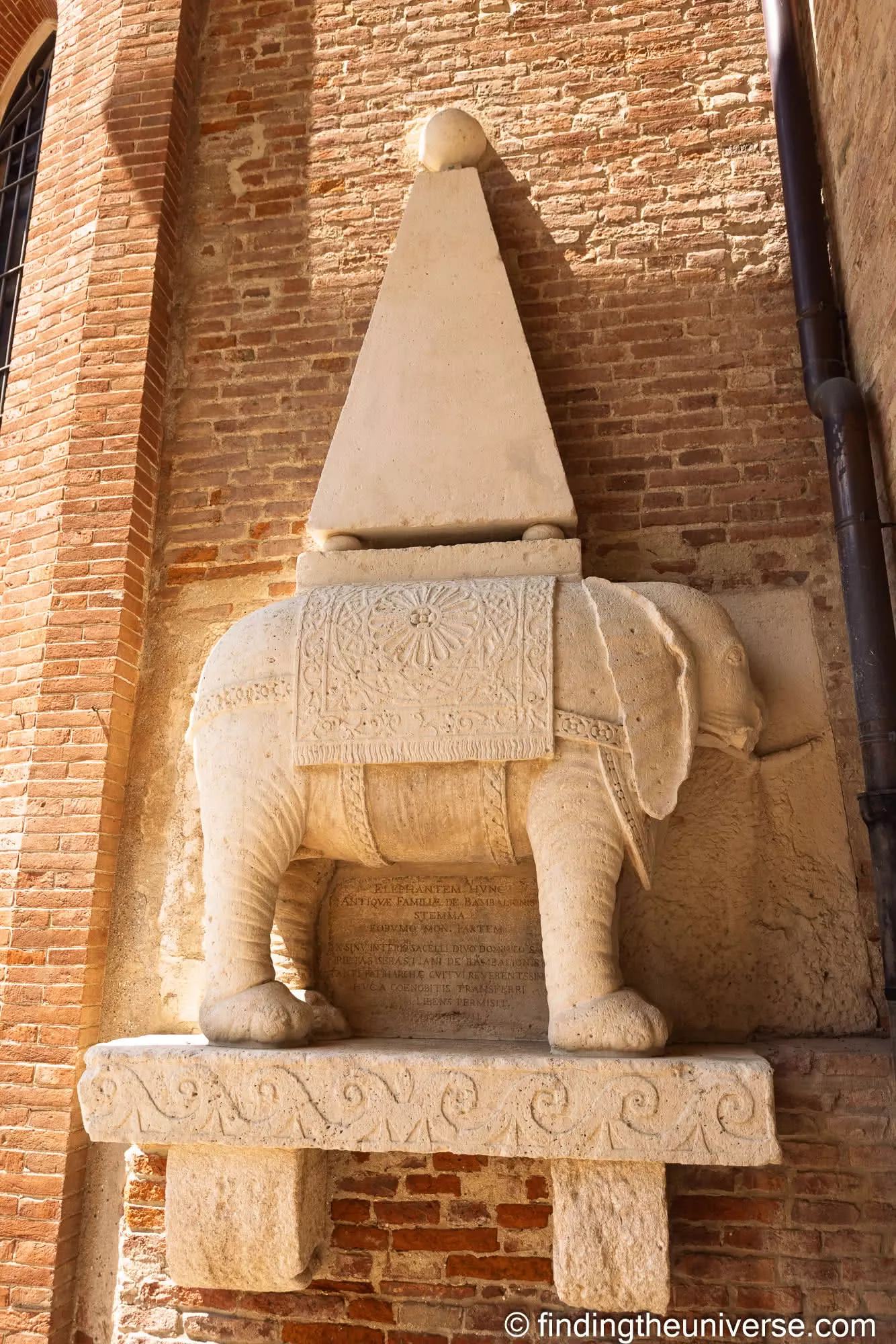
Villa Rotonda
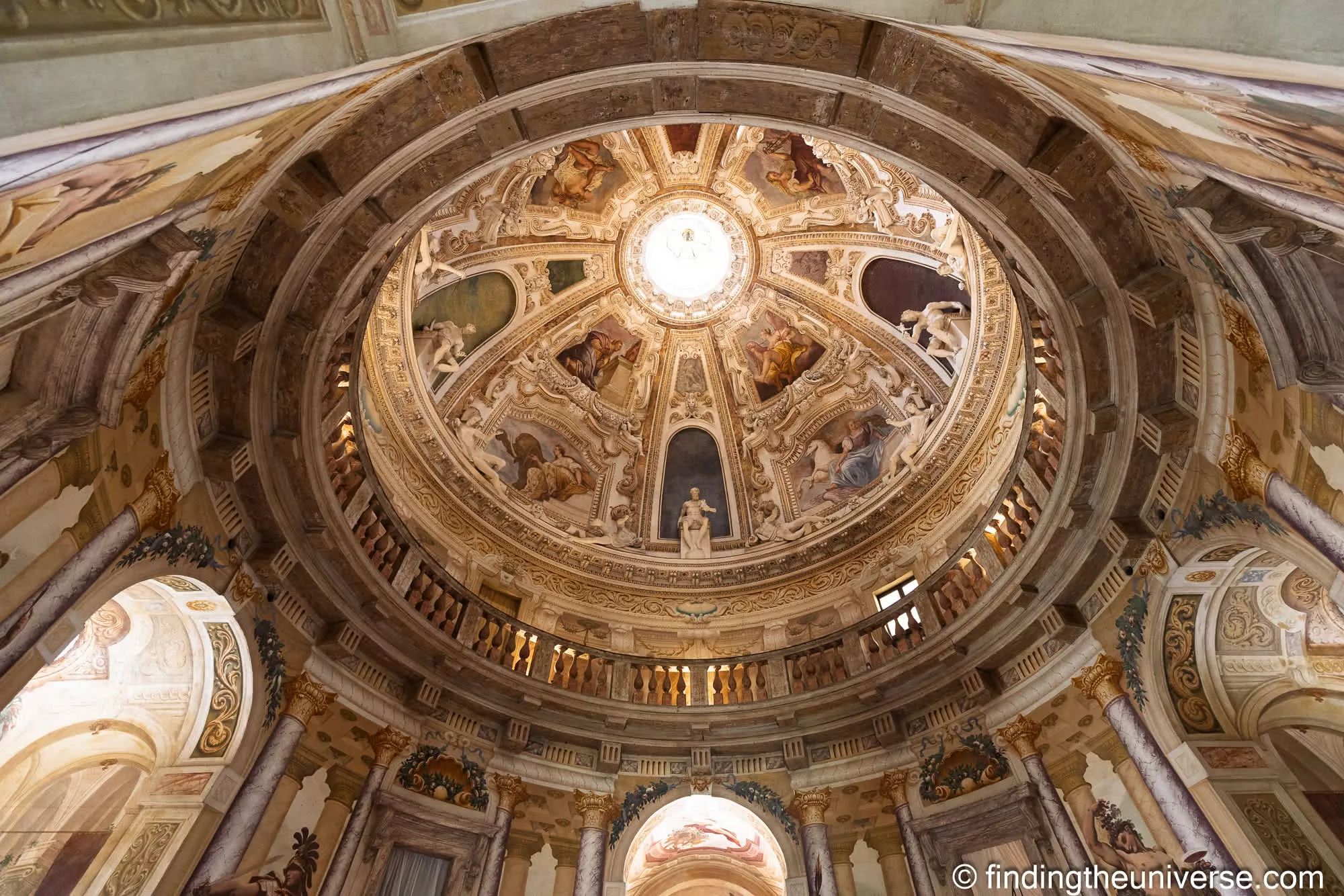
Villa Rotonda is Palladio’s most famous building, and seeing it in person is worth the short trip out of the centre. It’s a perfectly symmetrical villa with a central dome and four identical temple fronts, one on each side, set on a low hill with views in every direction. Palladio designed it around 1567 and Scamozzi completed it, and it has been copied more than almost any building in the world. The standard €15 ticket covers the gardens and the Piano Nobile, the main floor inside under the dome. We timed our visit for a Saturday so we could get in, and the interior is worth the planning. Remember the opening days: Friday to Sunday from April to October, weekends only in March and November, closed otherwise. Check before you go on the official villa site. It’s about a 25-minute walk south of the centre, or a short bus ride.
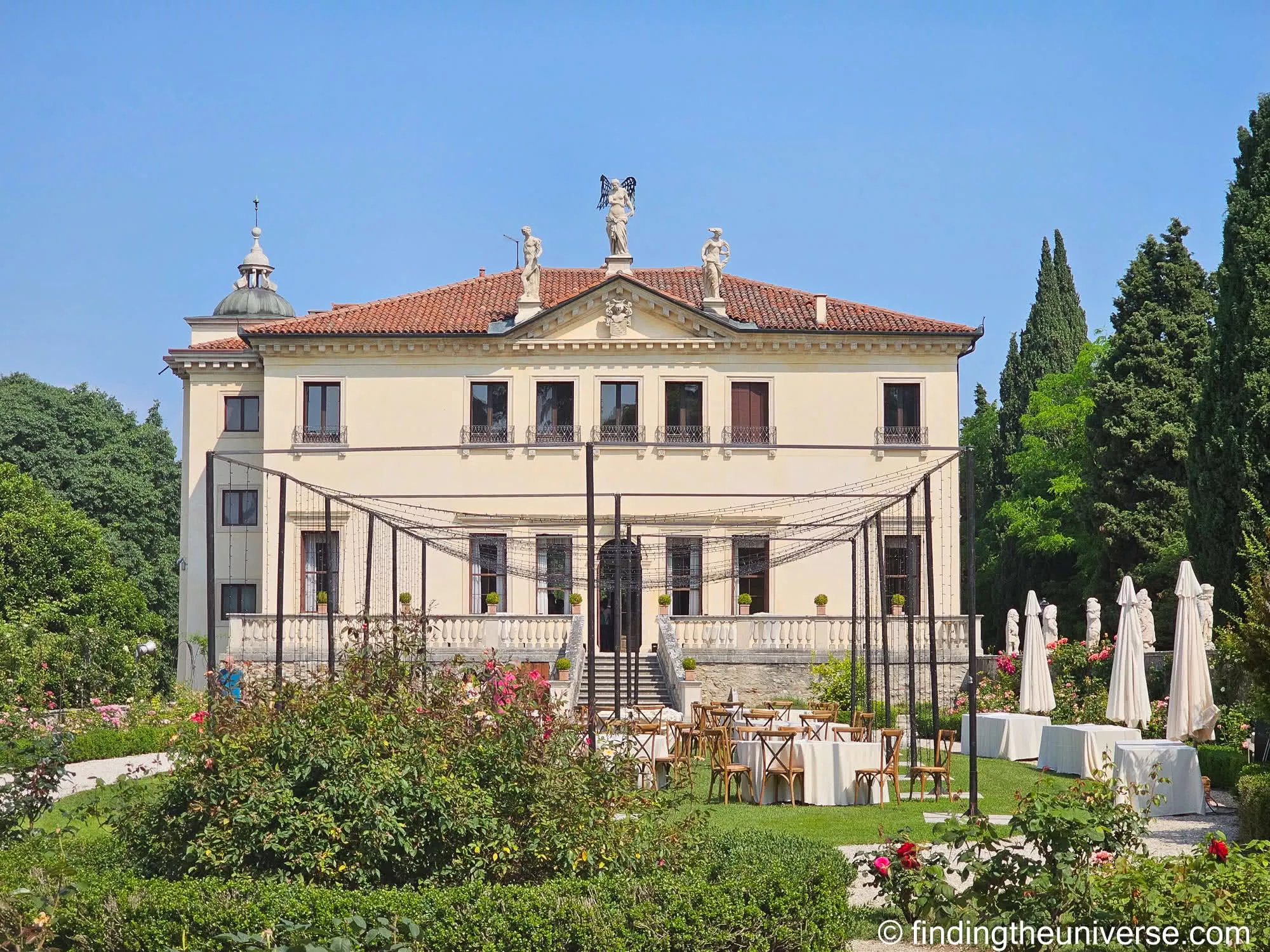
Villa Valmarana ai Nani
A few minutes’ walk from the Rotonda, along the same walled country lane, Villa Valmarana ai Nani is the villa I’d actually push harder if you only have time for one inside. It holds two cycles of frescoes by the Tiepolos: Giambattista in the main house and his son Giandomenico in the guest wing, and they’re some of the finest 18th-century frescoes you’ll see anywhere. The odd name, “of the dwarves,” comes from the stone dwarf statues lining the garden wall. Entry is €15, or €8 for the park only, and it keeps friendlier hours than the Rotonda, open daily through the season. Details are on the villa’s own site.
Basilica di Monte Berico and More in the Centre
If you skip the villas, or you’ve an extra hour, walk up to the Basilica di Monte Berico, the hilltop sanctuary that looks down over Vicenza. The church is free, and the view across the rooftops to the hills behind is the best panorama of the city. You can take the SVT bus (line 18) up from the centre, or climb the covered arcade of the Scalette, an 18th-century portico that zigzags up the hillside. Just remember it’s a working sanctuary, so visits pause during services. You can check times on the sanctuary’s site.
Back in town, two more are worth your time if the day allows: the Gallerie d’Italia at Palazzo Leoni Montanari, a Baroque palace of Veneto painting and Russian icons that’s on the GOLD card, and the Duomo, Vicenza’s cathedral. Neither is essential on a first short visit, but both fill an afternoon nicely if you’ve bought the GOLD card and want your money’s worth.
Should You Stay in Vicenza?
Most people do Vicenza as a day trip, and for a first visit that’s the right call. But we stayed a night and didn’t regret it. Once the day-trippers leave on the late afternoon trains, the squares belong to the locals, the evening passeggiata fills Corso Palladio, and you get the city at its best with an aperitivo in hand. Rooms are a fraction of Venice prices too, so if you want a calm, cheap Veneto base for a couple of days of day trips, Vicenza makes a sensible one.
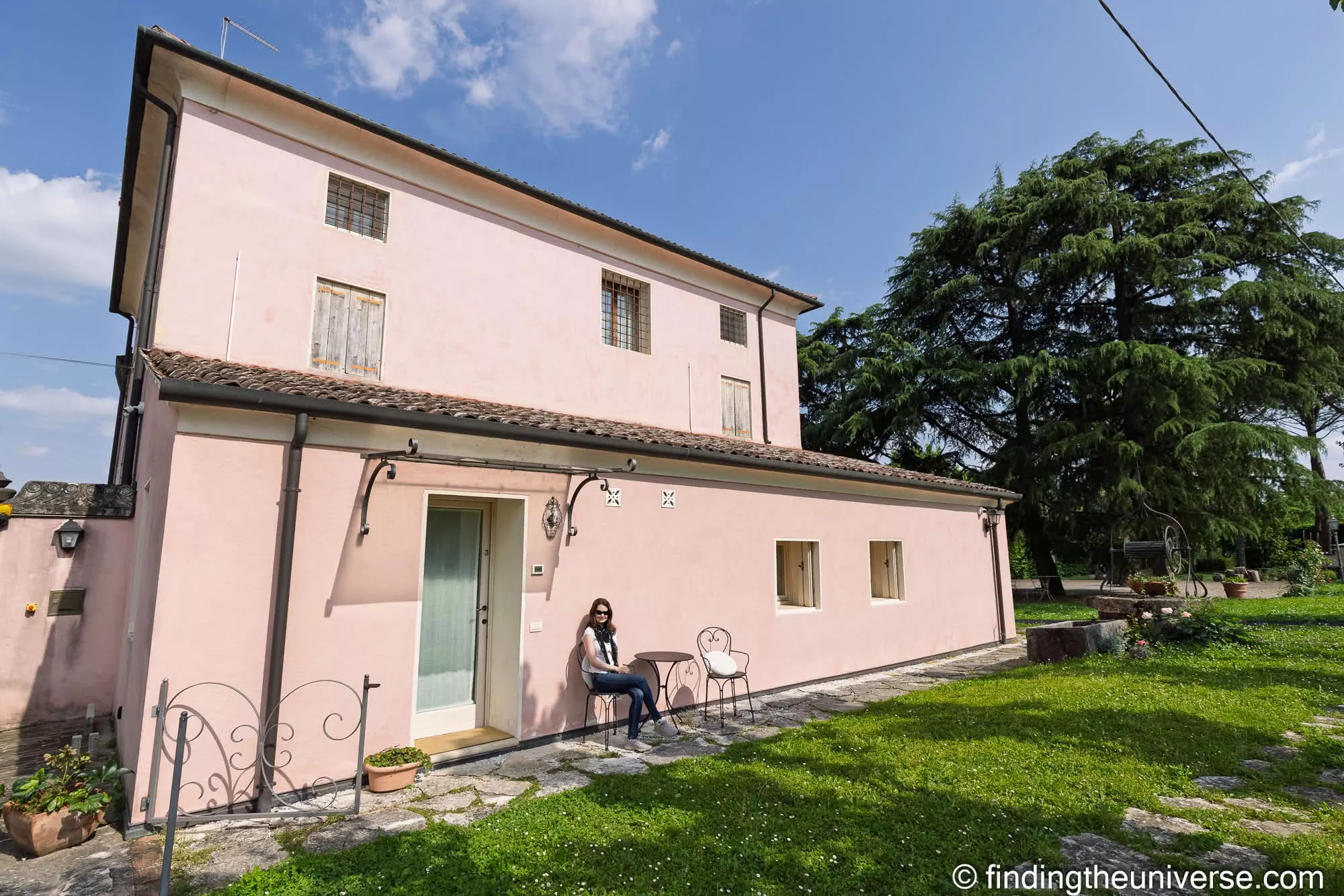
We based ourselves just outside town at Agriturismo San Michele, a farm stay in the quiet countryside a short walk from Villa Rotonda, which made the villa morning effortless. There’s free parking and a garden looking onto the fields, and after a day in the crowds, waking up out here rather than on a city street was a real pleasure. It’s the calm, countryside end of the choice.
If you’d rather be in the centre, in easy reach of that evening aperitivo, three places stand out. Antico Hotel Vicenza sits a minute from the Basilica Palladiana, with a small rooftop terrace over the tiles. The Glam Boutique Hotel is a smaller, more stylish option a couple of hundred metres from the Teatro Olimpico. And Hotel Campo Marzio is the easiest arrival of the three, a few steps from both the pedestrian centre and the station, which makes it a tidy base if you’re hopping around the Veneto by train. For more choice across every budget, browse the full spread of Vicenza hotels on Booking.com.
What We’d Do Differently in Vicenza
A few things we learned from our own day there, so yours runs smoother.
Come on a weekend if the villas matter to you. We did, and it was the right move, because a weekday visit means seeing Villa Rotonda over the fence. If you can’t make a weekend work, plan the day around the centre and Monte Berico and let the Rotonda be a photo from the road.
Work out your ticket before you arrive, not at the first box office. Decide roughly how many civic sites you’re doing, then buy the SILVER card for a focused half-day or the GOLD card for a full one. For most day-trippers the SILVER card is the right answer, and it’s cheaper than the two headline singles anyway.
Don’t pay for a guided tour or a skip-the-line ticket on reflex. Vicenza has neither the crowds nor the booking traps that make those worth it elsewhere. The money is better spent on the two villa entries, which the cards don’t cover.
And give yourself the evening if you can. The best hour in Vicenza comes after the day-trippers leave, when the light goes gold on the Basilica’s marble and the squares fill up. That’s the bit a rushed day trip misses.
Vicenza Day Trip: FAQ
Is Vicenza worth visiting?
Vicenza is worth visiting, above all for its architecture. It’s the home city of Andrea Palladio and a UNESCO World Heritage site, with his theatre, basilica, and villas all within easy reach.
If you love grand buildings, give it a full day. If architecture isn’t your thing, it’s a pleasant half-day stop on the train line between Padua and Verona rather than a reason to travel.
How long do you need in Vicenza?
One full day is enough to see the best of Vicenza’s centre, including the Teatro Olimpico, Palazzo Chiericati, the Basilica Palladiana, and Santa Corona.
Add the Palladian villas just outside town and it stretches to a day and a half, which is why some people stay a night. The historic centre is compact and flat, so you cover a lot on foot without rushing.
Which Vicenza Card is worth buying?
For most visitors the SILVER card is the best value. At €16 it covers any four of the eleven civic-museum sites over eight days, and it already costs less than buying single tickets for the Teatro Olimpico and Palazzo Chiericati alone.
If you plan to visit five or more sites, buy the GOLD card instead, which is €22 for all eleven over twelve days. Note that the two villas, Villa Rotonda and Villa Valmarana, are privately run and not on either card.
When can you visit Villa Rotonda?
Villa Rotonda’s interior and grounds are open Friday to Sunday from April to October, and Saturday and Sunday only in March and November. It’s closed Monday to Thursday for most of the year.
The €15 ticket covers the gardens and the main floor inside. If you want to get in, plan your Vicenza visit for a weekend, because this is the one fixed point in an otherwise flexible day.
Do you need to book the Teatro Olimpico in advance?
No, you don’t need to book the Teatro Olimpico. Individual visitors simply buy a ticket at the box office and walk in, with no timed slot or reservation required.
It’s open Tuesday to Sunday and closed on Mondays, and a single ticket is €12, or it’s included on both Vicenza Cards. This is part of why Vicenza is an easier day trip than Padua, where the Scrovegni Chapel must be pre-booked.
How do you get from Venice to Vicenza?
You get from Venice to Vicenza by train, and there are frequent services all day. Regional trains take about an hour to an hour and twenty and cost from around €6 to €7 one way, while high-speed trains do it in roughly 25 to 45 minutes for more.
Vicenza sits on the main line between Padua and Verona, so it’s also a quick hop from either of those cities. For a day trip, the regional train is the best value.
What is Vicenza famous for?
Vicenza is famous as the city of Andrea Palladio, the 16th-century architect whose work shaped grand buildings across Europe and America. His Teatro Olimpico, the Basilica Palladiana, and the Villa Rotonda are the headline sights.
The whole city, along with its Palladian villas, is inscribed as a UNESCO World Heritage site, “City of Vicenza and the Palladian Villas of the Veneto.”
Further Reading and Resources
If you’re building a wider trip around Vicenza, these guides cover the same corner of Italy:
- Day trips from Venice, which ranks Vicenza against all the other options from the lagoon.
- Our one day in Padua guide and two days in Verona, the two cities that pair best with a Vicenza stop.
- Our two days in Venice itinerary and 10-day Italy itinerary for the bigger picture.
For a paper guidebook to carry along, we’ve used the Rick Steves Italy guide for years. It’s the one I’d pack for a trip that strings together Venice and the towns around it.
Been to Vicenza, or planning a day there and have a question? Leave a comment below and I’ll do my best to help.






 English (US) ·