
 1 month ago
30
1 month ago
30
The small mountain village of Salento has become a staple of Colombia itineraries, being the most convenient place from which to visit the nearby Cocora Valley, home of the world’s tallest wax palms.
These trees reach up to 60+ meters (200 feet) and spear up from the ground like massive sailing masts all around the valley. It’s a surreal and wondrous sight, especially when seen at sunset or when shrouded in the morning mist.
While Cocora Valley is spacious and hasn’t lost its charm, Salento is becoming an increasingly busy tourist town. Because of this, let me highlight some alternatives to Salento for a calmer or more local experience.
 No, not in Cocora Valley… but another hidden location with unbelievable palm trees
Is Salento worth visiting?
In my opinion, yes. Just know that it’s becoming primarily a tourist town. The map is increasingly densely dotted with hostels, B&Bs and hotels, and you’ll see fleets of jeeps known as “Willys” ferrying tourists back and forth to Cocora Valley.
With about ten years between my two visits to Salento I’ve seen the transformation happen. I won’t be that grumpy “it’s changed” guy, but it has objectively gone from a sleepy coffee town to a buzzing global tourism hub.
This has been a lot to absorb for a town with a population of just over 7,000 — and gentrification has become an issue with many locals moving to other towns.
 Salento from its main viewpoint | ibrester / Depositphotos
Salento has lately attained fame beyond just Cocora Valley. It has itself been going viral online, now being pitched as the source of inspiration behind the Disney film Encanto. So, I expect Salento’s development to continue.
Aesthetically, the town is actually nicer now as many more buildings have been renovated or turned into beautiful boutique businesses. However, it arguably has less local ‘soul’ than before.
If you’re not too bothered by this, then Salento is still great. Overcrowding is not really an issue in my view, just touristification. (But it’s a lot busier on weekends when domestic tourists arrive.) However, if you’re a picky traveller or you’re simply interested in other options, then there are in fact several excellent ones to know about.
Allow me to spill the frijoles.
 Colorful Filandia, not far from Salento
TL;DR – Salento alternatives
There are several other ways to experience the coffee region or see amazingly tall wax palm trees in Colombia. And in some cases, you really don’t have to look all that far!
- If you’re just looking for that coffee town aeshetic but a little more lowkey, you have dozens of options. Check my guide to the Colombia coffee region which covers 7 other wonderful places in the region — and there are many more speckled around the “coffee triangle”.
- If you want to visit the famous Cocora Valley but are considering staying somewhere else nearby, check out laidback Filandia. It’s tourist-friendly and has the same kind of colorful architecture, but with more tranquility. It’s only 30 minutes to Salento or 50 min to Cocora.
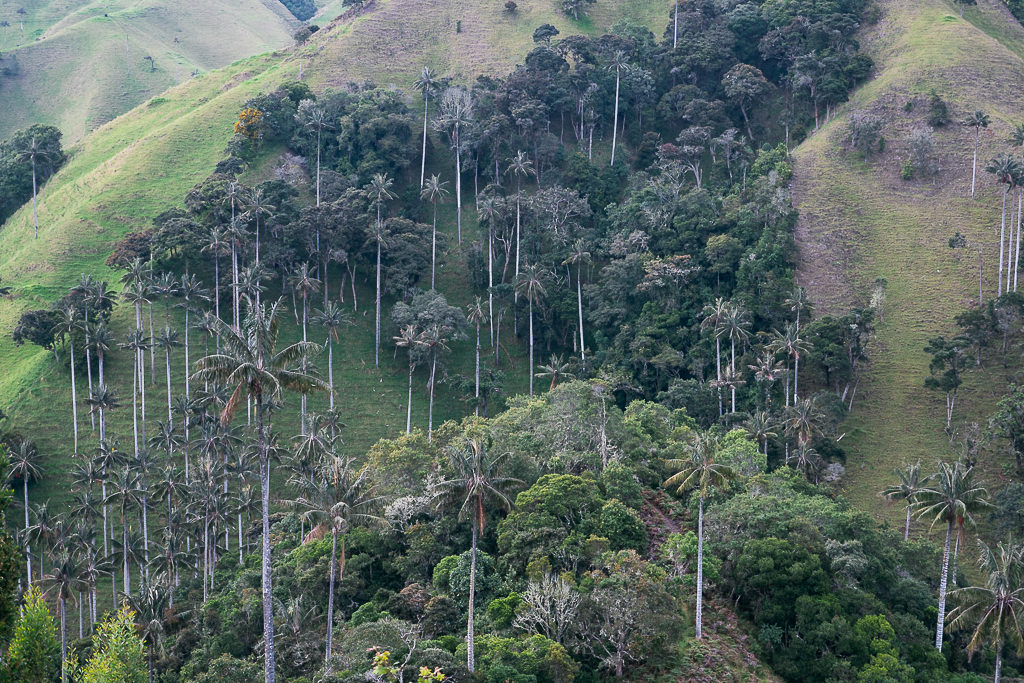
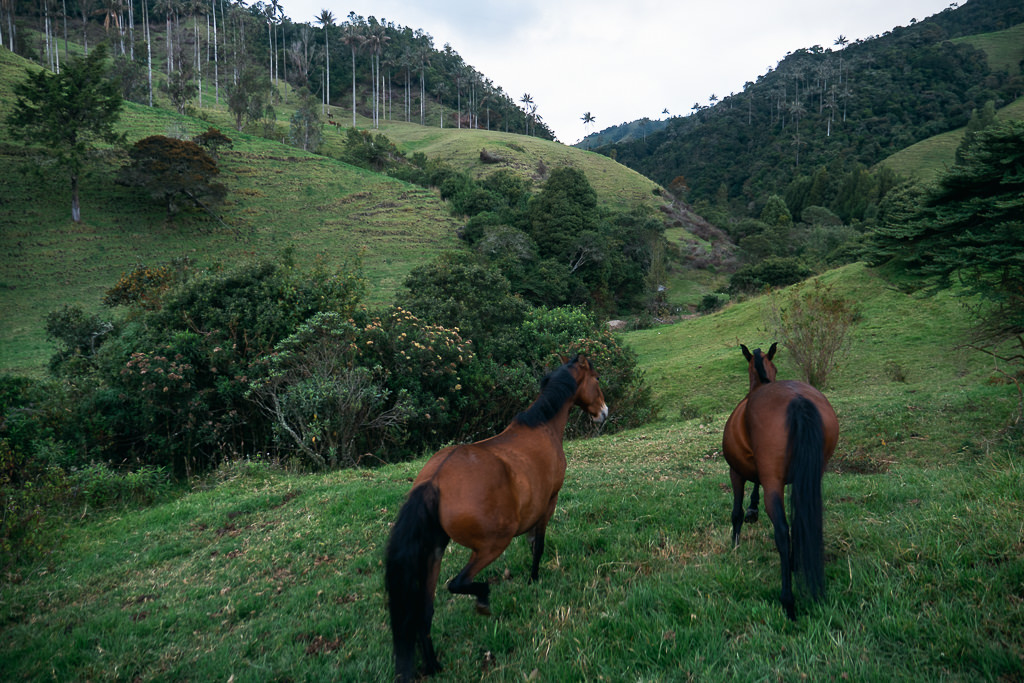
- For the dedicated traveller, there is also Valle de la Samaria. It’s another wax palm valley that feels practically undiscovered. Transportation does take three seperate steps and it’s quite “off the beaten path”, but it’s a great little adventure. You may just find yourself alone in nature here.
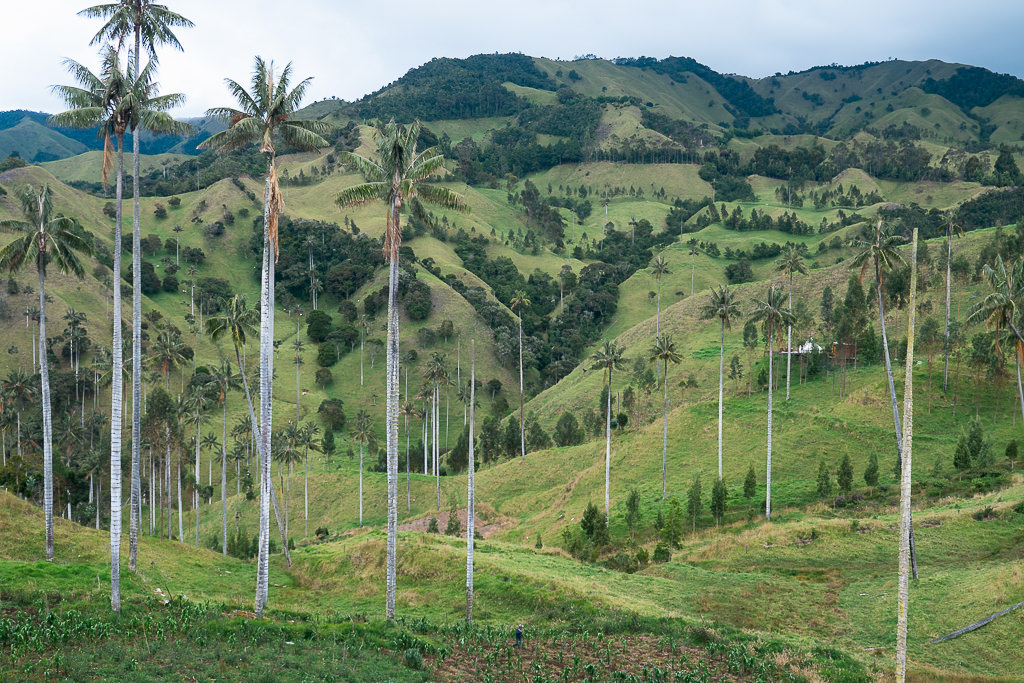 Valle de Samaria
Alternative 1: Filandia & Cocora Valley
Filandia is a colorful town just a 30-minute drive from Salento, and 50 minutes from Cocora Valley.
It has a well-developed culinary scene and third-wave cafes serving single-origin brews (the origin often being “right here”), but the streets are quieter than Salento. To me it felt like basically a ‘low touristy’ place where the hospitality industry is present and inviting but hasn’t fully taken over.
The colourful colonial town rests on top of a hill overlooking the rolling green hills of the coffee region. A string of restaurants on the north side offer stunning sunset views of the landscape in addition to some amazing food — in particular, don’t miss Helena Adentro or Cultivar.
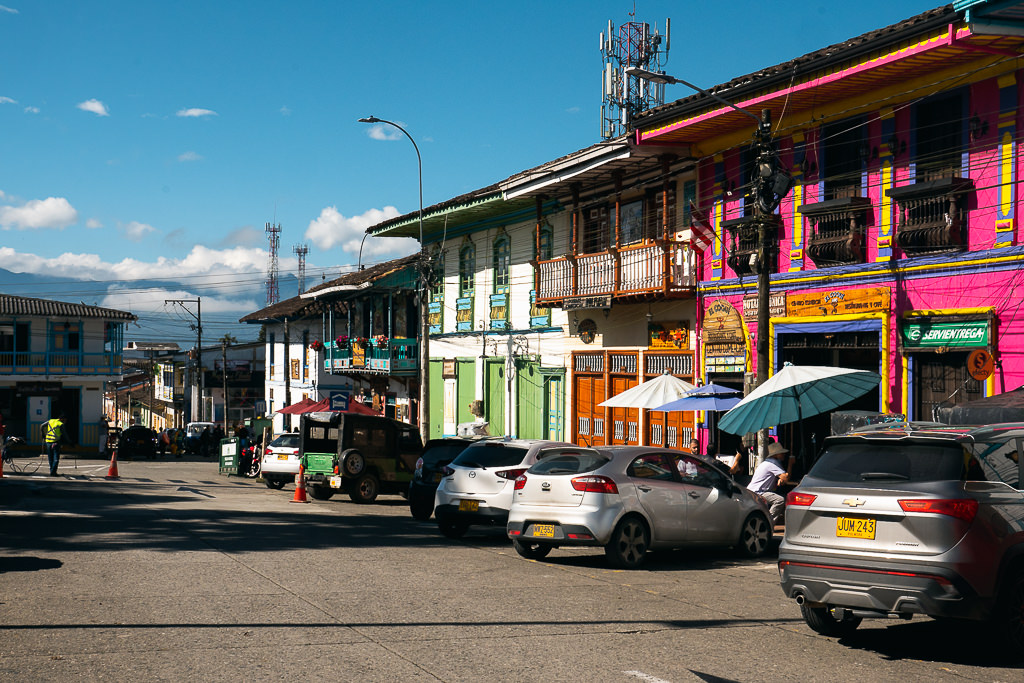
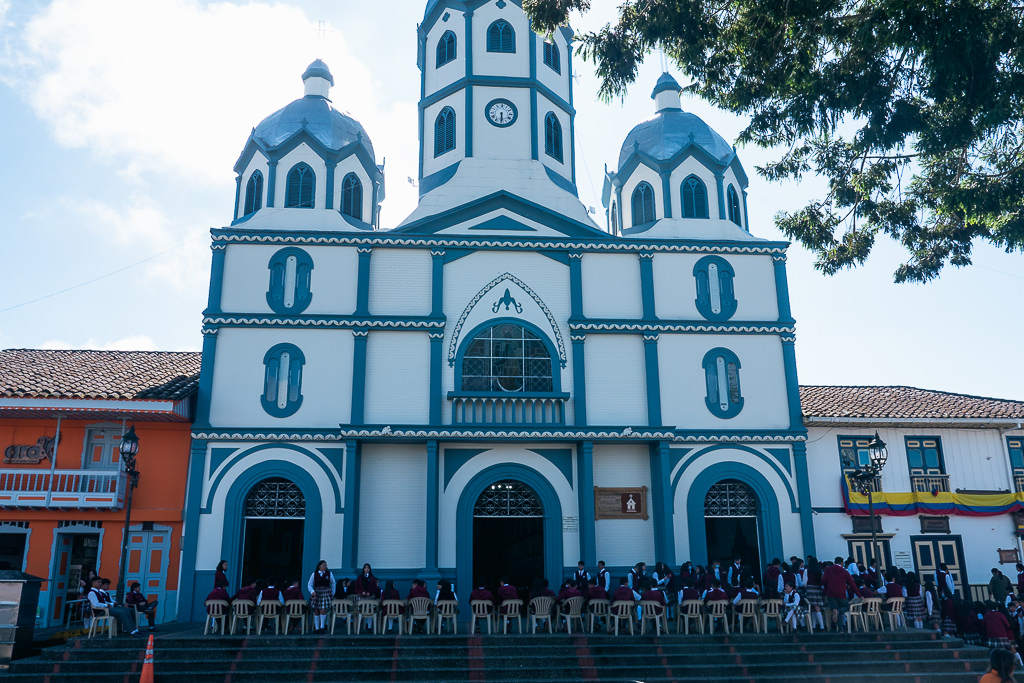

I stayed at Bidea Hostel, a cozy hostel with a great atmosphere that I can highly recommend if you’re on a budget. For something a little more upscale, I suggest the boutique hotel El Reloj Casa.
What I love about Filandia is that there is enough here to do to stay for several days adter you’ve done your day trip to Cocora Valley.
Around Filandia you can visit nearby coffee farms, go mountain biking to the town of Quimbaya, hike to hidden waterfalls, or visit the Barbas-Bremen reserve where you have a chance at spotting howler monkeys. I describe these activities in more detail in my coffee region guide (link goes to the Filandia section).
I rented a bicycle in order to better explore the town and its surroundings. Taking a random turn, I ended up at a cow market where cowboy hat and poncho-wearing ranchers were busy auctioning their cattle. The fabric of local life here still seems very much intact.
I should mention that Filandia is a popular weekend destination for Colombians, so you can expect it to be a bit busier then. However, this just makes it more fun and lively, rather than being a nuisance.
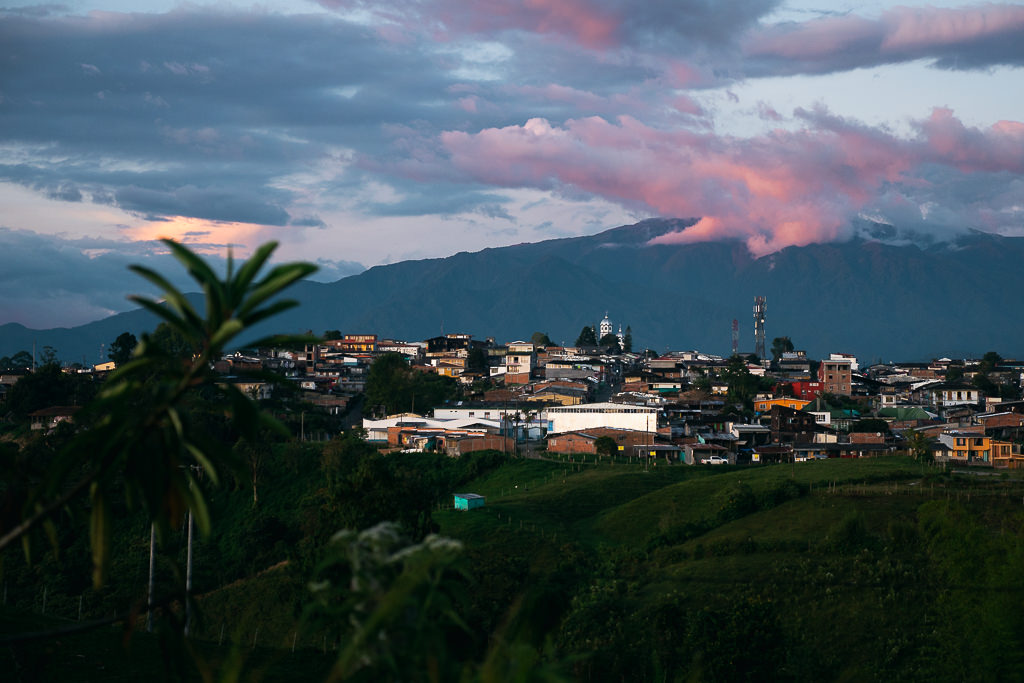
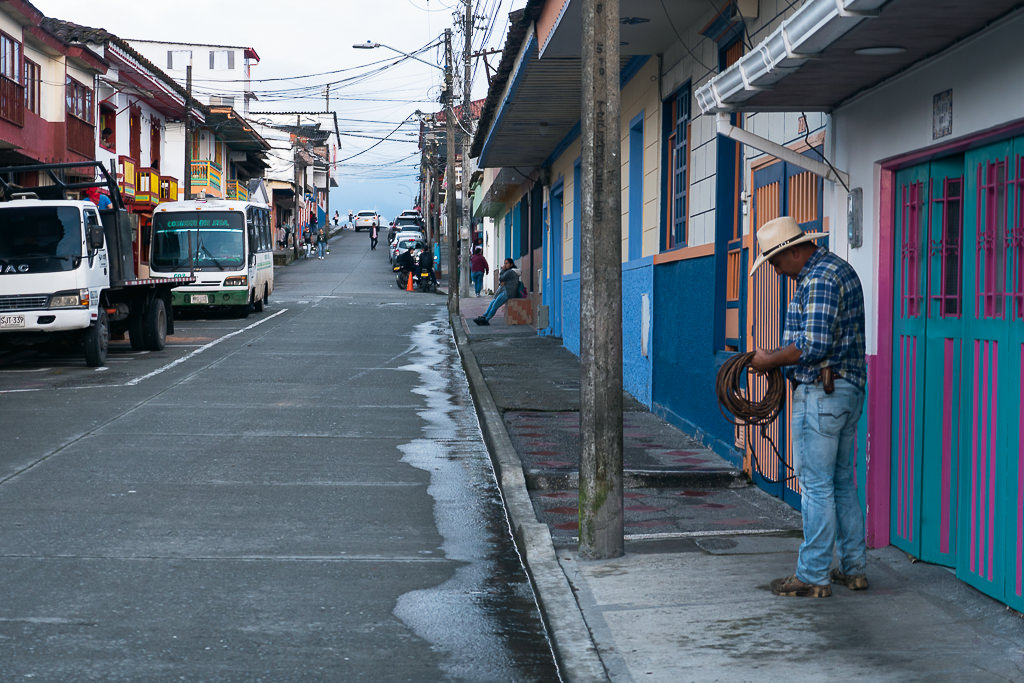
How to get to Filandia
It’s easiest to get to Filandia from the city of Armenia. From the Armenia bus terminal, there are services to Filandia about every 20 minutes. The journey takes about 45 minutes. You can also take a bus from Pereira, but these go only about once every hour.
Tip: if you’re coming to Armenia from the direction of Pereira or Manizales, you can ask to get off at Las Cruces. It’s just a road crossing, but there are a couple of shops/restaurants; wait there for the bus to Filandia. This can cut about an hour from your journey time.
How to get to Cocora from Filandia
There’s a direct jeep service from Filandia to Salento. The jeeps depart from the main square of Filandia at 8.40 am, 10.40 am, 12.40 om, 14.10 pm, 16.10 pm and 18.10pm. It costs 5,500 COP one way and takes about 40 minutes.
Get another jeep to Cocora Valley in the main square of Salento, or you can hike there (a loop around the valley takes about 4 hours to hike). A trip with one of the “Willy” jeeps to the valley should cost around 8,000-10,000 COP round trip.
Alternative 2: Salamina & Valle de la Samaria
Okay, now we are truly talking ‘secret’ as it seems almost no one on the Colombia backpacker trail has heard of these places. While the trip here takes several steps, if you’re motivated to see something different and off the usual travel route, it’ll be highly worth it.
Update: There is now also an easier way. This new organized tour from Manizales takes you direct to Valle de la Samaria, stopping the towns of Neira, Aranzazu, and Salamina. It’s quite a pricey tour, but it does cut out the bus, local jeep, and hike and makes it possible to see Valle de la Samaria on a single day trip.
Salamina is a small town in the coffee-growing region with colourful colonial-era houses. Despite being recognized as one of the heritage towns of Colombia, it has as of yet gone unrecognized in the usual travel itineraries through this region.
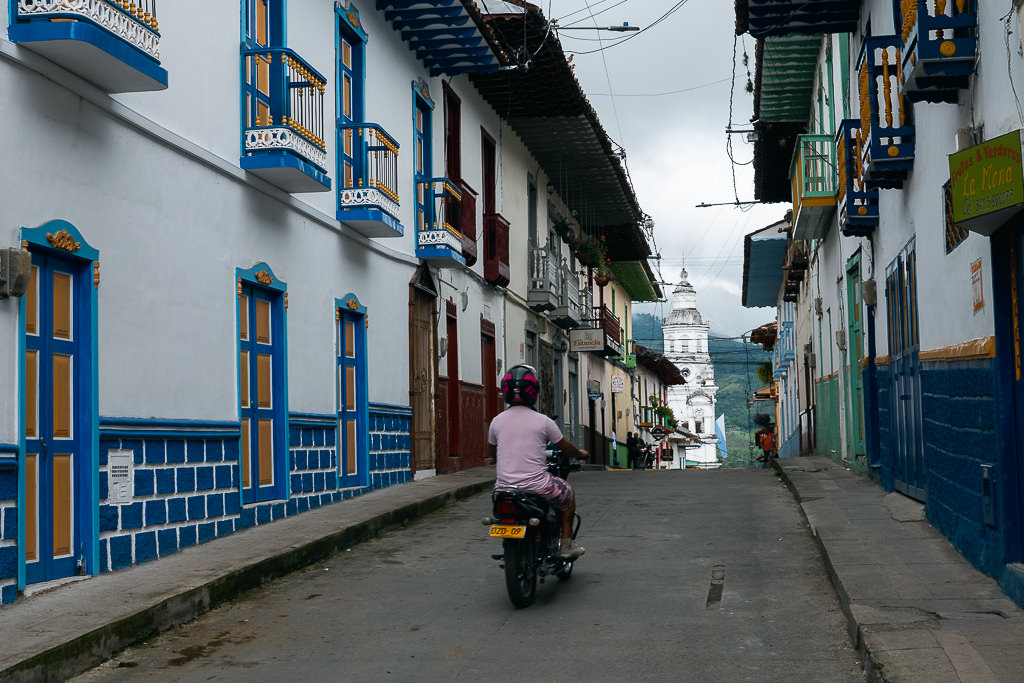
The town sits pretty on top of a mountain with gorgeous views in every direction. There aren’t that many activities you can do, at least in terms of off-the-shelf organized activities, but you can do your own hikes in nature.
It’s also fun just to walk around and see all the jeeps loaded with bananas, ranchers shopping for new hats at the artisanal hat shop, and other scenes of local life.


The authentic town in itself is a reason to come, though it’s also from here that you can reach the Valle de la Samaria, which is a wonderful secluded alternative to the Valle de Cocora. To get there, you first have to travel from Samaria to the village of San Felix.
I stayed at Bonsai Hotel Salamina, which seems to be the main choice for budget travellers. The rooms are decent, the owners very friendly, and the balcony at the back offers lovely views.
For a more upscale option, consider the Boutique Hotel La Leyenda 1860, which features a central courtyard inside a heritage building.
It’s possible to visit the valley on a day trip from Salamina. It takes about 1,5 hours by jeep to San Felix, from where you can hike 90 minutes or so to the main viewing point from where you can see all the wax palm trees (or you could try to find a taxi in Sal Felix). Make sure you check the departure times for the jeeps as I was told the last one back is usually at 5 pm (however, another blog mentions 2 pm, hence you may want to check this with local sources).
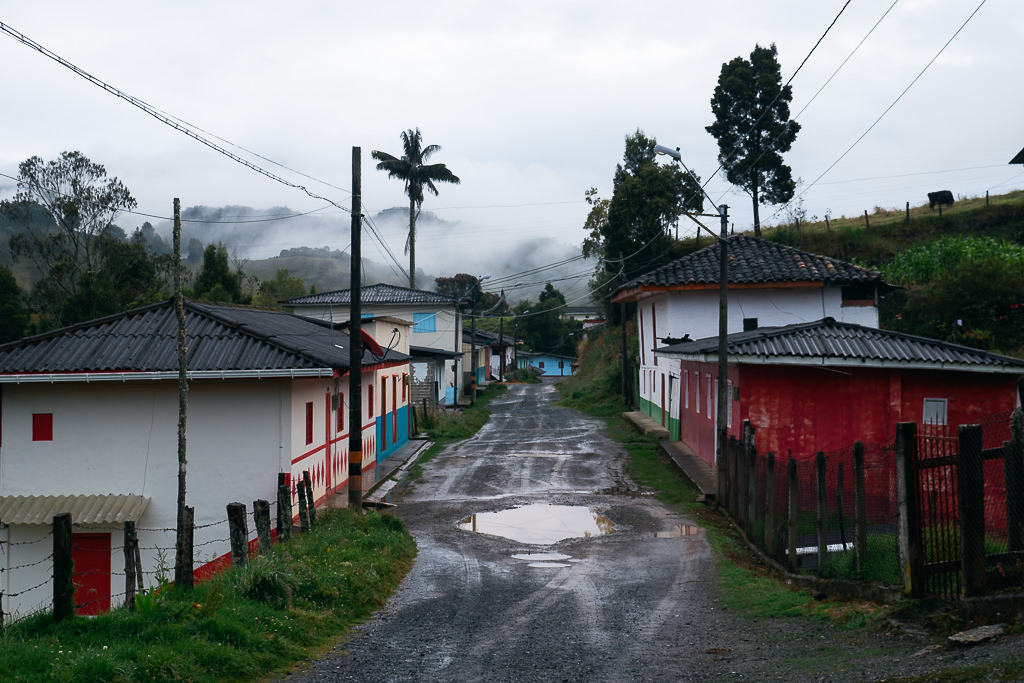
I opted instead to stay the night in San Felix. It’s a very small village; it has maybe only 3 restaurants, one convenience store, and about 3 places to sleep. It was fun to be in this rather low-profile village. Staying the night also gave me the chance to be in Valle de la Samaria at sunset without having to rush back to catch the last jeep.
In San Felix, I stayed at Hostal Casa Tucan, which is essentially a residential house turned into a guesthouse. It’s one of the only places to stay inside the town and it was practical for my purposes, though it’s better to stay in the eco hotels outside of town if you want to be in nature.
It’s an easy hike from San Felix to the valley (there are signs clearly showing the way). Be sure to stop at Mirador Valle de la Samaria, an eco-hotel and conservation project, where you can learn about the wax palm tree and the local ecology. For 5000 pesos, you can get a brief tour of their gardens and facilities.
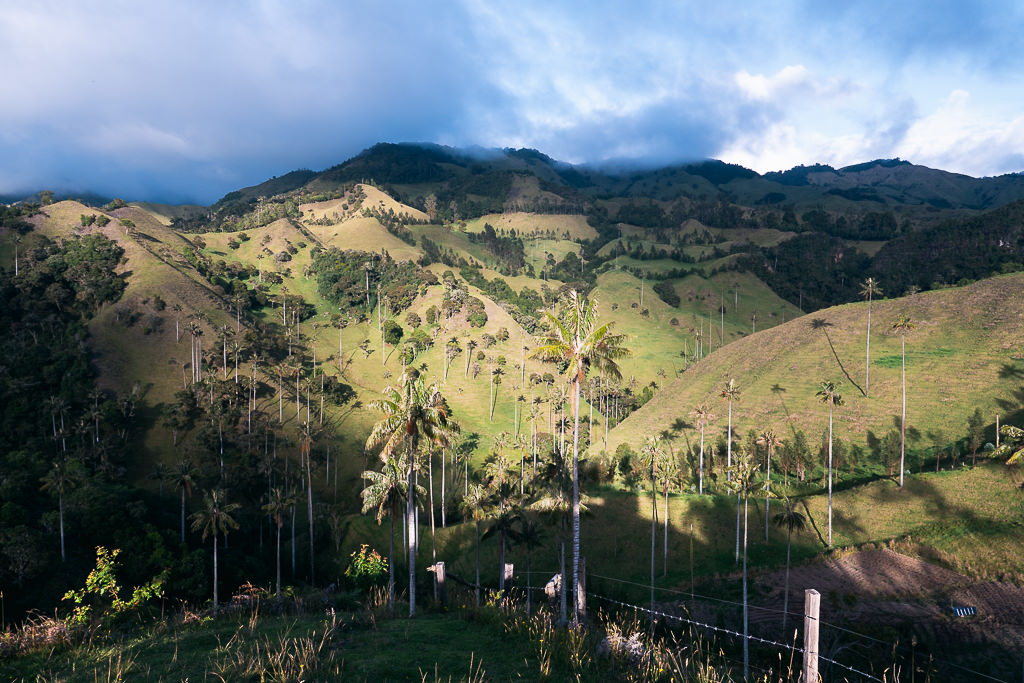
The owners are passionate about preserving and restoring the forest. They have a program for people to adopt a palm tree, which will get nurtured until large enough to grow on its own.
A big problem here and at Valle de Cocora is that the wax palm trees are not actually meant to stand alone! They would normally be inside a forest where they are much more protected. In the open fields, the palm trees’ seeds will wither easily in the sun or get eaten by cows.
At the Mirador Valle de la Samaria, they ensure that seedlings and young plants will have the shade (and protection from cattle) they need to grow, so the landscape can be preserved for future generations.
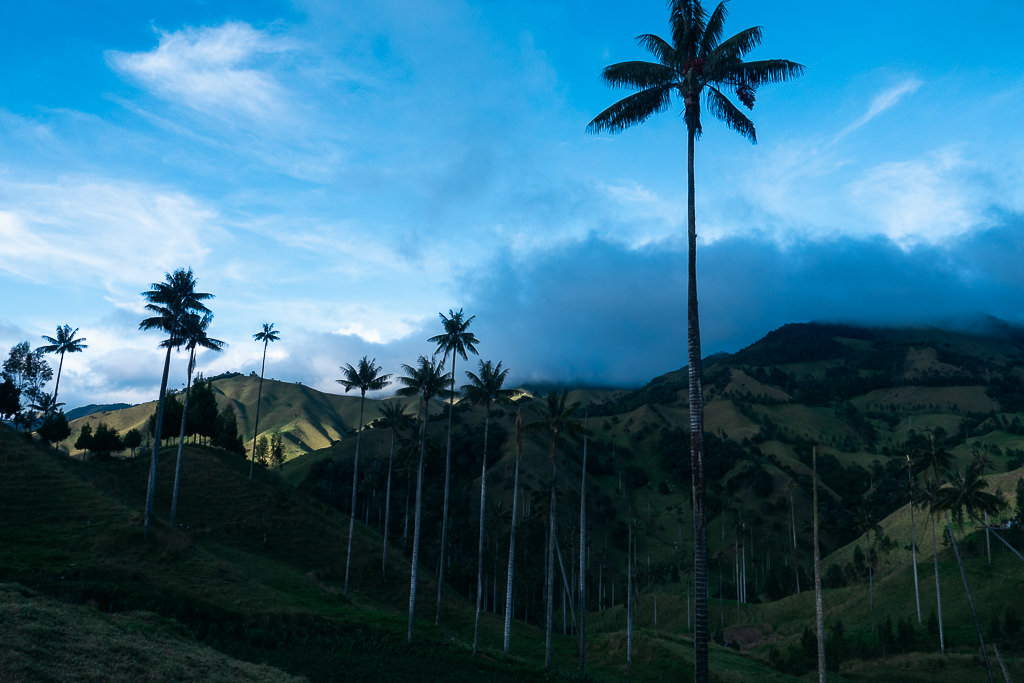


I made it to the viewpoint during sunset, which was simply glorious. It was utterly tranquil, only hearing the chatter of parakeets and parrots that make this valley their home and that feed off the palm trees.
I was kicking myself for not having enough time on my trip to stay the night as it’s such a magical spot. Mirador Valle de la Samaria offers several accommodation options, including a dorm, several cabins, and a totally secluded glamping tent offering panoptic views of the valley. Guests are served meals cooked using organic vegetables from the garden.
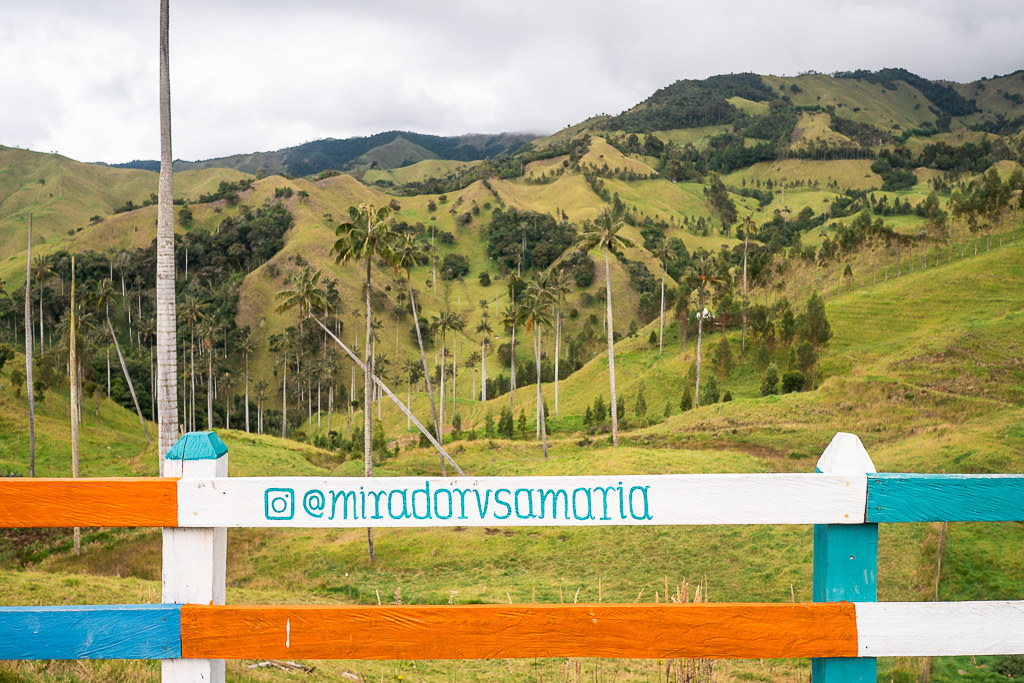
There is no WiFi at the eco-hotel; being in nature with barely another soul around is the main attraction here. Besides enjoying the views from the hotel, you can take a 3-hour circular hiking route around the valley (this is different from the hike to and from San Felix).
Bookings via Whatsapp only, which you can find on their Instagram account. If it’s full, consider a stay at the nearby Eco Hotel Valle de la Samaria.
How to get to Salamina
It’s easiest to go via the city of Manizales. At the Manizales bus terminal, you can jump on a minibus to Salamina, or take a shared taxi. Four different companies run bus services and the journey usually takes 3 hours. The taxi service has its own desk where the bus tickets are also sold; the price is fixed at a reasonable 26,500 pesos. It takes about 1,5 hours by taxi with departures all day until 5.30 pm.
Alternative route: take a bus from Medellin or Jardin to Manizales, but get off early at the tiny village of La Felisa. From here it takes three local taxis or Chivas via other towns up to Salamina. I was dissuaded from doing this by a bus driver who made it sound difficult, but I later heard that it can be a really wonderful adventure (just quite slow). With this route, you’ll skip the city and only travel through the mountains.
How to get from Salamina to San Felix
Jeeps to San Felix depart next to Salamina’s central marketplace (it’s marked on OpenStreetMap apps like Maps.me or Organic Maps). They go several times a day; inquire locally at the tourist office for the exact times. The trip takes about 1,5 hours. Taxis don’t go there as the largely gravel road requires a 4-wheel drive. Try to sit at the back of the jeep for the best views!
From San Felix, the first jeep in the morning to Salamina goes at 7 am. There is also a minibus at 6.30 am that does the trip in about 1 hour; after a 10-minute stop in Salamina, it continues to Manizales.
How to get from San Felix to Valle de la Samaria
It takes about 1.5 to 2 hours to hike there (one way). It’s a lovely hike along a dirt road, only a little uphill. You’ll see many palm trees all along the way. If you ask around in San Felix, you can also find a taxi to the viewing point, which should cost about 20,000 pesos one-way and take 15 minutes.
Alternative 3: Tochecito & Valle de Cauca
Finally, for completion’s sake I want to mention a third alternative to Salento: the little-known Toche (or Tochecito). It is located next to what is actually the largest concentration of wax palm trees in Colombia. While I ran out of time time to go here myself, I thought it useful to highlight this potential other option.
In Valle de Cocora there are about 2,000 wax palms. In Tochecito, there are estimated to be over 600,000. However, in Tochecito more of the palm trees are inside the forest, rather than standing alone.
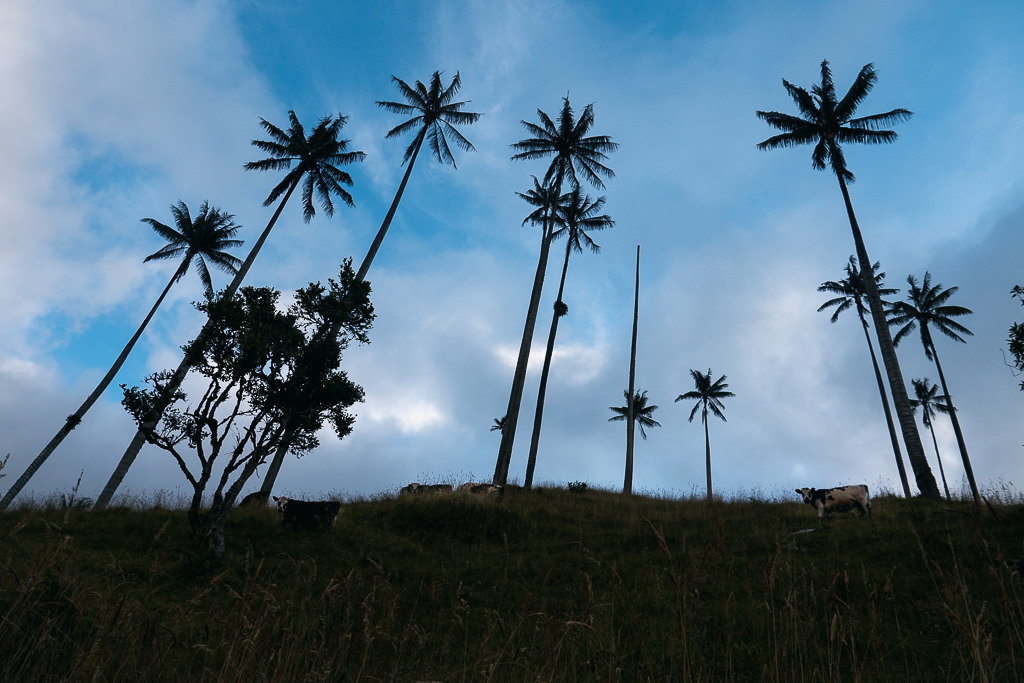
Tochecito was actually once a dangerous no-go area, long contested between government forces and FARC rebels. But that was over a decade ago and now the area is safe. This situation did keep Tochecito off the travel map, which is why it’s still less well known.
You can read more about the enormous palm forest in this article from a Colombian newspaper or this piece in the New York Times. The conflict kept scientists away for decades until it was finally safe enough to return to study the wax palms.
Valle de Cauca is also near Volcan Machin, which everyone will tell you is “one of the most dangerous volcanoes”. Its last known activity was actually 800 years ago. What this distinction really means is that, if it were to erupt again, it would do so rather violently. Remarkably, there is a farm located right inside the crater.
You could go to Valle de Cauca independently if you have your own transportation by following the rural road from Salento. A few companies also run tours to the wax palm forests and/or Volcan Machin.
For accommodation, I was told to check out Hostal Faldas del Machín or the Santuario de Palma Las Cruces. They don’t appear on booking platforms so you may have to call them to make a reservation.
That’s it for my wrap-up of Salento alternatives. Intrigued to go a little off path? Then jump into my in-depth guide to the Zona Cafetera, where I highlight other hidden gems including Pijao, Jardin and Jerico.
Note: I travelled in 2022 and fully updated this guide in 2026 with more context on Salento’s development, updated prices, and a new tour option for Valle de Samaria. You can read more about our approach to updating here.
















 English (US) ·