
 1 month ago
58
1 month ago
58
I’ve been coming to Chester since I was a child, and as a professional photographer I’ve since shot most of its landmarks on countless trips, on my own and with Jess. It started with my parents bringing me here for shopping days out: a lot of standing around while clothes were tried on in one shop after another, redeemed only by a nice lunch somewhere. I did not enjoy it one bit. Through slightly more aged eyes, though, I completely get why they chose Chester, and quite how lovely it is to wander around once you take the clothes shopping out of the equation.
From the two miles of Roman and medieval walls you can walk in a full circuit to the black-and-white galleries of the Rows, the Eastgate Clock, the cathedral, the Roman amphitheatre and the River Dee, this is a first-timer’s day in Chester, with a steer on where to point your camera and a frank answer to the question everyone actually types into Google first.
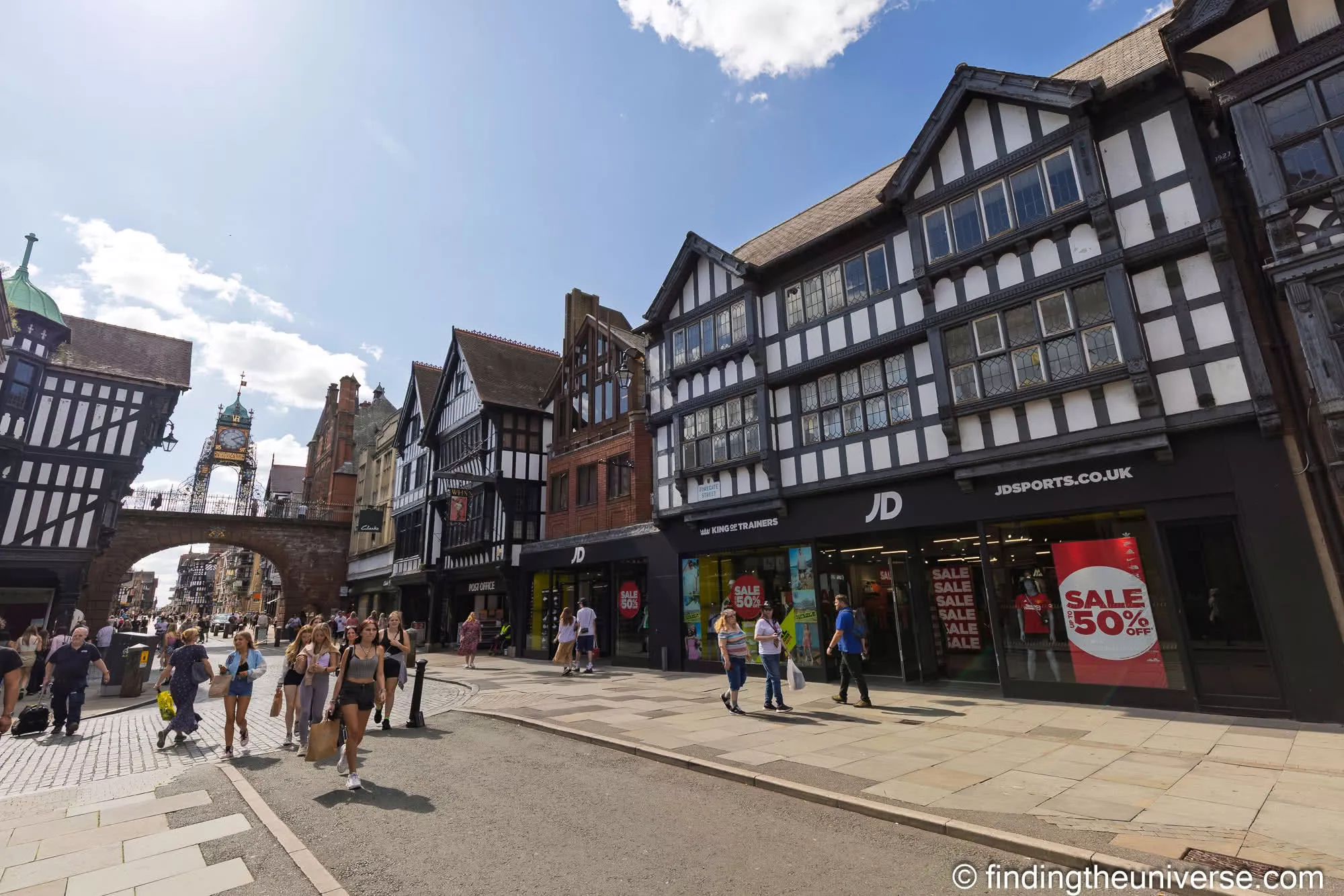 Chester’s black-and-white centre is made for a slow wander (and a camera).
The quick verdict: Yes, Chester is well worth visiting, and one day is easily enough to see the best of it. It’s compact, walkable and packs a complete circuit of ancient walls, the medieval Rows, a thousand-year-old cathedral and the largest Roman amphitheatre in Britain into a centre you can cross on foot in 15 minutes. It works best as a day trip from Liverpool (about 45 minutes by train) or Manchester (about an hour). Give it a second day only if you want to add Chester Zoo or push on into North Wales.
Is Chester Worth Visiting?
Yes. If you like compact historic cities you can explore entirely on foot, Chester is one of the most rewarding in England, and it’s one of the cities I always point people toward when they ask me where to go beyond the obvious. You’re walking on top of two-thousand-year-old Roman foundations one minute and ducking under medieval timber the next, and unlike a lot of heritage cities the good stuff is all packed tightly together rather than spread across a sprawl.
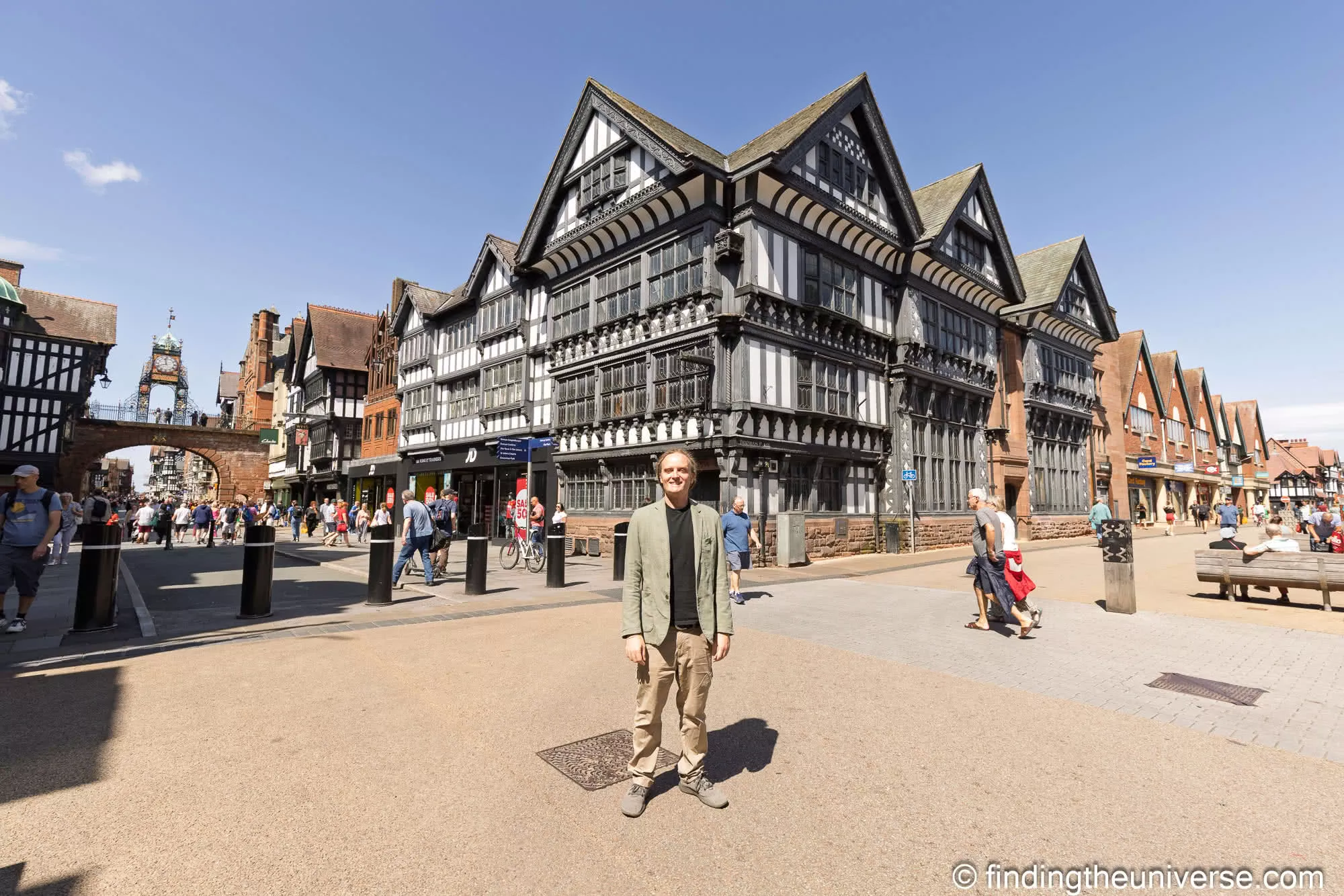
What makes it click for a day out is the density. The walls loop the whole old town, so you’re never far from a view; the Rows give you covered, two-storey shopping arcades that are 700 years old; and the cathedral, the amphitheatre and the river are all a few minutes’ walk apart. It’s also a handsome city to photograph, with the black-and-white timber-framed buildings (some of it original Tudor, a lot of it confident Victorian restoration) giving the centre a consistent look that holds together beautifully in pictures.
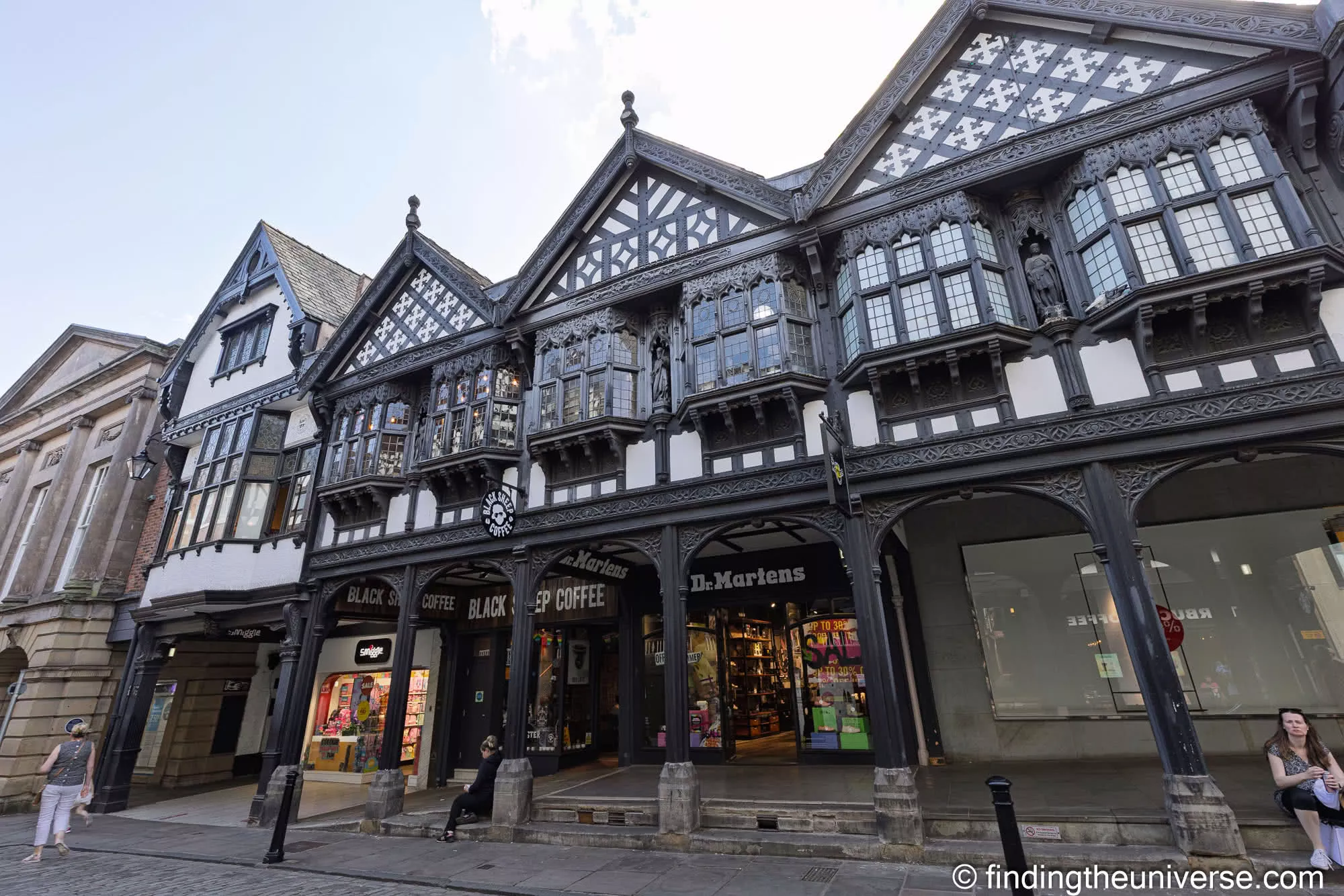 Chester’s black-and-white streetscape is remarkably consistent, and a joy to photograph.
It isn’t a hidden corner of the country and I wouldn’t pretend it is. The main streets get busy on summer weekends, and the shopping that bored me as a child is still very much the centre of gravity for a lot of visitors. But take it at a wander, climb the walls, give the cathedral an hour, and Chester earns the trip. For a wider sense of where it sits among England’s small cities, it’s part of the same cluster as the best things to do in England guide I keep on the site.
How Long Do You Need in Chester?
One full day is enough to see the centre well. You can walk the walls, see the Eastgate Clock and the Rows, spend an hour in the cathedral (longer if you do the tower tour), look round the Roman amphitheatre and finish by the river, all at an unhurried pace, in a single day. That’s the day this guide is built around.
You’d want a second day for one of two reasons. Chester Zoo is a half-day to a full day on its own and sits a couple of miles north of the centre, so it doesn’t fold neatly into a walking day in town. And Chester is right on the Welsh border, which makes it a natural base for getting into North Wales, the coast and the mountains beyond. If neither of those is on your list, don’t feel you’re rushing by giving Chester a day. The old town really is that compact.
How to Get to Chester
Chester is easiest by train. The station is about a 10-minute walk (or a short bus ride) from the city walls, and the city is well connected to the big northern hubs and to London. These are typical fastest journey times, with rough driving times for comparison.
| Liverpool | about 45 minutes | about 50 minutes |
| Manchester | about 1 hour | about 1 hour |
| London Euston | about 2 hours (Avanti, direct) | about 4 hours |
| Birmingham | about 1.5 to 2 hours | about 1.5 hours |
| Llandudno (North Wales) | about 1 hour | about 1 hour |
From Liverpool, Chester sits on the Merseyrail Wirral line, and the cheapest option for a day trip is an all-areas Merseyrail day ticket, around £6.40 off-peak in 2026. One quirk to know: that day ticket isn’t sold online any more, so buy it at the station ticket office, or just tap in and out with a contactless card, which charges the off-peak day fare automatically. Fares change, so check the current price before you travel.
From Manchester, London or Birmingham, booking an advance single through Trainline a few weeks ahead will get you the cheapest fares by a wide margin; walk-up fares on the day cost a lot more. If you’re combining Chester with Manchester or a wider trip, the train makes it painless to do both.
Driving is easy enough, but parking in the centre isn’t cheap, and the old town is partly pedestrianised. The Park and Ride on the edge of the city is the stress-free option if you’ve got a car; the central multi-storeys fill up fast on weekends.
A Perfect Day in Chester: The Walking Route
Here’s how I’d spend a day in Chester, in an order that flows on foot. Roughly, the morning is the walls, the centre and the cathedral; the afternoon is the amphitheatre, the river and the park. Nothing here is more than a few minutes’ walk from the last stop, so treat the timings loosely and linger where you want to.
You don’t need a hop-on-hop-off bus to see Chester. The centre is compact and the best of it is on foot, which is how I’d always do it. If you’d rather be shown round, a guided walking tour of the old city with a Green Badge guide makes a good 90-minute primer before you strike out on your own. And if you simply want the overview without the legwork, plenty of people enjoy the City Sightseeing hop-on-hop-off bus, which loops the cathedral, the walls and the main sights. We’ve never taken the bus ourselves, but it’s a popular way to do it.
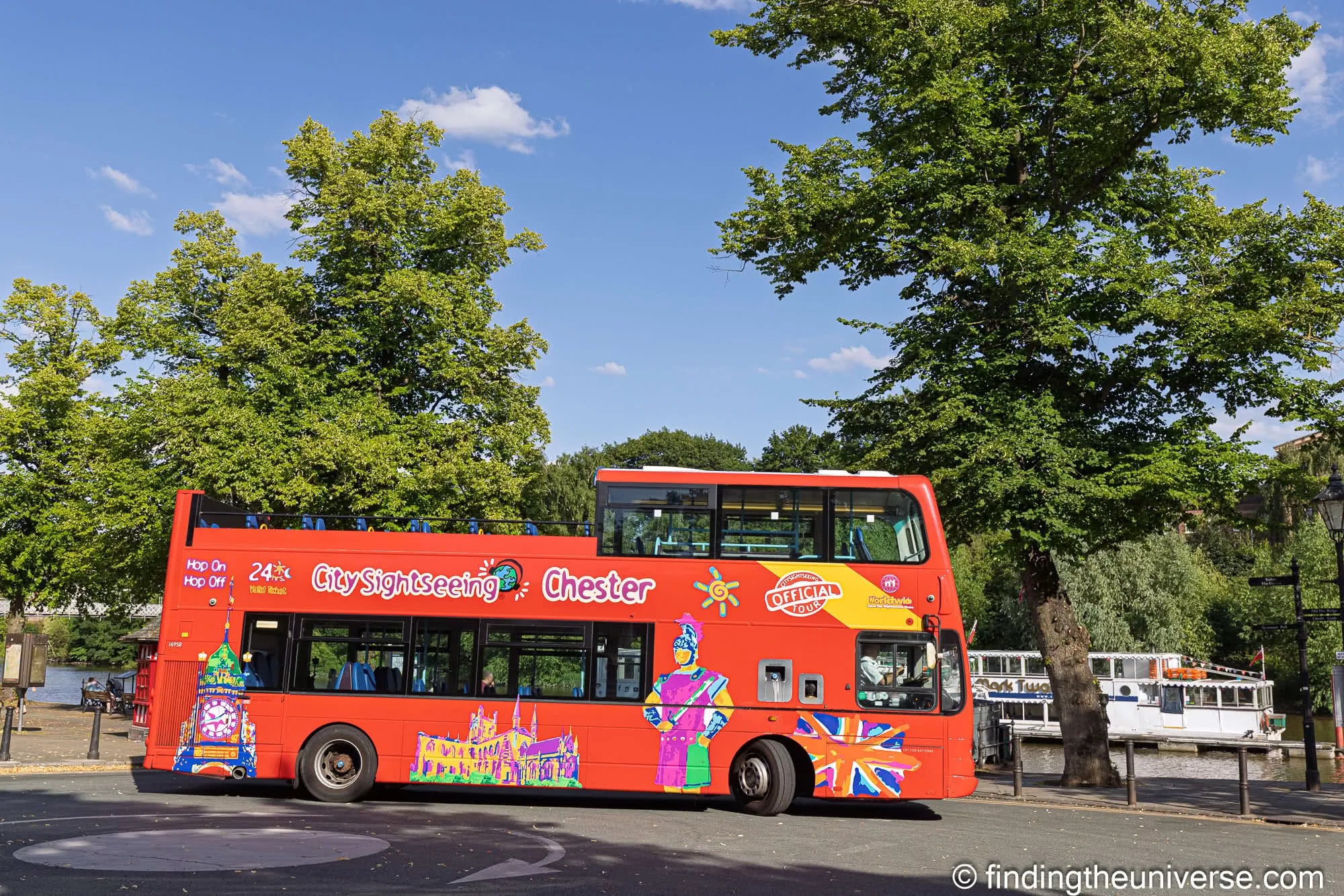 The open-top tour bus is a popular way to get the overview, though Chester’s compact centre is easily walkable.
Start on the City Walls
Chester is the only city in England where you can walk a complete circuit of its ancient defensive walls, and that’s the thing I’d do first. The full loop runs about two miles (3.2 km) and takes in a Roman core that was extended into a full medieval circuit, so you’re walking a wall that’s been patched and rebuilt across nearly two thousand years. York has longer town walls, but the circuit there isn’t complete; Chester’s is, and walking the whole thing is the best possible orientation to the city.
You can join the walls at several points. I usually start near the Eastgate, walk the eastern and southern stretches down toward the river, and pick the rest up later. Look out for King Charles’ Tower at the northeast corner, where Charles I is said to have watched his beaten army stream back from the Battle of Rowton Moor in 1645, and for the southwest stretch that looks down over the Roodee, home to Chester Racecourse, the oldest racecourse still in use in the world. It’s free, it’s open all the time, and there are steps up and down at the main gates. Watch your footing in the wet, as the old stone gets slick.
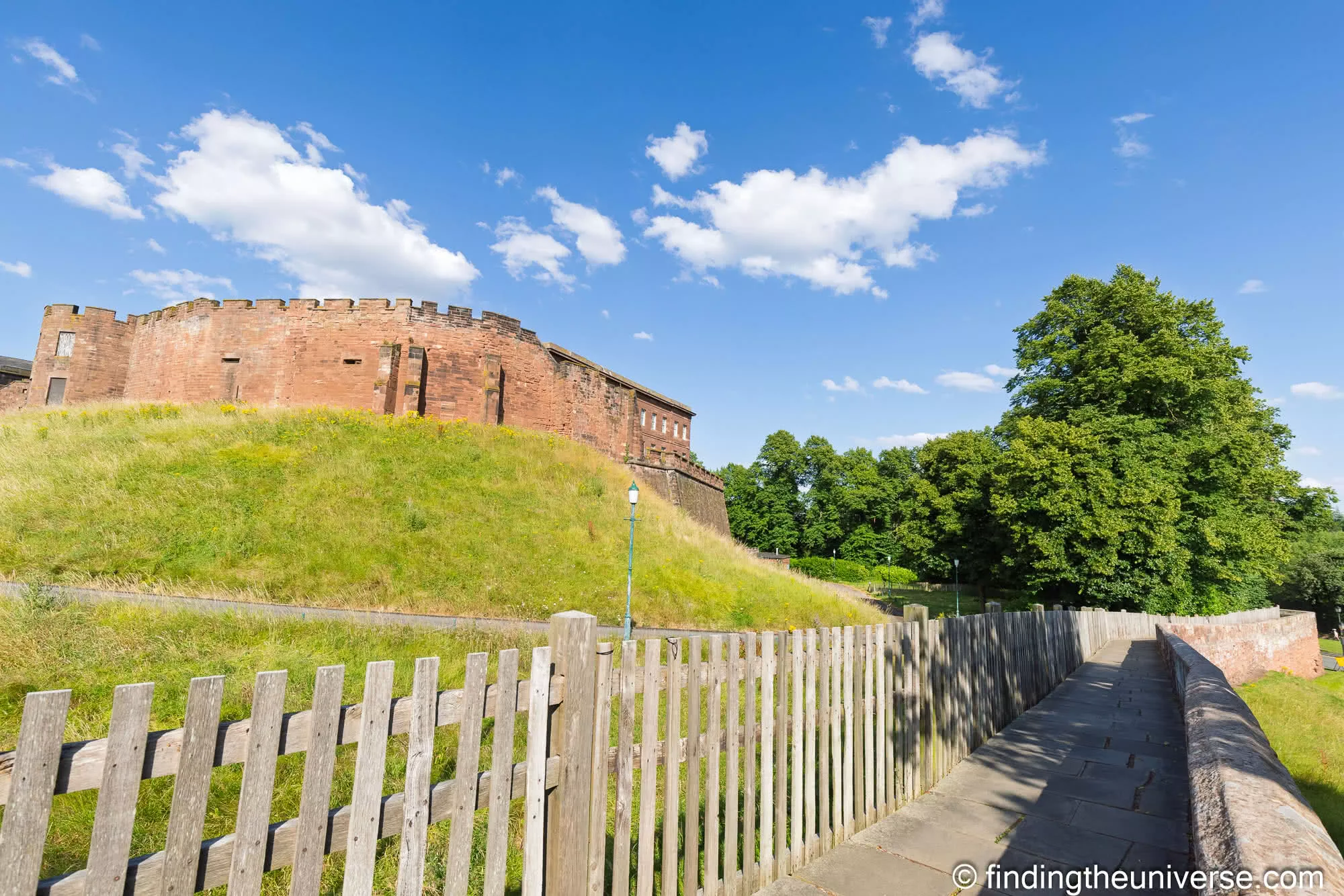 You can walk the entire two-mile circuit of Chester’s walls, which is the best way to get your bearings.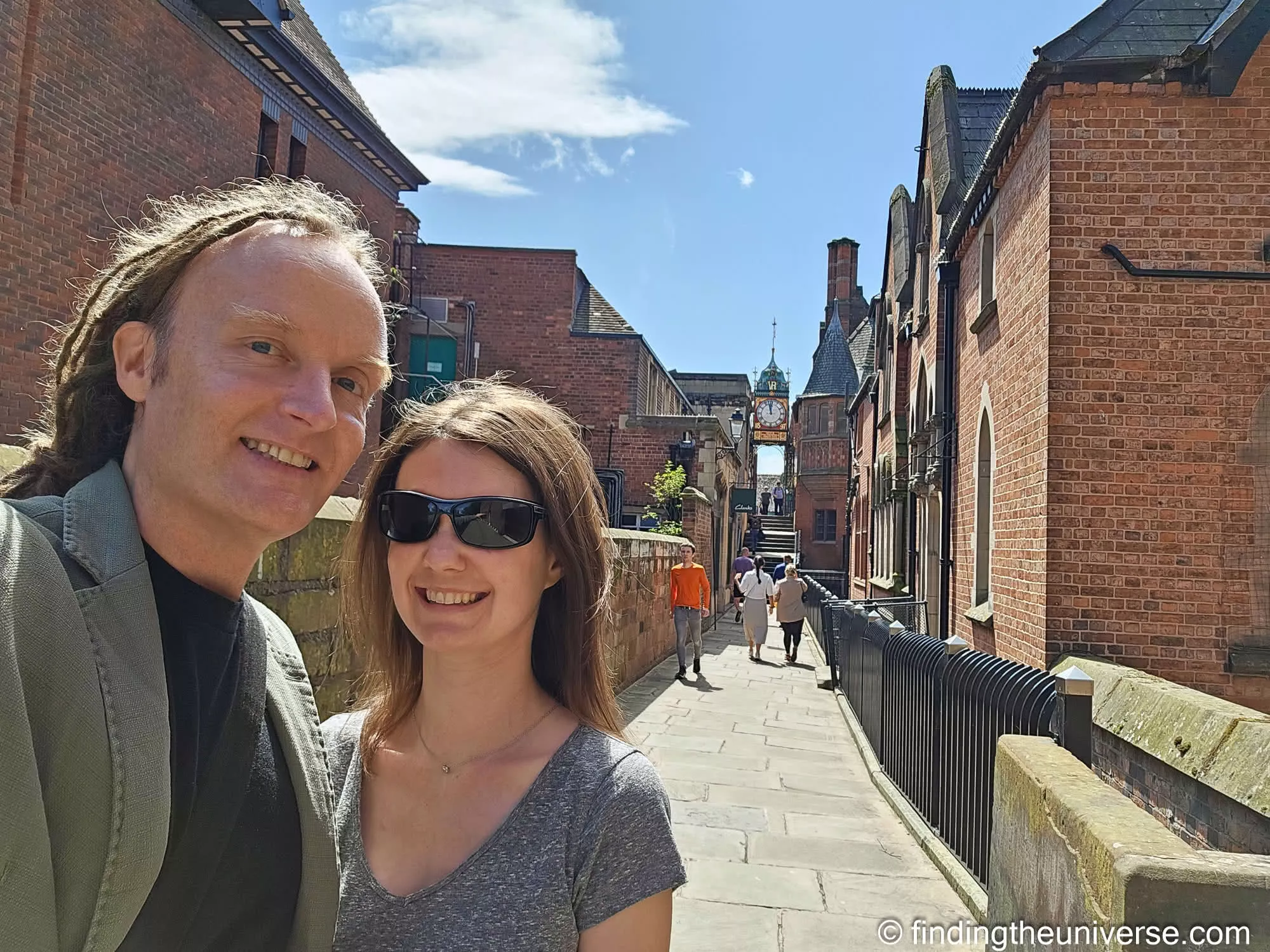
Photographer’s note: the walls give you the best raised angles in the city. The stretch by the Eastgate looks straight down onto the clock, and the southeast section near the Roman Gardens and the river catches lovely light late in the day.
The Eastgate Clock
The Eastgate Clock is Chester’s signature shot, an ornate ironwork clock set on top of the Eastgate where the main Roman road into the fortress once ran. It was added in 1899 to mark Queen Victoria’s Diamond Jubilee of 1897, designed by the local architect John Douglas, and it’s often said to be the most photographed clock in England after Big Ben. I’ve never found out who actually counted, so take that one with a pinch of salt, but it’s far and away the most photographed thing in Chester.
The trick to shooting it is height. From street level on Eastgate Street you’re craning up at it; from the city walls either side you’re almost level with it and can line it up against the rooftops. Early morning, before the street fills, is your cleanest shot.
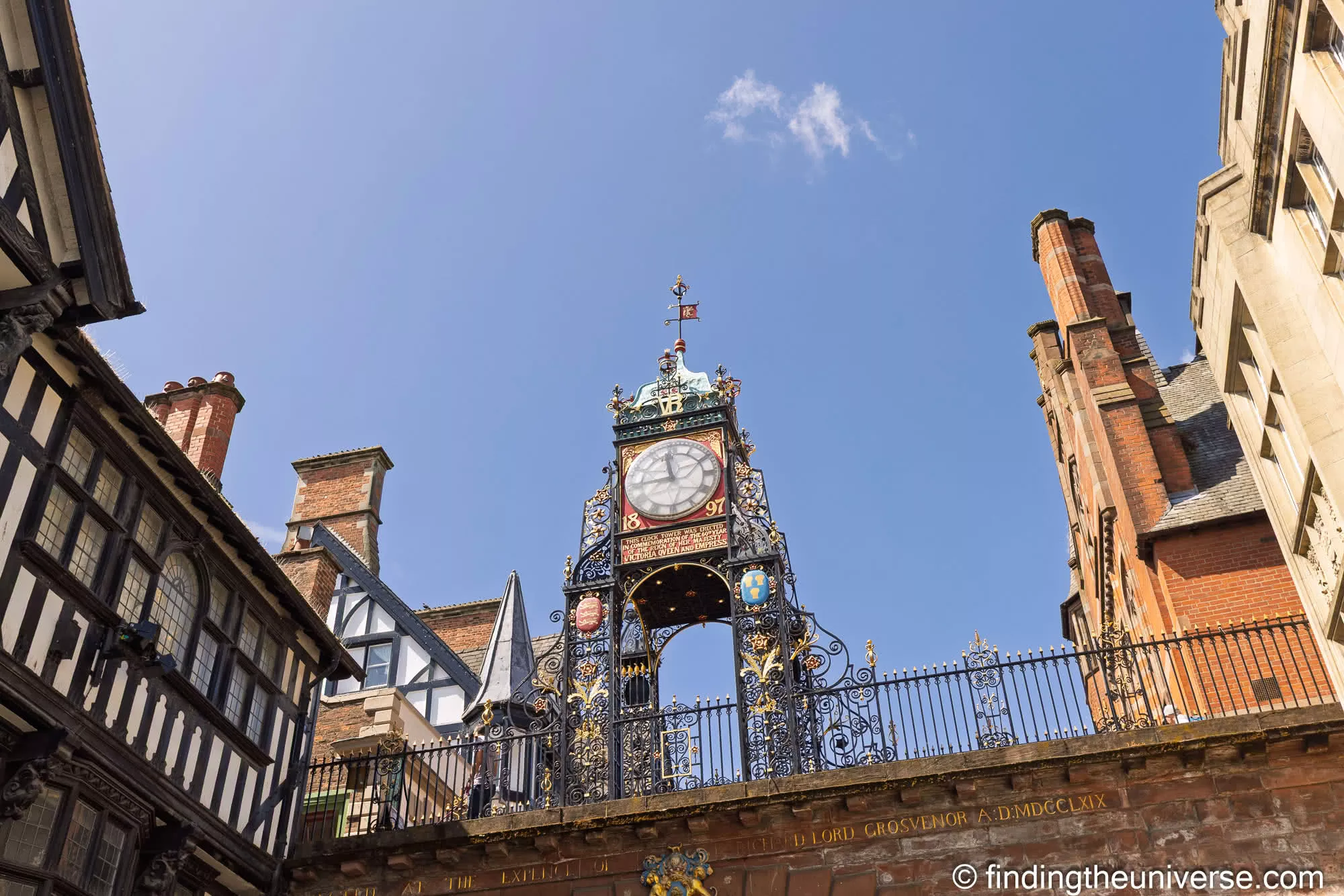
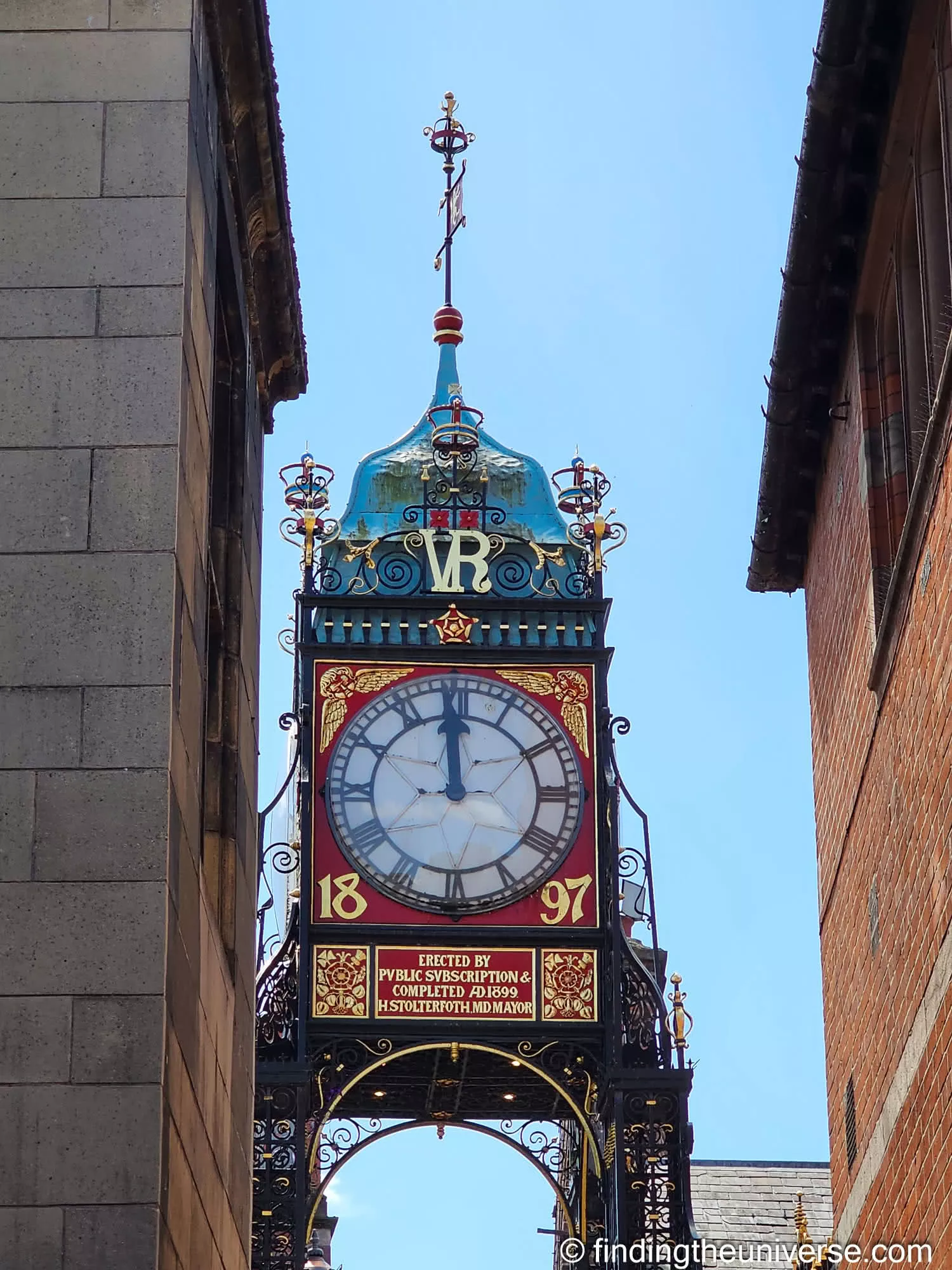 The Eastgate Clock, best framed from the walls rather than the street below.
The Rows
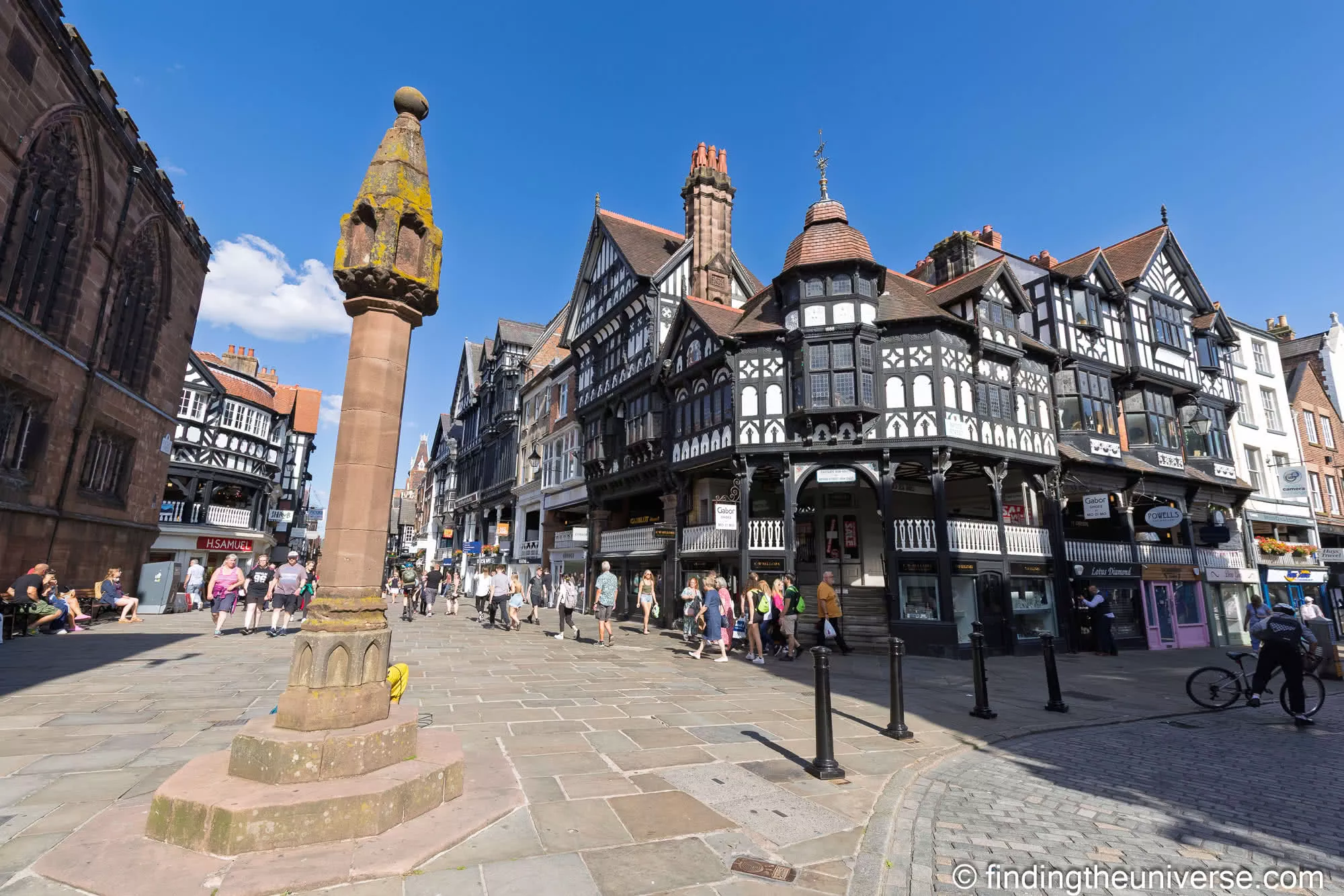
The Rows are the thing you won’t find anywhere else, and they’re the part of Chester that finally made sense to me as an adult. Running along the four main streets of the centre, they’re medieval two-tier galleries: a row of shops at street level, and a second covered walkway of shops above, reached by steps, running along the first floor. They date from the 13th and 14th centuries, which makes them around seven hundred years old, and nobody has ever fully explained why Chester built up like this and no other English city did.
This is the shopping heritage my parents dragged me round, and I’ll admit the irony isn’t lost on me that it’s now my favourite bit. Even if you’re not buying, walk both levels. On Bridge Street, look out for the Three Old Arches, dated to around 1274 and reckoned to be the oldest surviving shopfront in England. The covered upper walkways are also the city’s secret weapon in the rain, which in this corner of the country is worth knowing.
Chester Cathedral
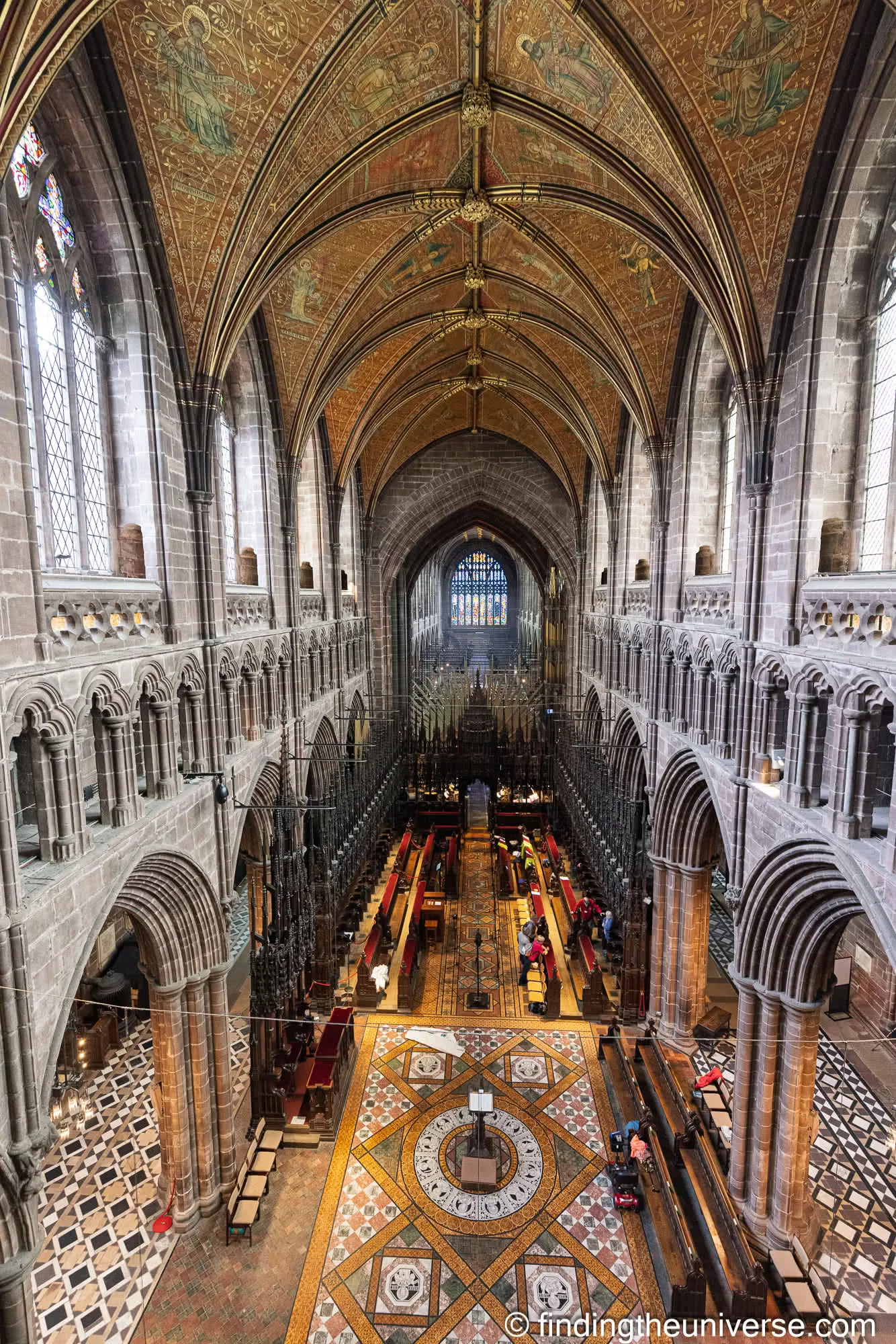
Chester Cathedral is the one stop I’d tell you not to skip, even if you think you’ve seen enough cathedrals. It began as a Benedictine abbey founded in 1093 (built on the site of an earlier Saxon minster dedicated to St Werburgh), and it became a cathedral in 1541 when Henry VIII reorganised the English church. What that long history left behind is an unusually complete medieval monastery: the cathedral itself, but also the cloisters, the refectory and the chapter house, which most cathedrals lost centuries ago.
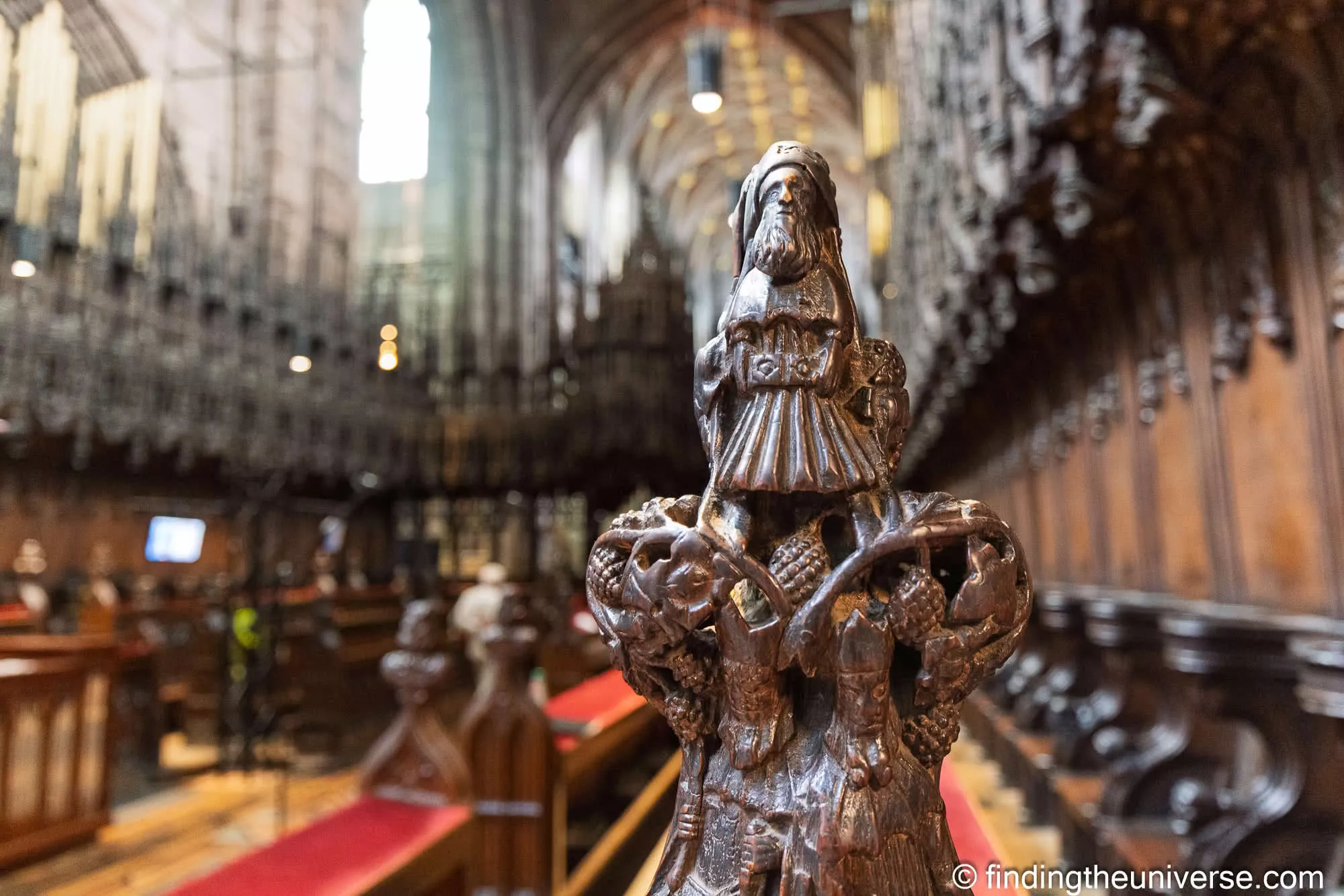
It’s free to enter for most of the year, with donations welcome, though there’s a small admission charge during summer and over Christmas, so factor that in if you’re visiting in peak season. Give it an hour. The carved medieval choir stalls and the cloister garden are the highlights for me, and it’s a calm, cool place to slow down in the middle of a busy day.
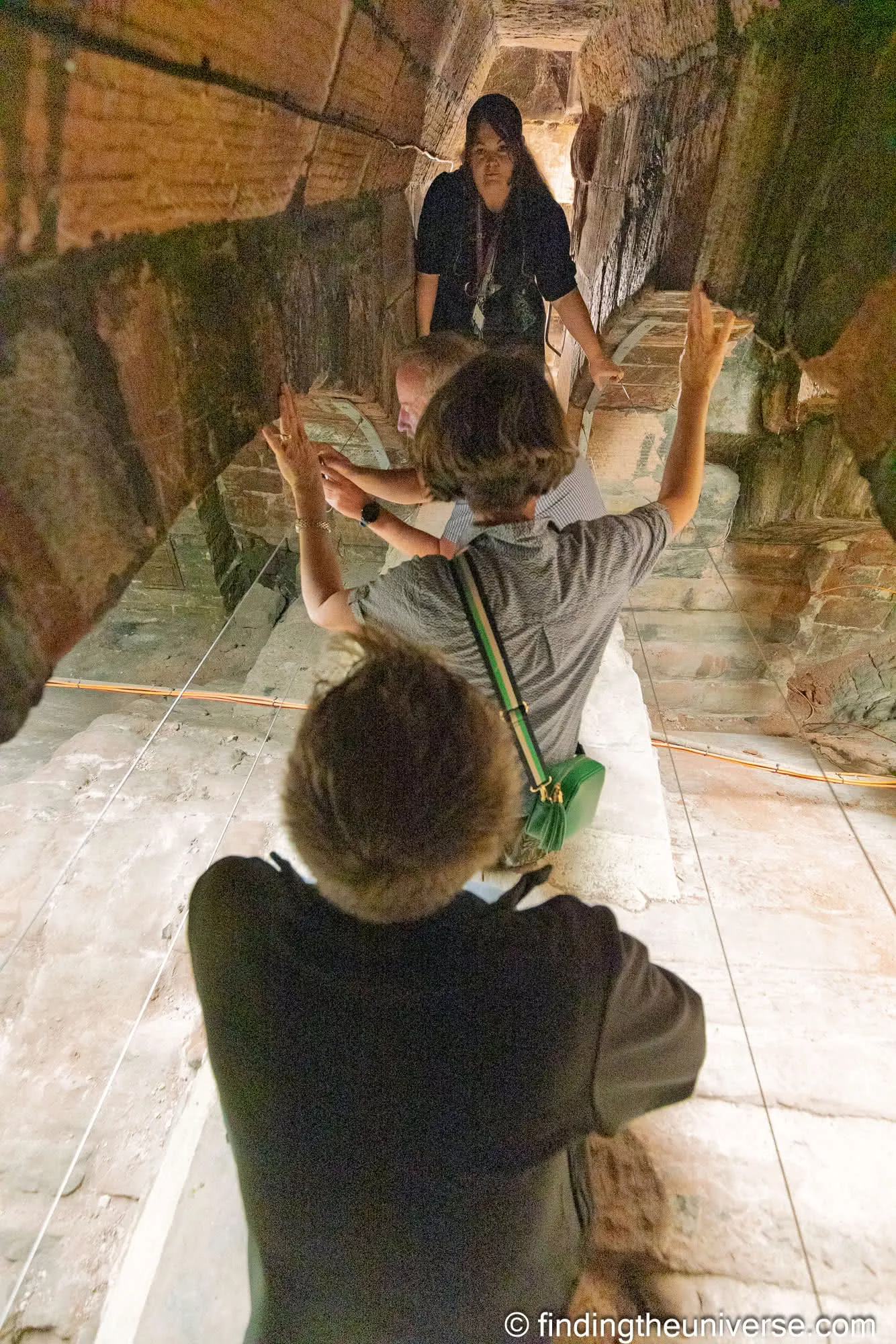
If you’ve got the legs for it, the cathedral’s Cathedral at Height tower tour is the best thing I’ve done in Chester, and I’d recommend it to anyone. It’s around £14 per person (a 2026 price, worth confirming when you book) and runs roughly hourly Monday to Saturday throughout the year. You climb 216 steps, about 125 feet, but the real fun is the route up: you clamber through the guts of the cathedral, along hidden passageways and roof spaces you’d never otherwise see, before coming out on top for the view across the city to the Welsh hills. I can’t think of another cathedral visit quite like it. Book ahead in summer, as the small group sizes mean slots go.


The Roman Amphitheatre and Roman Gardens
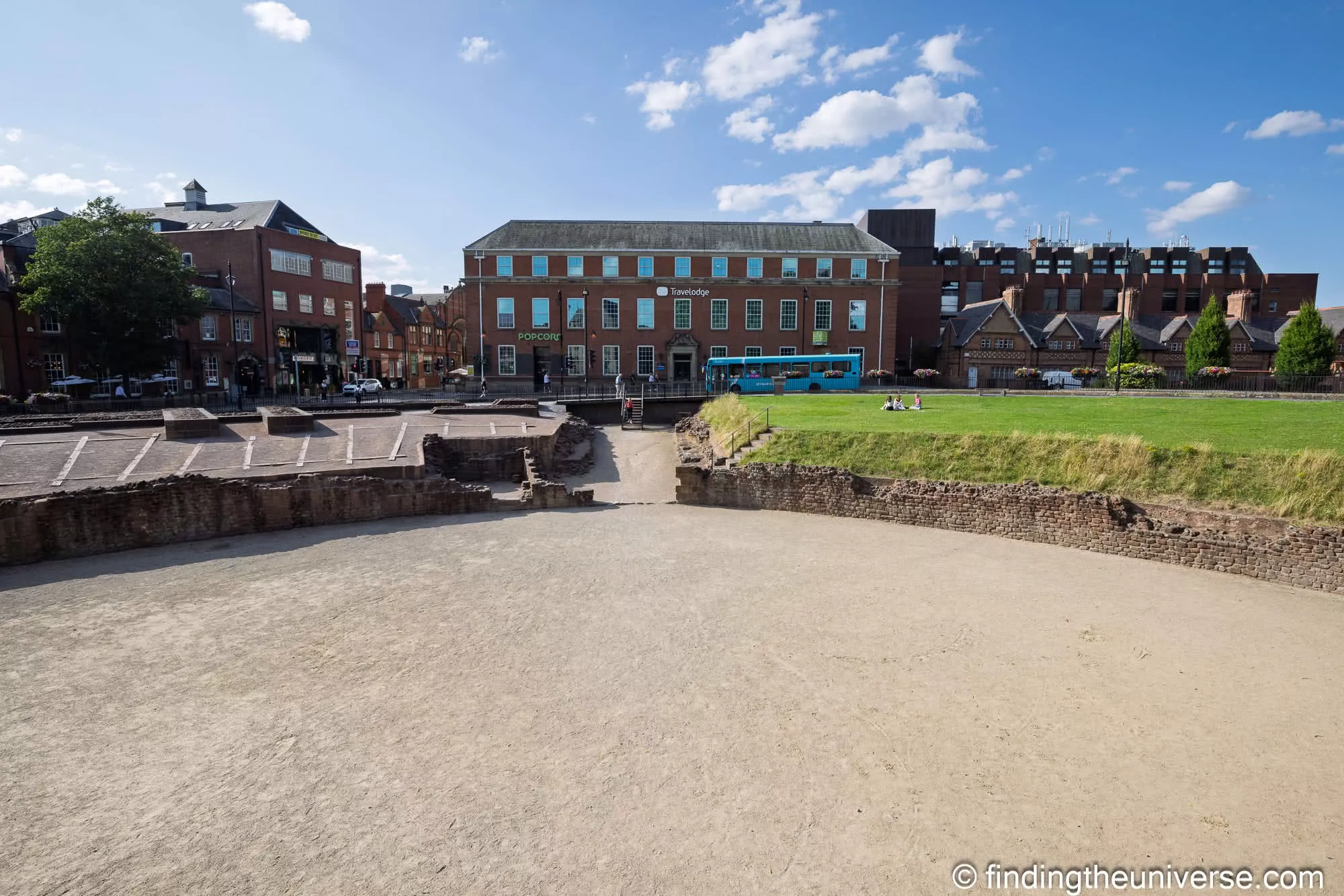
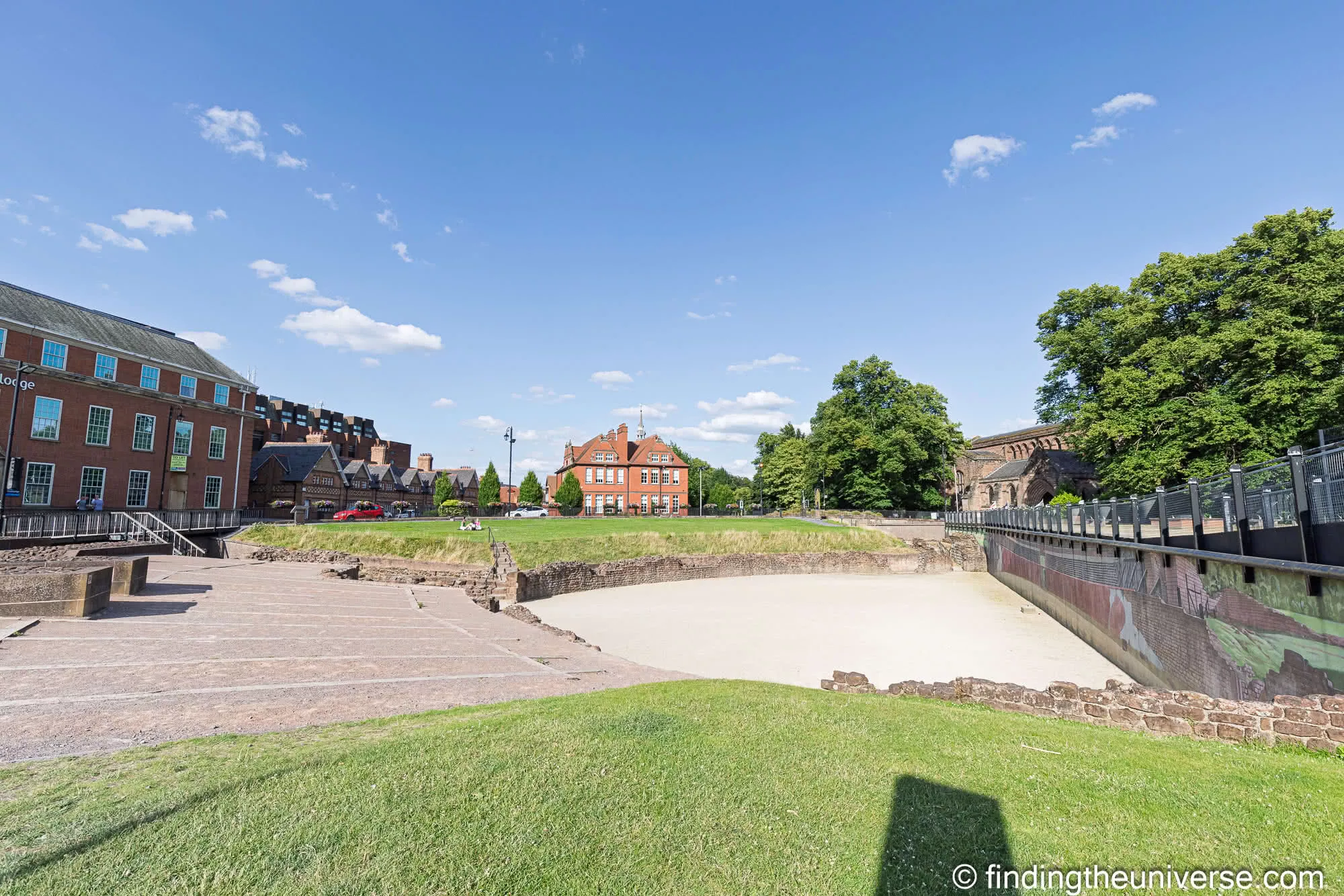
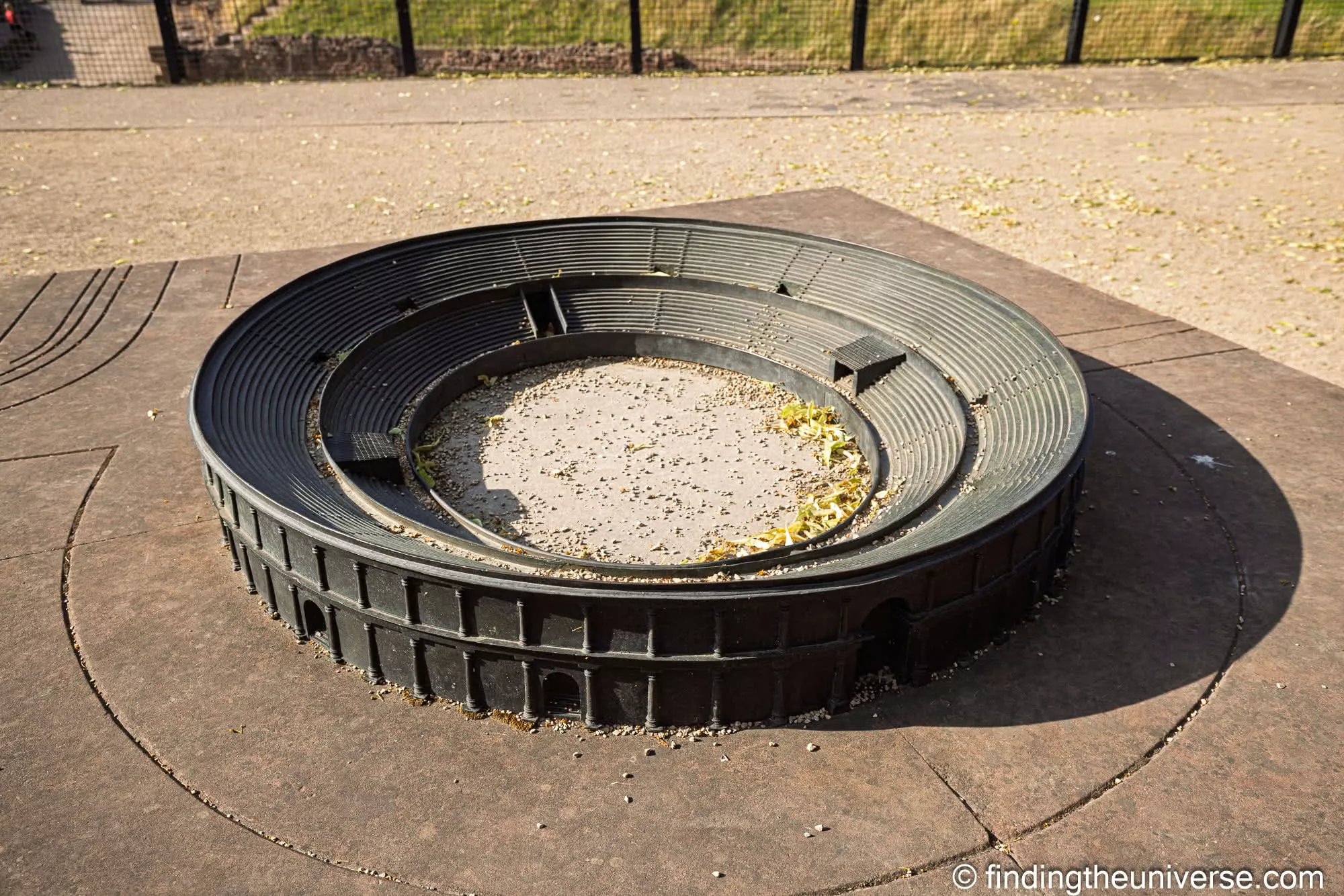
Just outside the southeast corner of the walls is the largest Roman amphitheatre uncovered in Britain. Now, temper your expectations a little here. This is not the Colosseum in Rome, and if that’s the picture in your head, you’re in for a bit of a letdown. The Romans built amphitheatres in all sorts of sizes, and Chester’s sat firmly at the compact end. Only about half of it is exposed (the rest still lies under later buildings), but what’s there gives you the scale: it held something like 8,000 spectators when Chester was the Roman fortress of Deva Victrix, founded around 79 AD.
It’s free, it’s open, and it takes all of 10 minutes to look round, but as a slice of Roman Britain hiding in plain sight, it’s well worth the short detour.
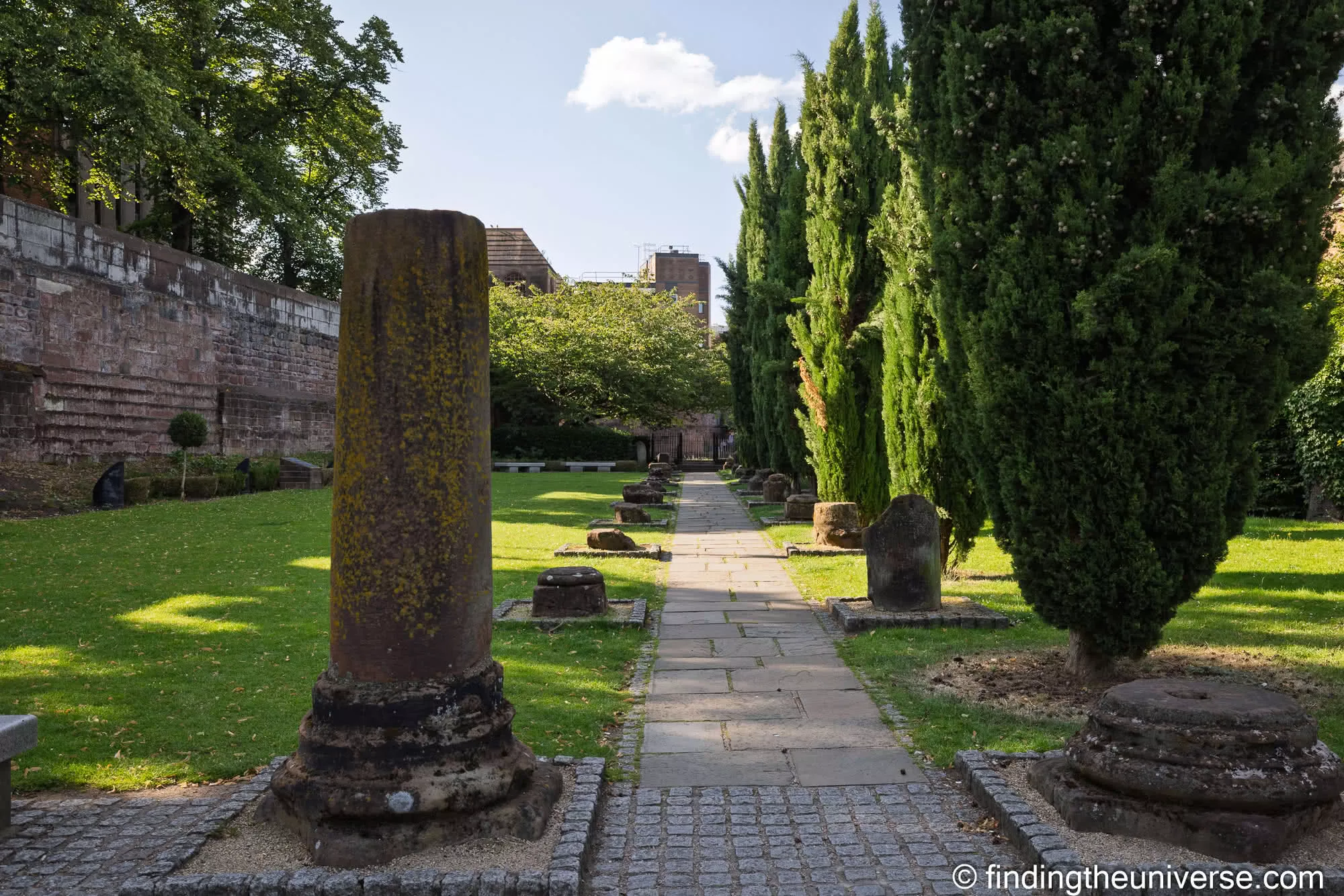
Next to it, the Roman Gardens make a nice green link down toward the river, dotted with Roman columns and stonework recovered from around the city. For the full background, English Heritage looks after the amphitheatre and has the history if you want to read up before you go.
The River Dee and The Groves
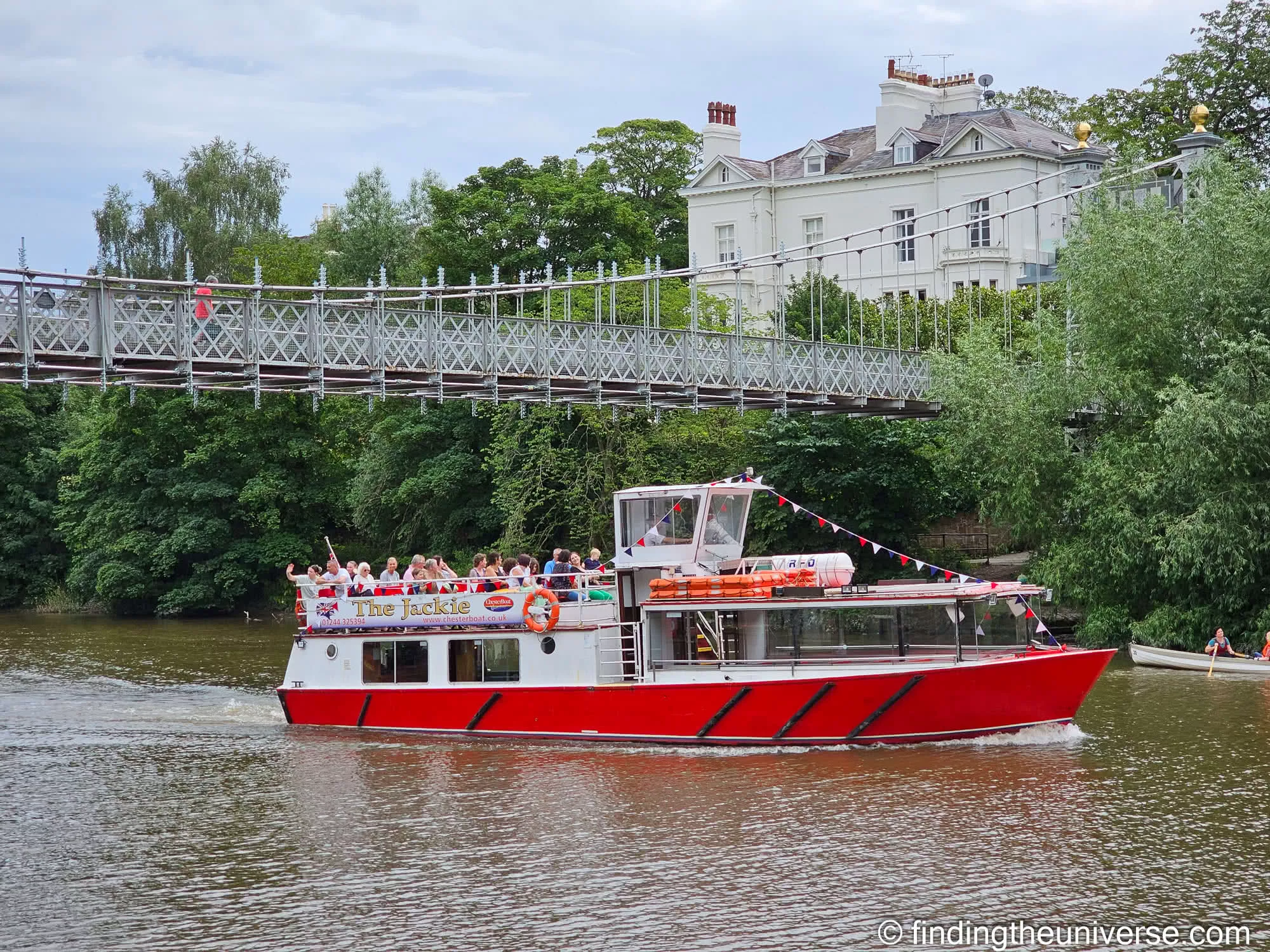
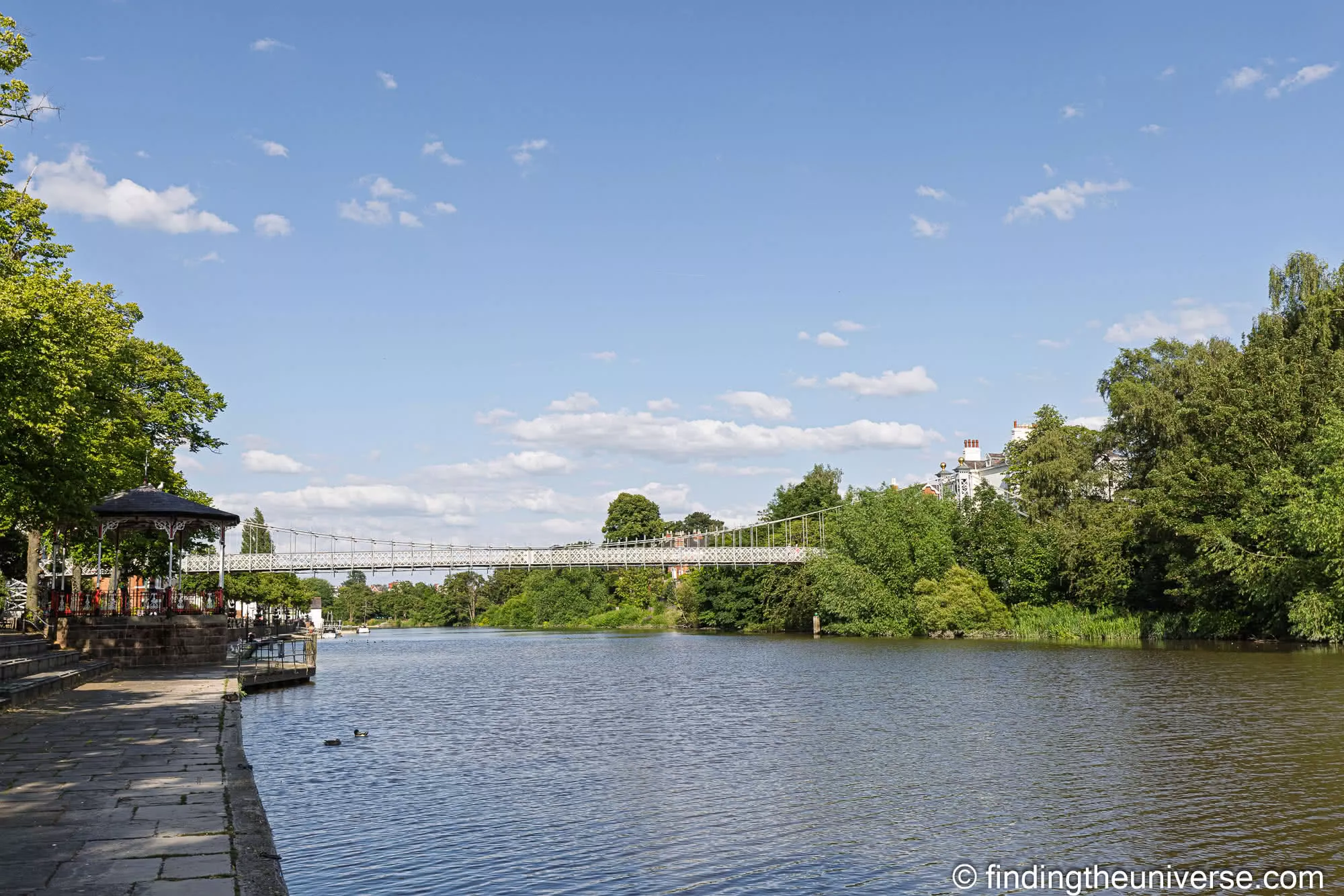
Finish by the water. The River Dee runs along the south side of the city, and The Groves, a riverside promenade with a Victorian bandstand, is where Chester goes to relax. There are rowing boats to hire, an old suspension footbridge to cross, and on a warm afternoon it’s the most pleasant spot in the city to sit with an ice cream and watch the river go by.
If you want to get out on the water, the half-hour River Dee cruise with ChesterBoat leaves from the moorings on Souters Lane, runs hourly through the season and costs around £9.50 for an adult and £4.50 for a child when booked online. It’s a gentle, narrated loop rather than anything dramatic, but it’s a nice way to rest your feet at the end of a walking day and see the grand riverside houses from the water.
Grosvenor Park
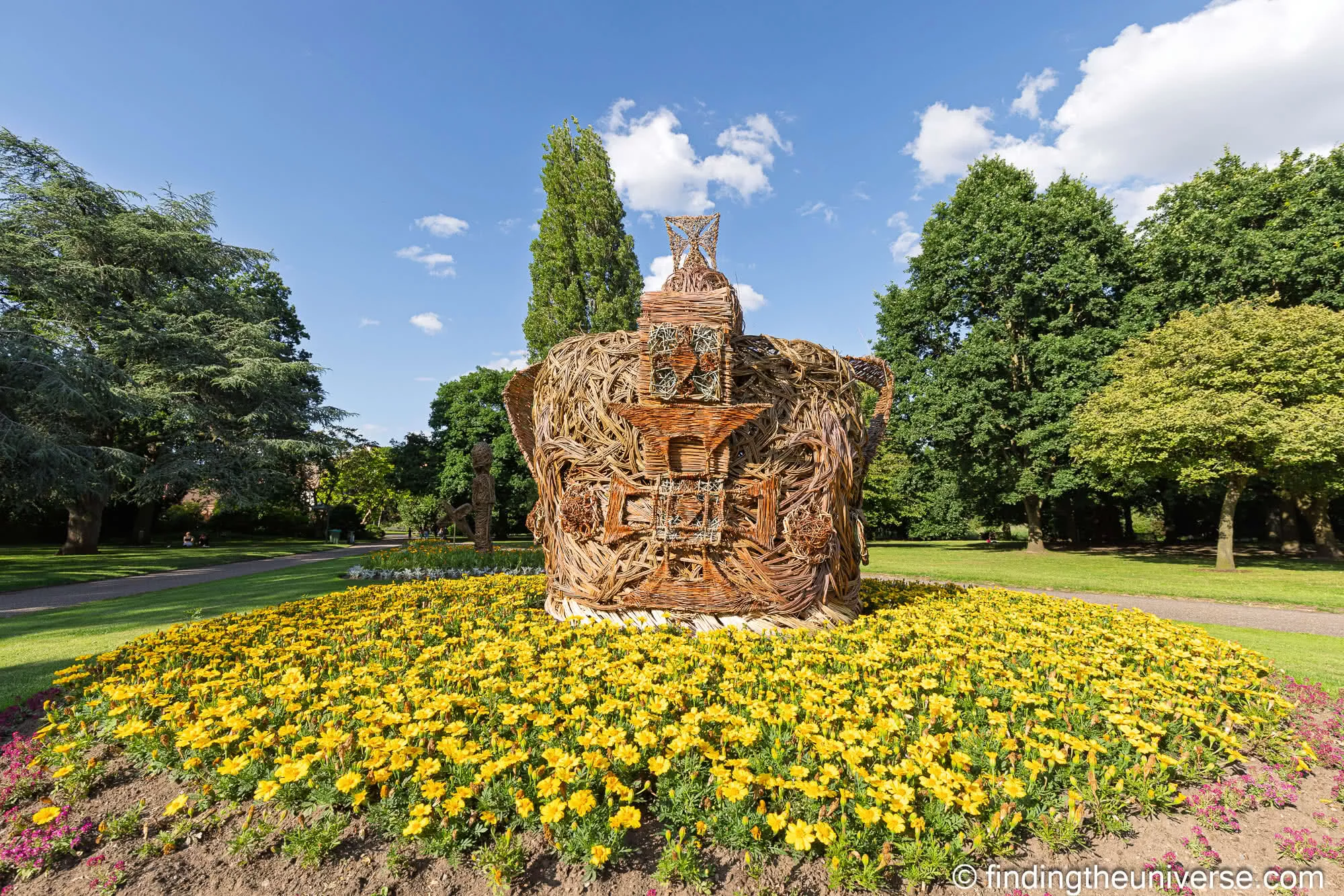
If you’ve still got time and the weather’s holding, Grosvenor Park is a short walk from the river and one of the best-preserved Victorian parks in the country. There’s a little miniature railway that runs in the warmer months (a hit if you’ve got kids), formal flowerbeds and big mature trees, and it’s an easy, quiet way to round off the afternoon before heading back to the station.
Where to Eat in Chester
For a relaxed lunch or dinner, my pick is Hickory’s Smokehouse, right on The Groves by the river. It’s American-style barbecue, all low-and-slow brisket, ribs and burnt ends, and Jess and I have had a memorable meal there. It sits perfectly at the end of the riverside leg of the day, it’s good with kids (there’s even a little cinema room for them after a recent refurbishment), and the riverside setting is hard to beat on a fine evening. It’s a small chain rather than a one-off, but it’s a reliably good feed.
For something more casual, or when you can’t decide, head for Chester Market in the Northgate development, a couple of minutes from the Town Hall. The covered food hall reopened here in late 2022 and now has more than 40 independent traders under one roof, from street-food kitchens to bakeries and bars. We grabbed lunch here and were spoiled for choice, and it’s a good shout on a rainy day since you’re under cover. It’s open Tuesday to Sunday and closed most Mondays.
If you’re after something smarter, The Forge inside Hotel Indigo holds two AA Rosettes and leans into dry-aged beef and game. And for a proper afternoon-tea-and-cake stop mid-wander, the cafés along the Rows and around the cathedral are thick on the ground, so you won’t struggle to refuel between sights.



Where to Stay in Chester
Chester’s centre is small, so almost anywhere central keeps you within walking distance of the sights. Here’s a spread across budgets, all a short walk from the walls.
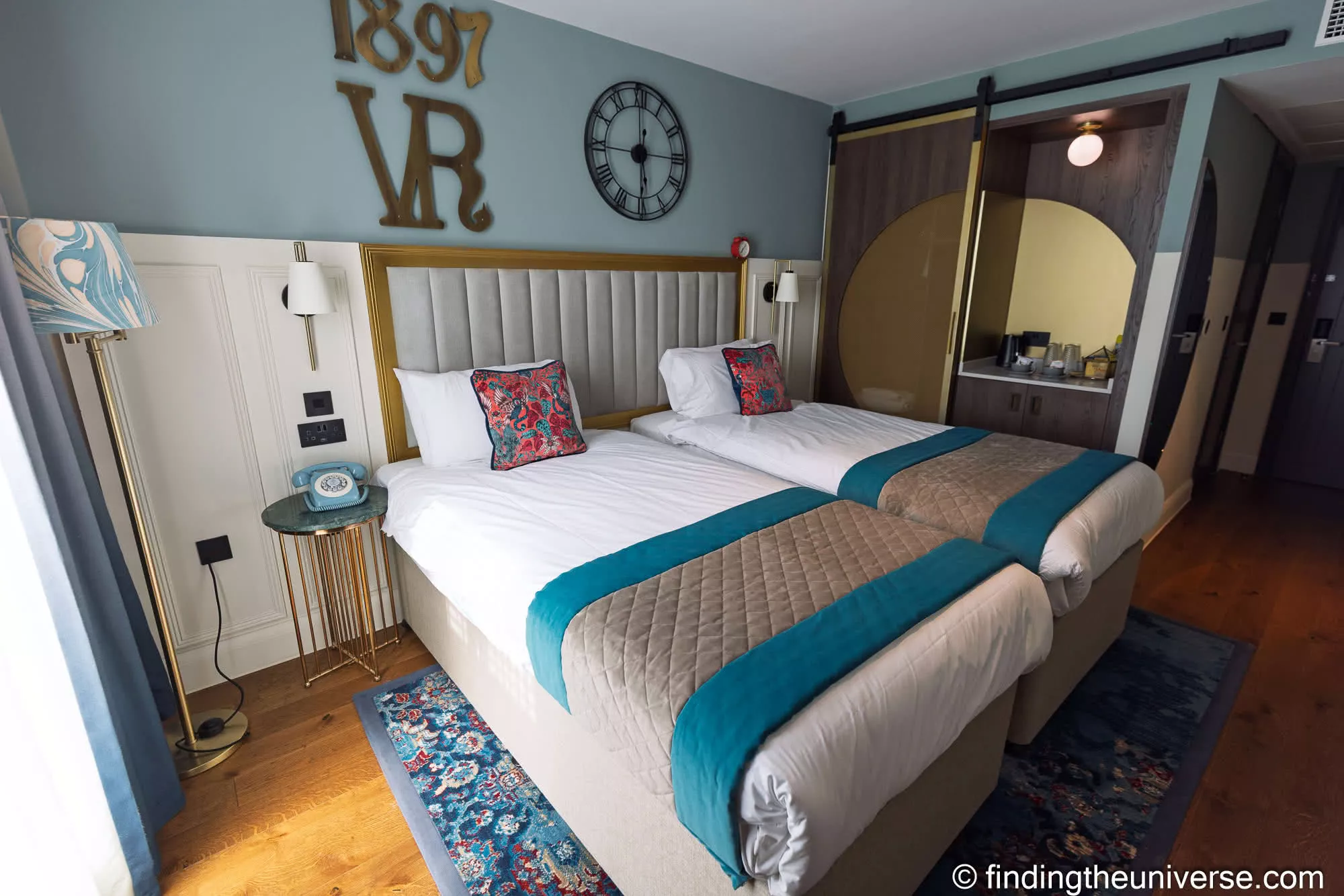
We stayed at Hotel Indigo Chester and liked it a lot: a boutique hotel right in the centre, a few minutes from the walls and the Rows, with the city’s history woven into the design and The Forge restaurant downstairs for dinner. For a one-night stay that puts everything on your doorstep, it’s an easy recommendation.
If you want to push the boat out, The Chester Grosvenor is the city’s grand five-star, going since 1865, with a spa and the four-AA-Rosette Arkle restaurant, and about as central as it gets. For something with more character, Oddfellows is a boutique hotel in a Georgian townhouse near the river, with individually styled rooms and a walled secret garden for a drink. And for a reliable budget bed, the Premier Inn Chester City Centre is well placed for the station and the cathedral, and does exactly what you’d expect.
Staying over also opens up Chester after dark, when the floodlit walls and cathedral look their best. If you fancy something different in the evening, the city runs a popular ghost walk through the old streets.
With More Time: Chester Zoo and Beyond
If you’ve got a second day, two things stand out. The first is Chester Zoo, a couple of miles north of the centre and one of the best zoos in the country. It’s home to more than 30,000 animals across over 500 species, it opened back in 1931, and in 2024 it was the most-visited paid attraction in the UK outside London, with about 1.9 million visitors that year. I’ll be straight with you: we haven’t actually made it to the zoo ourselves yet, so I can’t give you a first-hand steer round it, but it’s a clear half-day to full day out and the obvious add if you’re travelling with children. You can plan a visit on the zoo’s own site.
The second is North Wales. Chester sits right on the border, and within an hour or so you can be on the coast at Llandudno or heading into the mountains of Eryri (Snowdonia). If that tempts you, it’s worth turning the trip into something longer, and our Wales road trip itinerary and broader Wales planning guide will help you build the rest of it out from here.
What to Know Before You Go
A few practical things I’ve learned from visiting Chester across the years that will make your day run more smoothly.
When to visit. Chester is good year-round, but it’s at its best from late spring through early autumn, roughly May to September, when the river and the parks come into their own and the walls walk is a pleasure rather than an endurance test. The school holidays in July and August are the busiest stretch, so if you want the centre quieter, aim for June or early September. November and December bring the Christmas market by the town hall, which is lovely, though December is also when the cathedral applies its seasonal charge and the streets are at their most crowded. If you want the city quiet and the light soft for photos, an October weekday is my favourite.
One day or two. For the centre, one day does it. Add a second only for the zoo or for crossing into North Wales, as covered above.
The Rows are your wet-weather plan. This is the northwest, and it rains. The covered upper galleries of the Rows mean you can keep shopping and wandering under cover when it comes down, so don’t write off a grey day. I’d still wear comfortable, waterproof shoes, though, because between the walls walk, the cobbles and the riverside you’re on your feet all day. I’ve worn Vessi’s Weekend Classic waterproof trainers for exactly this kind of all-day city walking and they’ve held up well in proper rain.
Parking and access. The old town is partly pedestrianised and central parking is pricey and fills early. Use the Park and Ride if you’re driving, or better still come by train and walk in from the station. The walls have steps at the gates but the main streets and the Rows’ lower level are flat and easy.
Chester Travel FAQ
Is Chester worth visiting?
Yes. Chester is one of England’s most rewarding compact historic cities, with a complete circuit of ancient walls you can walk, the unique medieval Rows, a thousand-year-old cathedral and the largest Roman amphitheatre in Britain, all within a centre you can cross on foot. It makes a great day trip and is well worth the journey.
How long do you need in Chester?
One full day is enough to see the centre well, including the walls, the Eastgate Clock, the Rows, the cathedral, the Roman amphitheatre and the River Dee. Add a second day only if you want to visit Chester Zoo or use the city as a base for North Wales.
How do you get to Chester from Liverpool or Manchester?
Both are easy by train. Liverpool to Chester is about 45 minutes on Merseyrail, and an all-areas Merseyrail day ticket (around £6.40 off-peak) is the cheapest way to do the round trip. Manchester to Chester takes about an hour, and booking an advance fare keeps the cost down. The station is about a 10-minute walk from the city walls.
What are the best free things to do in Chester?
Walking the full two-mile circuit of the city walls is free and is the single best thing to do in Chester. The Roman amphitheatre and Roman Gardens are free to visit, the River Dee and The Groves cost nothing to enjoy, and the cathedral is free to enter for most of the year (with a small charge in summer and at Christmas).
When is the best time to visit Chester?
Late spring to early autumn, roughly May to September, is the best time, when the riverside and parks are at their best. December is lovely for the Christmas market but busier and colder. For quiet streets and soft light, an autumn weekday is ideal.
Is Chester or York better to visit?
Both are walled cities and both are well worth visiting, but for a day trip I’d choose Chester. It’s more compact, especially handy from Liverpool or Manchester, and its complete walls circuit and the Rows are unlike anything else in England. York is bigger, with the Minster, the Shambles and major museums, and it suits a full weekend better. So if you can only fit one as a day out, make it Chester; for a two-day city break with big-hitter sights, make it York.
Is Chester Zoo worth visiting?
Chester Zoo is one of the most-visited attractions in the UK and a strong choice if you’re travelling with children or have a second day. With more than 30,000 animals across over 500 species, it’s a half-day to full-day visit in its own right and sits a couple of miles north of the city centre, so it doesn’t combine easily with a walking day in town. Plan it as a separate outing rather than squeezing it into a single day in Chester.
Further Reading
If Chester is part of a wider trip, these guides will help you plan the rest:
- The best things to do in England, our pillar guide to the cities worth your time
- Things to do in Manchester, an easy add-on or day-trip base just up the line
- A weekend in York, England’s other great walled city
- Things to do in Cambridge and Stratford-upon-Avon for more compact English city days
- Our Wales road trip itinerary for crossing the border into North Wales
- Our 10-day UK itinerary by train if Chester is one stop on a wider trip around Britain
For planning a wider England trip, I rate the Rick Steves England guidebook as a starting point; it’s the one I reach for when I’m mapping out a route around the country.



















 English (US) ·