
 3 weeks ago
25
3 weeks ago
25
You’ve been doing it wrong this whole time. Like many things in Japan, there’s a certain way of doing things and as travellers, it’s often hard to grasp those things unless you learn through a bit of trial, error, and passive aggressive stares.
This article may contain affiliate links where we make a small commission for purchases you make from links that you click from this article. By purchasing through our links, you support us at no additional cost. Thank you for your support ❤️. For more details, read our disclosure page.
Let us share with you what you need to know about how to eat ramen in Japan and etiquette you should follow.
What You’ll Get Out Of This Article
- The essential rules and etiquette for how to eat ramen in Japan
- What to expect when visiting a traditional Japanese ramen shop
- Tips on ordering, seating, and using ramen ticket machines with confidence
- Guidance on common ramen customs like slurping noodles and drinking the broth
- Practical advice to help you avoid common mistakes and enjoy a more authentic ramen experience in Japan
How To Eat Ramen In Japan

The reason why ramen has taken the global stage is because not only is it Japan’s most famous comfort food, it’s also incredibly gourmet and complex.
Tokyo is the best place to have ramen not because it was invented here, but as the capital, the nation’s top chefs, and more importantly, styles from all regions come to splash, collide, and meld. Even in one district of the city, you can go from one shop that serves a beef-based ramen to another that has Michelin Guide honors.
TOP TIPS FOR TRAVELING TO TOKYO
- Where to stay: The Royal Park Hotel is a luxurious hotel in Ginza. It’s a short walk away from the Ginza Station and well-situated for getting to other neighborhoods. We use Agoda.com for all of our accommodations anywhere in Asia, as this is where we find the best deals!
- Must pack item: Since you’ll be doing plenty of eating, like A LOT, you’ll want to bring your own pair of metal chopsticks to cut down on waste, which is always nice!
- Recommended tour: Book this Tsukiji Fish Market Food Tour, where a local will take you around the food stalls of the Tsukiji outer market. It’s a great way to learn all about the market’s history and make sure you don’t miss any of the best food spots!
- Car rentals: Tokyo has great public transport links, so you probably won’t need a car for this itinerary. However, if you do decide to rent a car to explore outside the city, then make sure you know how to save money with car rental coupon codes and always start your search with Discover Cars and RentalCars so you know what the best deals are.
- Flights: If you are flying in from elsewhere, use the Skyscanner ‘Everywhere’ feature to find the best deals from your local airport. Check how much it would be to get to Haneda Airport or Narita Airport!
- Insurance: Not always required but always recommended! Make sure you’re covered with the best travel insurance. Our go-to is always HeyMondo for great coverage at a fair price, also with our link you automatically get 5% off
- Hottest deals: Never be without our frequently updated travel deals page.
What makes ramen even more attractive is that it’s humble and accessible. For as little as 800 JPY ($7.30 USD), you can order a bowl of ramen that uses the world’s best ingredients, is prepared with the utmost attention to detail and care and is made-to-order in front of you.
Sounds like something you’d find in a pretentious pinky-pointing restaurant but no, it’s just a little 8 person closet with a master chef in front of you that’s devoted his entire life to his craft.
Depending on the day, there are at least 50,000 ramen shops in Tokyo. That’s why we put together a guide on the best ramen in Tokyo.
What’s In A Bowl Of Ramen?

Now we gotta say that we certainly didn’t have all of this vocabulary before going back to Japan but after spending time with Hiroshi of Ramen Beast and eating so many bowls of ramen in a short span of time, we realized that it definitely helps to have a good understanding of what you’re eating before you go.
Broth/Soup
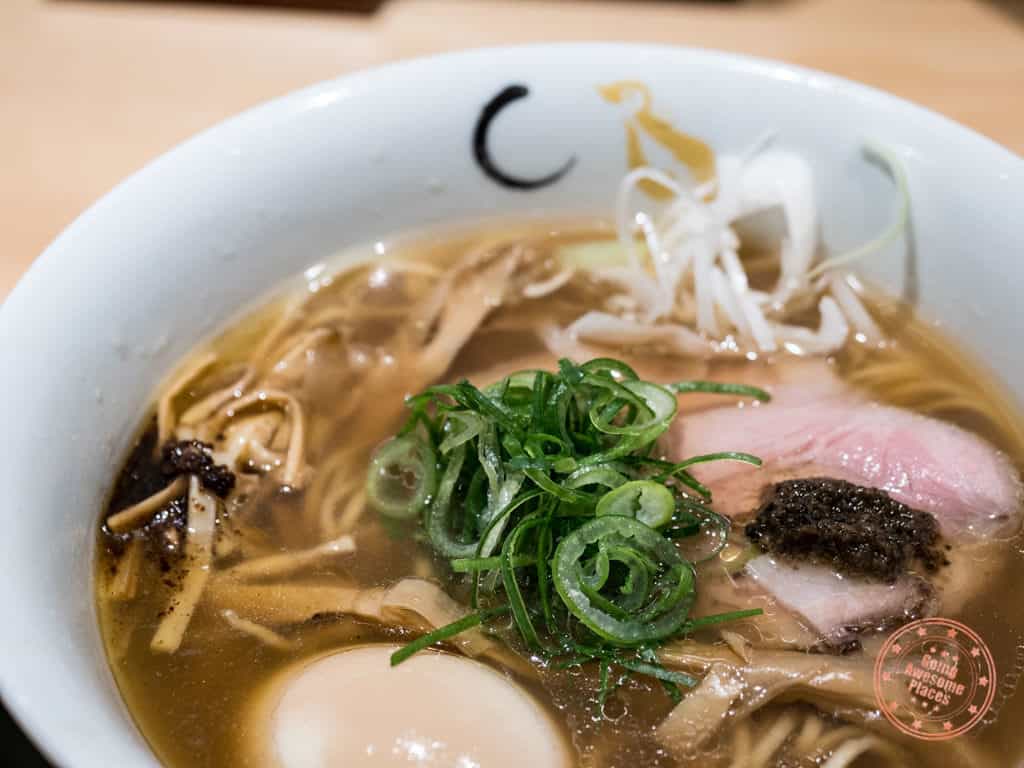
Now this term should be familiar because it’s basically the main component of any soup. In ramen, it is also one of the main back bones (pun intended) and determination of quality and skill.
Every ramen shop will do it differently but usually it’s made of pork bones, chicken bones, or combination. Depending on how it’s made, you can have cloudy broth or clear broth. In other variations, seafood or beef can also be used.
Then there’s the dashi that is combined with the soup. Dashi is essentially a stock that’s made out of ingredients such as bonito flakes (dried salted tuna) and/or niboshi (dried salted sardines/anchovy), and then simmered with dried kelp.
Flavor
This is considered to be distinctly separate from the soup base because it’s made on its own. It’s this sort of secret sauce or seasoning that ultimately gives the ramen its classification and what we consider as “type of ramen”. This defines the taste.
In most ramen shops, this seasoning isn’t added into the bowl until the soup base has been poured in.
There are 4 primary flavours:
- Shoyu (show-you) – This is a soy-based flavour but not your typical table soy sauce. It’s custom made and often home-fermented.
- Shio (she-oh) – This is a salt-based sauce and the most traditional. There’s no colour to this flavour and so it usually looks quite light and clear.
- Miso (me-so) – This is usually easily identifiable because the soup will be cloudy/opaque. Miso paste is typically used here and it’s a fuller profile with stronger noticeable taste.
- Tonkotsu (tong-cots-sue) – Not to be confused with tonkatsu, this is made from boiling pork bones until the collagen is dissolved into the stock as gelatine which gives it that fatty, cloudy, complexion.
Each of these types has their own origin story like a good Marvel movie but we won’t delve into that here.
Meat Pairing

Almost all ramen is topped with some sort of protein. The most common is chashu which demonstrates its Chinese origins (char siu).
It is most commonly pork belly but can be pork shoulder. In fact, that standard is thrown out the window because anytime a ramen shop says “chashu”, it can mean any sort of meat. That includes beef, chicken, duck, or really anything the chef wants.
Toppings
This part is what gives the ramen its creative flare and can really be one of those defining characteristics both visually and from a flavor perspective.
Here are a few common toppings that you’ll find along with their Japanese names:
- Menma – preserved bamboo shoots
- Kikurage – black fungus
- Nori – seaweed paper
- Wakame – rehydrated seaweed
- Negi – scallion
- Kamoboko – sliced fish cake with the pink swirl symbol
- Ajitama – soy sauce seasoned boiled egg with runny yolk – personally one of our favorite parts about ramen and make-or-break when it comes to skill
Noodles

We’ve gone this far without talking about one of the other important parts of ramen however nailing down all the types will be pretty hard like it would be with pasta.
Since ramen originated from China, noodles are traditionally made of wheat flour, salt, water, and something called kansui which is alkaline water to give noodles that yellow tinge. Eggs are sometimes used as well depending on the recipe.
What you’re really after when you think about noodles is a few factors:
- Straight or wavy
- Thick or flat
- Bouncy or firm
- Freshly made or from a supplier
Umami
This isn’t exactly a specific ingredient in ramen but if you read any reviews, it’s a word often used to describe the flavor. We didn’t really know what it meant so we had to look it up as well. Umami directly translates to “yummy” or “delicious” in Japanese.
Umami is the fifth taste profile out of five which also includes sweet, bitter, sour, and salt. This is the savory taste that our receptors can isolate and is often tied to those moments when we say “tasty”. At its extreme, it’s essentially why MSG is used to enhance tastiness.
Ramen is associated with umami because it is so flavor rich and the best ones do it without anything additional to enhance it so don’t expect to find MSG in any of the shops that are recommended here.
Styles Of Ramen
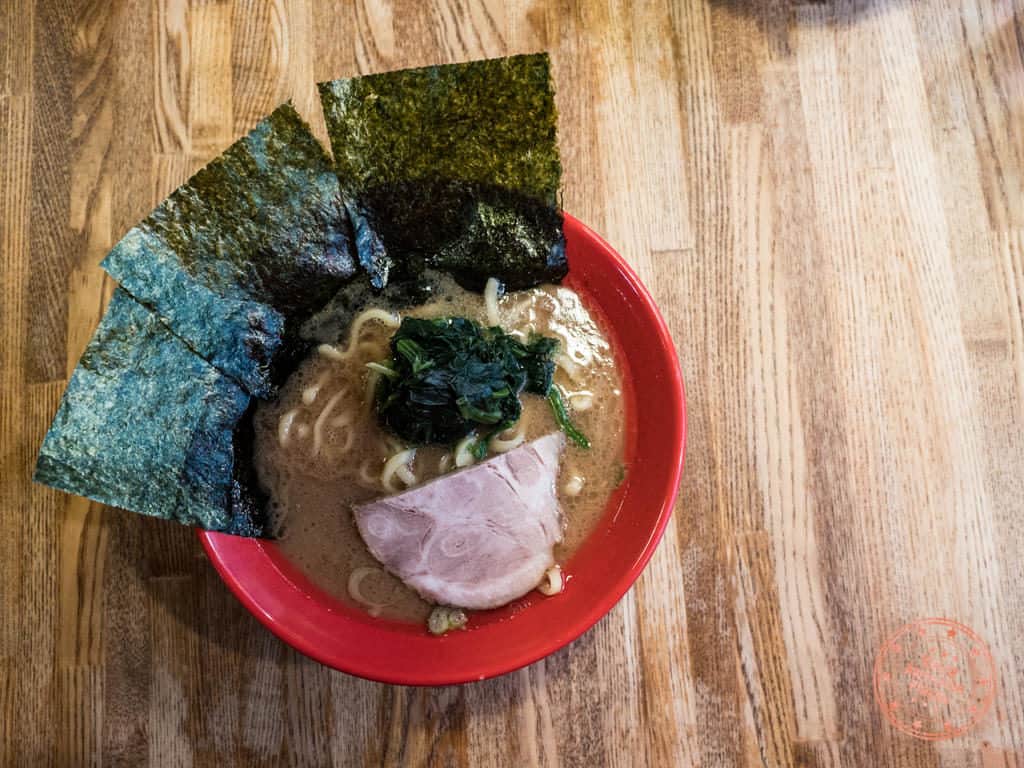 Iekei style ramen at Musashiya
Just when you thought that was it, you then have all the variants of ramen that are usually region-based. We won’t go through them all as Kobi’s Kitchen does a great job breaking it down, but we’ll pick a few that you’ll encounter on this ramen guide.
- Kitikata style – This is a shoyu pork soup base with a dashi made with sardines originating from the city of Kitikata.
- Tokyo style – Since you’ll be based in Tokyo, this is what you’ll encounter the most and why you’ll see shoyu in most shops you go to. Chicken stock, dashi and shoyu is mixed to create this unique style.
- Iekei (Yokohama) style – Considered to be an off-shoot of Tokyo style, where the same shoyu is taken but mixed with tonkotsu. It is usually topped uniquely with spinach.
- Tsukemen – A summer favorite, the cooled noodles are separated from the soup. In this style, the soup is extremely thick and is meant to be used as a dipping sauce. This directly translates to “dipping ramen”.
- Tori Paitan style – Think rich, creamy, and flavourful soup made from simmering chicken bones and carcasses long and slow.
Not Sure Where To Stay In Tokyo?
Tokyo’s neighborhoods can completely change your trip—from neon nightlife to quiet local vibes. Don’t book until you read our full breakdown of the best areas and hotels.
Where To Stay In Tokyo – A Guide To The Best Hotels and NeighborhoodsRamen Etiquette You Need To Know

If there’s one thing that you learn about the Japanese as a people is that they are incredibly dedicated, humble, serious, and deeply respectful, and honor driven. If you think it’d be any different with ramen, you’re greatly mistaken.
While it may seem like “just a noodle shop”, there’s an unspoken code of conduct that every local knows, but for us as foreigners may not be as intuitive or obvious.
Consider this; most of these “rules” show that the culture is deeply rooted in the idea that as a customer, it is an honor to be able to eat the food a ramen master creates since we’re not able to make it ourselves and therefore, respect is part of the tribute that you pay.
This is craft that most chefs spend a lifetime to perfect and usually without any thought of seeking fame or fortune.
Take a second to let that sink in. This is very different from other cultures, right?

Queuing: All popular ramen restaurants will have a line up outside its door and many of these shops are located in local neighborhoods. Most restaurants will be prepared with signs that show how the queue should form, but staying quiet is even more important.
Lastly, it is not in good taste to line up without your full group present. You’ll get some pretty serious death stares from locals if your friends go away and only come back when you’re next up.

Consider this; Konjiki Hototogisu is right below an apartment and neighbors to other restaurants. They’ve had to close on weekends because of complaints they’ve received from those that surround the shop. Other shops have been forced to close because of unruly patrons and noise pollution problems.
Put your things in an orderly way: If you’re travelling with a backpack or a small bag, make sure it’s not in the way. Most ramen shops will have a small ledge for your feet since you’re higher up on the bar. This ledge is a good spot for a larger backpack. Also look under the table for hooks or small shelves. This is perfect for purses and small bags.

Ordering with the machine: This is more or less the standard for ramen restaurants because shop owners don’t want to have to handle cash and it helps improve the flow.
Once you enter the shop, pay for your order at the machine. When you’re at the table, either hand the order ticket to the master/assistant or place it on the counter. These machines are mostly cash-only and some only accept bills less than 5,000 JPY, so make sure you’re ready. The only exception is Kagari, which uses a new cash-less system.
PRO TIP: If you need a receipt, some machines have a button for it, but we often struggled finding it without Hiroshi’s help. Worst case, just ask the chef or assistant for one. Just say “ryoshushou kudasai” (ree-o-shoe-sho ku-da-sa-ee). Worst case, blurt out “receipto” which seemed to work more often than not.
Large groups: If you’re in a group of 4 or more, seating will be a challenge especially for those ramen shops that only have 8 seats. Expect to be broken up, so don’t raise a stink if they politely ask.
No sharing: Seats are at a premium so to share a bowl of ramen is a big no-no. Every person must order a bowl. That said, if you’re not super hungry, what you can look for is a smaller size if they offer it or talk to the chef and ask for less noodles by saying men sukuname (small size).
Seasoning up: It is considered to be rude to immediately start adding spices and additional sauces that you’ll find on the table to the ramen before tasting it at all. The way it was explained to me is that it’s almost a slap in the face to the chef where you’re saying immediately that what they created wasn’t good enough. Always start with a few spoonfuls of soup before adding more seasoning.
Photos: This one’s a tough one and a struggle for most that go to Japan the first time. Photos of the ramen and food in general is no problem at all. What is not okay in Japan is to take photos of other customers and anyone behind the counter. Not to say it’s not allowed but if you want to take photos of the kitchen, you should always politely ask first.
What you say is sumimasen, shashin o totte mo ii desu ka. If they nod and smile, you’re good to go. If they cross their arms or give you the Japanese “X” with their arms, that’s a no.
Note that there are some ramen restaurants that completely ban photos.
Slurping: To slurp or not slurp is up to you. Contrary to popular belief, it’s not considered rude to not slurp. In truth, we’ve learned it’s more of an eating technique than etiquette. The experts say that they do it because it’s a great way to eat the noodles quickly while also cooling them down as you inhale.
More on the best practices for eating ramen in just a moment.
Eat quick: As much as it is an experience eating at a legit ramen joint, these are meant to be fast turnover. There’s no lingering around or staying around to chit chat. You come to eat and so once your bowl is delivered, you chow down. Once you’re done, you get up and go. The main reason is because of the limited spacing and often large queues outside so you have to keep the business moving. Ramen is also something you need to enjoy ASAP so there’s no time to waste.
Taking to go: Don’t even think about it.
Cleaning up after yourself: So you’re done and ready to head out. There’s a couple of things to do that are good etiquette.
First, depending on the shop, gather your bowl with utensils on the counter for easy cleaning. If there’s a wet towel and you weren’t sure what it was for, this is a self-serve table wipe, so the next customer gets a clean tabletop. For waste such as tissues, locate the garbage bin. If not, we noticed our guide keep it in their pocket to throw out somewhere else.
Thank you and exit: When you’re ready, signal to the master or staff with eye contact and it’s customary to say gochi-so-sama-deshita (traditional phrase meaning “thank you for the meal”). Grab your things, head to the door, do a final bow, and make sure the door is closed on the way out.
Ready To Put Your Ramen Skills To The Test?
Don’t just learn the etiquette—experience it at some of Tokyo’s best ramen shops and food spots.
Ultimate Tokyo Food Guide in Japan – Where And What To EatHow To Eat Ramen

We’re not here to tell you how to eat your food but we kind of are. Let’s just say we’re sharing our learnings from locals, and these are recommendations.
Once you receive your bowl of ramen from the ramen master,
- Take a quick photo but don’t take too long because the noodles will become soggy.
- Use your spoon and take a sip of the soup before you mix anything together so you can taste it in its pure form.
- Try the chashu before it continues the cook in the hot soup
- Dig into the noodles while slurping. The key to slurping is that you lift 5-10 strands of noodles and make sure they’re loose from the rest. They don’t have to be cut ends on the other end but as you hold your chopsticks to keep them together take short slurp bursts to almost inhale them in. After 4-5 bursts, chew off any that are still connected to the rest of the noodles in the bowl.
- Once you’ve had some of the ingredients on their own, mix it all together and keep slurping away while mixing in the soup or having the soup via your spoon. If you feel like it needs more spice or flavor, you can add some of the condiments that are available on the table.
- If you ordered the egg, use your chopsticks to break it open in half or just bite into it. Feel free to mix it with the soup and have it with some noodles as you please.
- Eventually you’ll be left with the soup. Depending on whether you like it or not, you can drink it all like you would miso soup or leave it there. You don’t have to finish it and it’s not bad manners if you do.
What About Tsukemen?

- With dipping noodles, you take a bunch of noodle strands with your chopsticks and dunk it into the thick soup. You don’t need to smother the noodles with the soup since it’s quite strong – enough to apply a small layer.
- Some of the strands might be too long and so you can bite them off at the end as you slurp.
- When your plate of noodles are done, there should be a thermos of dashi (soup). Pour some into your bowl to dilute it. Drink this as soup if you like the flavor. If not, you don’t have to do this step.
Looking To Bring Some Ramen Home?
While you’re in Tokyo, this is your best chance to buy exclusive ramen from Michelin-star ramen shops.
As we cover in the Japan souvenir guide, you can pick up ramen from Konjiki Hototogisu, Tsuta, and Nakiryu.
There’s of course Ichiran as well, which you can now find in North America but if you’re there, you might as well pick up a box (or two).
Don’t Overthink It — Just Enjoy Your Ramen

While there are a few etiquette rules to keep in mind, ramen in Japan is surprisingly relaxed compared to other dining experiences. Slurping is not only acceptable but expected, and most shops are fast-paced and casual.
Focus on enjoying your bowl, follow the basics, and you’ll fit right in without even trying.
What are your experiences with eating ramen in Japan? Any tips that we’ve missed here or any stories from eating ramen the wrong way in Japan? We’d love to hear it!
Frequently Asked Questions
What different ramen styles are there?
There are many different ramen styles in Japan, but the four main broth types are shoyu (soy sauce), miso, shio (salt), and tonkotsu (pork bone). You’ll also find regional specialties across the country, along with styles like tsukemen, where noodles are served separately for dipping into the broth
How to eat ramen politely in Japan?
To eat ramen politely in Japan, wait until everyone has been served before eating, use chopsticks for the noodles and a spoon for the broth, and return bowls and utensils neatly when finished. Slurping noodles is completely acceptable and is often seen as appreciation that you’re enjoying the meal.
Can you get ramen from a vending machine in Japan?
Yes, many ramen shops in Japan use vending machines for ordering. You select and pay for your meal at the machine near the entrance, receive a ticket, and hand it to the staff before sitting down. These machines are especially common in casual ramen restaurants.
What is the most popular type of Japanese cuisine?
Some of the most popular types of Japanese cuisine include ramen, sushi, tempura, yakitori, and udon. Ramen is especially popular across Japan thanks to its regional variations and wide range of broth styles.
Japan Trip Planning Essentials And Discounts
If you’re in the middle of booking your trip to Japan, here are the most important places you need to go to book:
JR Pass
The two most reliable places we always check are JRailPass and JRPass. If you are taking long distance Shinkansen across multiple region, get the full JR Pass. If you’re focusing on one specific area, you only need a JR regional pass. The official booking platform is Smart-Ex.
Shinkansen
The JR Pass prices have gone up and for many of you, it’ll make more sense to book tickets individually. The secret is that when you buy your Shinkansen tickets through Klook offers special vouchers for Don Quijote and BIC when booking. Their tickets are super easy to redeem as well. Right now, use code SKS10OFF to save $10 USD off.
Tours
While Viator and GetYourGuide are our go-to’s, Klook and KKDay are much popular in Asia so it’s always worth comparing across all of them to make sure you get the best price. With Klook, use code GOINGAWESOMEPLACES to save up to 8% for new users and 3% for existing users.
Pocket Wifi

While we do love eSIMs, having a pocket wifi is great for sharing data with a large group. The most popular is NinjaWifi which is easy to pick up at the airport. Use code AWESOME15 to save 15% (automatically applied). Alternatives are offered by JRPass and JRailPass but they aren’t as cheap. For a more global solution, consider Solis and PokeFi.
Car Rental
Big companies such as Budget, Avis, and Enterprise operate in Japan but they’re usually the most expensive. The best companies are the local Japanese ones such as Toyota, Nippon, Orix, Nissan, and Times Car Rental. To make things easier, use Booking’s car rental platform and Klook to compare prices all in one place. Don’t forget, you need an IDP to drive in Japan so get one before you leave your home country.
Learn Japanese
It helps to know even a bit of the language before you go. Start your learning with Rosetta Stone Japanese.
Cash or Credit
Cash is still very important to have in Japan but when you use credit cards, make sure you’re not getting charged those extra exchange rate fees. The best card right now is the Wise Multi-Currency Card which is actually a debit card where you can convert at favorable rates beforehand. This cuts out any sneaky transaction fees.
Travel Insurance
Make sure you’re covered in case something happens. Get quotes from HeyMondo where booking through our link gets you 5% off automatically and if you’re from Canada, get quotes from RATESDOTCA.
Shopping
Discovering Don Quijote is a quintessential part of the Japan experience. The secret for tax-free shopping is that they have a coupon that can help you save 10% off + additional 5% off if you spend ¥10,000 or more. If you’re interested in coupons like this, we have them stored on our Goodies page that Insiders can access. Join today!

















 English (US) ·