
 1 month ago
32
1 month ago
32
The Zona Cafetera is a place in Colombia where I felt, well… truly in the zone. This land of fertile valleys sprinkled with small pueblos is where most of Colombia’s coffee originates — and it’s also one of the most fun parts of Colombia to explore.
I moved from one coffee town to another by means of a Chiva, a colorful type of modified truck that’s used as a local bus. It went at a nail’s pace and got stuck in the mud a few times, but I didn’t mind the syrupy-slow journey, being treated to such wonderful scenes of local life and views of glorious landscapes.
We passed rolling hills quilted with smallholder coffee and banana plantations. Butterflies and hummingbirds darted from flower to flower. In villages, mustachioed ranchers and coffee farmers wearing striped ponchos and white hats went about their daily business.
All this gave me a delightful sense of place. It’s a feeling that persisted during my two weeks of hopping through the Coffee Zone (also known as the Coffee Triangle or Eje Cafetero in Spanish).


Where is the Zona Cafetera?
Colombia’s fertile coffee-growing region is found roughly within a triangle between the cities of Medellin, Cali, and Bogota. This entire area is recognized by UNESCO as an exceptional example of a sustainable and productive cultural landscape.
The map below shows exactly how I hopped around the region, though I’ll admit I was being a bit of a completionist. Most Colombia itineraries include only the town of Salento, famed for its coffee farms and unbelievably tall palm trees, which are definitely a mindblowing sight.
However, this town is getting more touristy every year. To truly capture the atmosphere of the Zona Cafetera, it really pays off to make time for some other places.
My favorites were probably Jericó and Salamina — both are rather sleepy places, but among the most authentic (for lack of a better word). If you seek somewhere more lively and with more things to do, my recommendation apart from reliable Salento would be to go to Jardin. It’s in that perfect sweet-spot of being fun and tourist-friendly while also having lots of local charm.

Much of this region is mountainous with the coffee often cultivated in small plots on steep slopes. Besides the lovely landscapes, you can enjoy villages and towns with colorful traditional architecture, many of them being among the recognized heritage towns of Colombia.
Being usually at higher elevations, the weather is pleasantly milder than on the searingly hot and sweaty northern coast of Colombia. It’s known for its year-round spring-like weather, but rainfall is common (usually short, intense showers) so bring a rain jacket just in case.
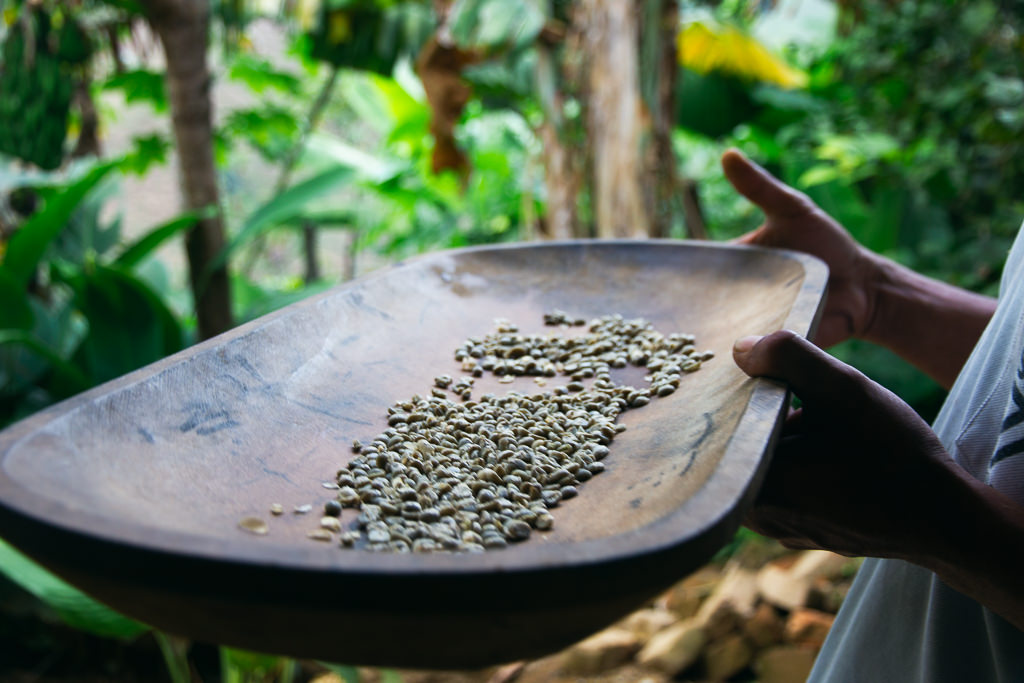 The coffee that gives the region its name
Towns in the Zona Cafetera
I’ve been to the region twice — once to hit up just the absolutely highlights, and a second time to slow-travel from town to town starting in the north (from Medellin) and ending in the south, while unearthing many wonderful hidden gems along the way.
Here I’ll cover all the towns except for Salento — not because it isn’t worth visiting (it’s great), but being the most popular spot you can find many guides dedicated just to this town.
Jericó
This was my first stop in the Zona Cafetera and quite possibly my favorite.
Despite being easily reached from Medellin, it’s off the usual travel trail. If you’d enjoy just spending time in an authentic coffee town, and don’t mind the lack of any easy-to-book tours or off-the-rack day trips, then I highly recommend Jerico.


Part of the fun of Jericó is simply to stay on the main square with a beer or a meal and watch local life unfold. Coffee farmers and ranchers wearing their typical hats can be often seen meeting on the small main square for trading their goods or to buy supplies. Jerico just has a great vibe and felt to me very unspoiled.
During August, Jericó has a big festival where hundreds of colorful kites are flown over the valley. I was sadly there a bit too early to witness it, but still saw many people already practicing their kites from the town’s viewing point.
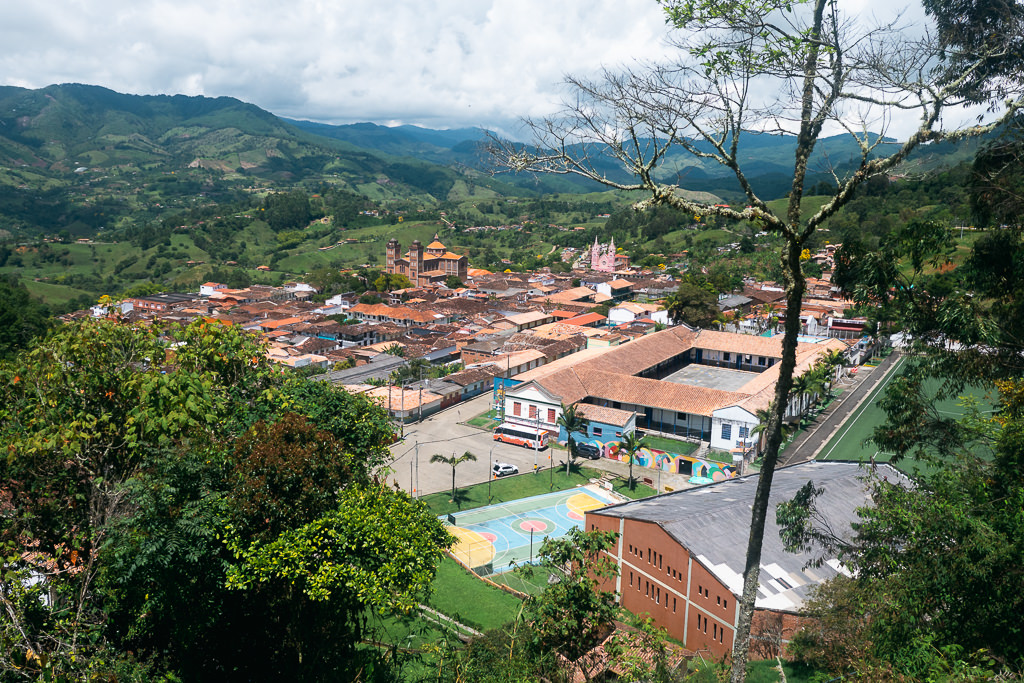


What to do in Jericó
- Hike the surrounding hills. Trails lead through coffee farms and countryside with views over the valley. There aren’t many properly marked trails but locals can point you the way (or use a mapping app like Organic Maps)
- People-watch in Parque Principal – this is the town’s main square, especially lively on weekends when families gather and vendors set up stalls
- Climb to the Cristo Redentor statue – a 20-minute uphill walk from the plaza for panoramic views of Jericó’s orange rooftops and surrounding mountains
- Continue to the Morro El Salvador viewpoint – a further 30-45 minutes beyond the Cristo statue for even higher vantage points over the region
- Wander the Jardín Botánico – a small but nice botanical garden showcasing native plants and orchids. Not a key attraction but I enjoyed a short and pleasant walk through here.
- Take a coffee farm tour. I already did one in Salento, but the Mother Laura Coffee Tour is the one option I’ve heard recommended several times.
Although there are not so many ready-made tourist activities in Jericó, I really liked the small-town vibe and just enjoying the atmosphere. This blog has some great further suggestions.
Where to stay in Jericó
- $ Backpackers will love Parcerito’s Hostel, which is very social as it’s built around a central courtyard, though the rooms are very basic.
- $$ I also stayed in the boutique hotel El Despertar which has a lovely viewing deck with a hot tub and friendly family-run management.
- $$ I also want to draw your attention to this Riverside Ecoliving Space, where I didn’t stay but which should be perfect for digital nomads.
Where to eat
Restaurante La Gruta offers an amazing set meal at lunch that’s both delicious and great value. Cafe Don Rafa on the main square has specialty coffee and treats.

Chiva to Jardín
From Jericó to Jardín it’s only 20 miles (32 km) as the crow flies. But your only direct transportation option is a chiva (a truck converted into a bus) that does the trip in about… six hours.
You could say that this is a mind-bogglingly slow and terribly inefficient way to hop to the next town — and you’d be right.
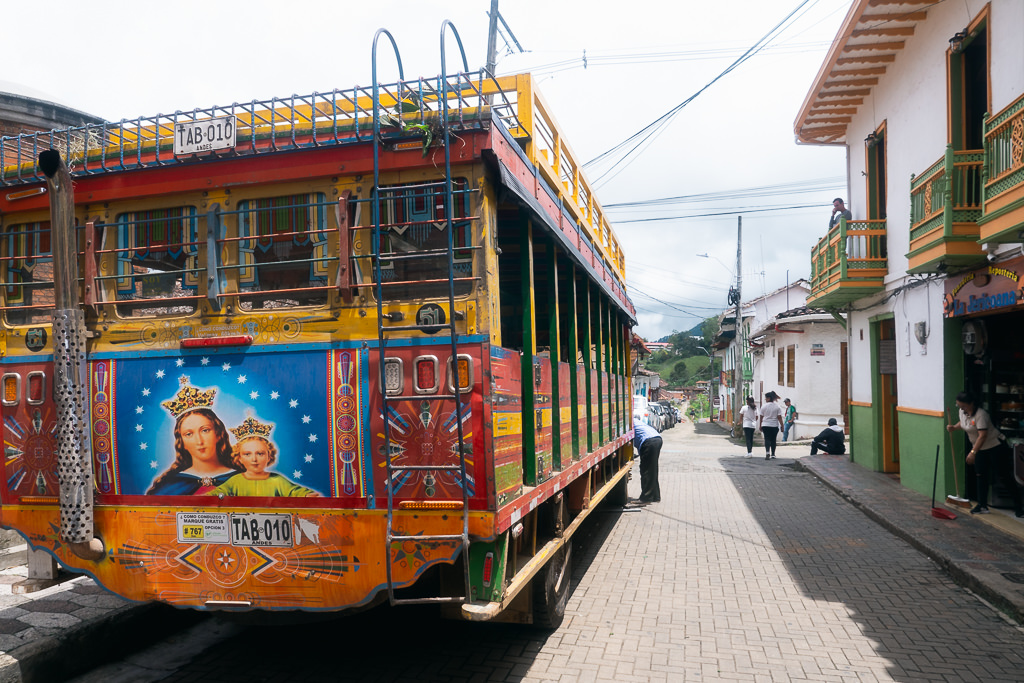
But… look at this another way and it’s actually the cheapest tour of the coffee region landscapes you can get. For just a couple of bucks, you get to spend several hours driving slowly through backroads in the Zona Cafetera. You’ll be treated to some insanely gorgeous views especially towards the end of the trip.
Now, my chiva got stuck in the mud… twice. We had to help a banana truck that had tipped over the side of the dirt road. We got into a “who blinks first” stand-off with another chiva on a road that could fit only one.
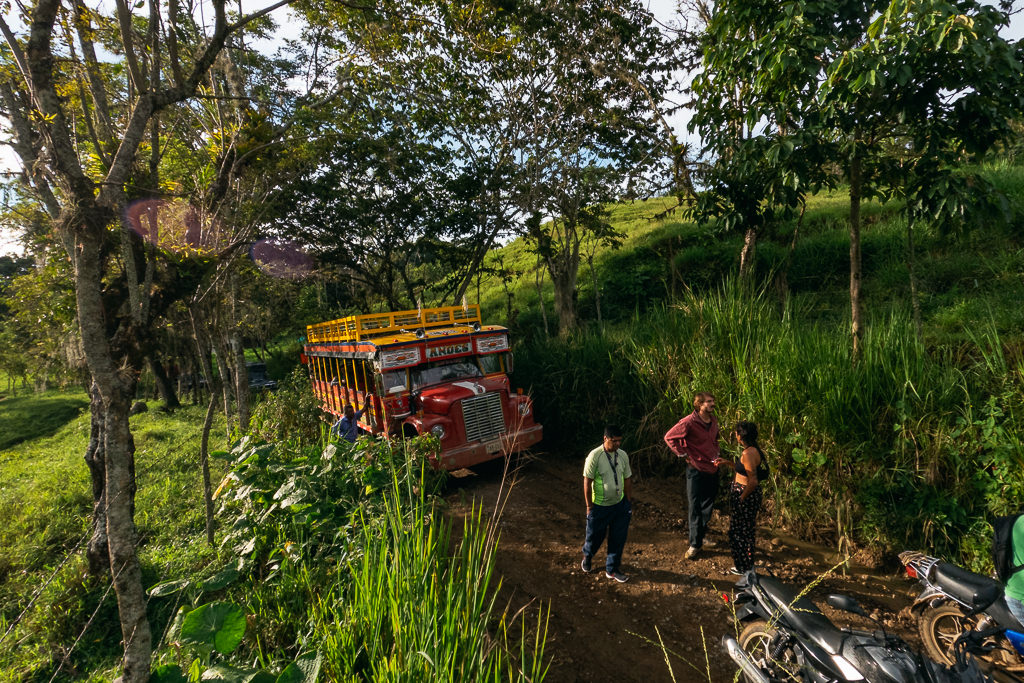 Stuck on a narrow dirt road
Progress was slow, but it didn’t matter. This trip was possibly the most fun day I’ve had on this route. It alone was worth going to Jericó for.
You can find the chiva departure point beside the main square in Jericó, opposite of Restaurante La Gruta. It leaves only once or twice a day; inquire locally for the current timetable.
Watch my adventures in the Zona Cafetera below:
Jardín
Literally meaning “garden” in Spanish, Jardín is certainly a pretty place, with colonial facades and green mountains forming wonderful backdrops on all sides.
Jardín has quite a lot to do in and around it (much more so than low-key Jerico), which makes it an easy place to add into your itinerary. It can also serve to nicely break up the journey from Medellin to Salento or Armenia.
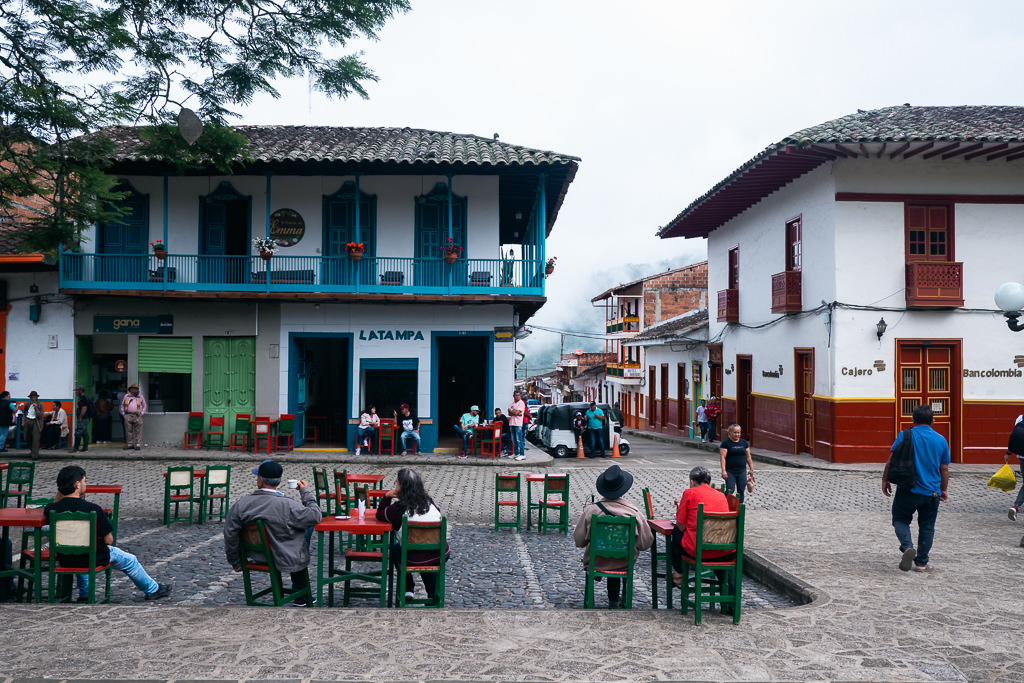


The main square gets very lively with people enjoying beers and snacks at colorful chairs and tables. Sometimes you’ll see a local rancher on horseback going past. Given its charms and how much there is to do nearby, if you only have time for one town in the coffee region, I think Jardín is a perfect choice.
It’s a popular weekend spot for Colombian families and is still only somewhat known among foreign travelers. There are ten or-so backpacker hostels and many small-scale hotels to choose from in Jardin.
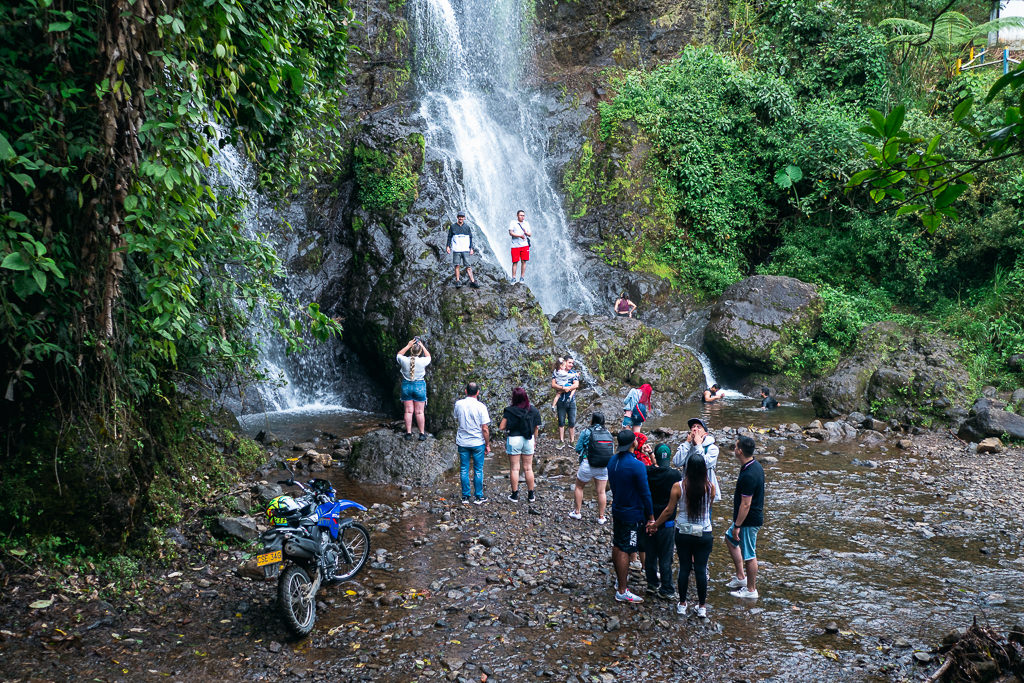 Cascada La Escalera
What to do in Jardín
- Hike to waterfalls including Cascada La Escalera and Cascada del Amor, both within walking distance of town (30-45 min each way)
- Cueva del Esplendor is a waterfall inside a moss-covered cave with a skylight opening above. It’s accessed via a 2-hour hike or horseback ride, bookable through local tour operators
- La Garrucha cable car – a rickety metal gondola that climbs the mountainside for valley views (note: frequently out of service, including when I visited, so check locally before going)
- Paragliding launches from the surrounding hills with tandem flights offering bird’s-eye views of coffee farms and the valley below
- Coffee farm tours at fincas like Finca Mariposa, where you can walk through plantations and learn the bean-to-cup process
- Birdwatching tours – the region is home to hummingbirds, toucans, and the Andean cock-of-the-rock. You have to be willing to get up in the early morning for this, but early bird catches to worm.
- Horseback riding through the countryside, often combined with waterfall visits or coffee farm stops
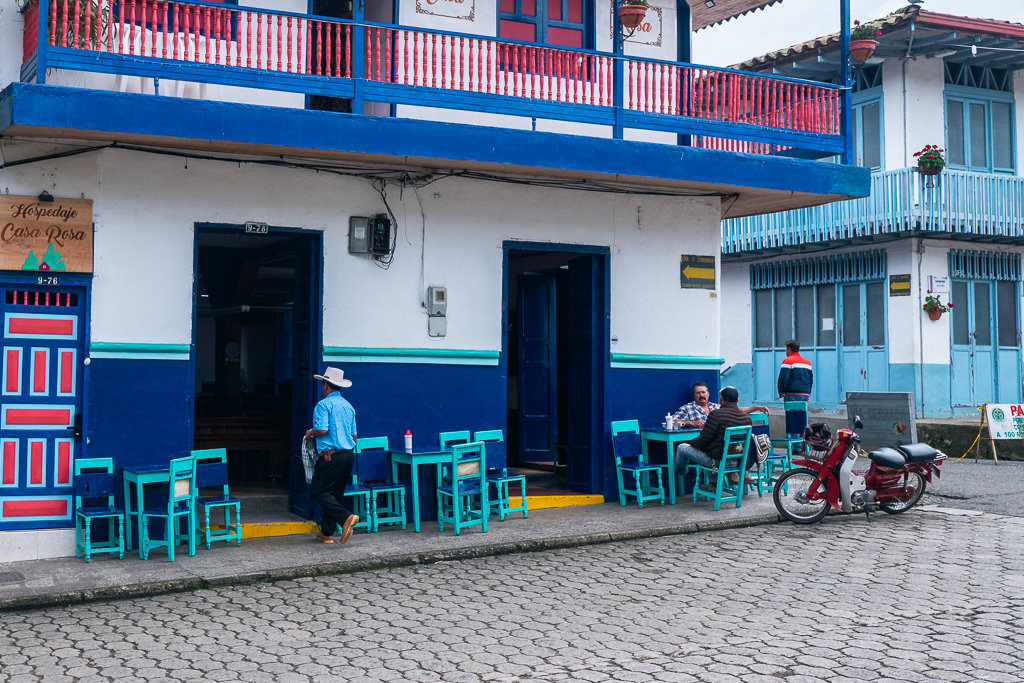
Where to stay in Jardín
- $ The cozy family-run Hostal Naty Luna is a great spot for backpackers and it’s where I stayed. The location is perfect but the rooms are a bit cramped though, so I would also suggest La Tangara Rural hostal if you’d prefer more open space among nature just outside town.
- $$$ For a beautiful boutique hotel, check out Casa Passiflora Hotel.
Where to eat in Jardín
The town is known for its trout farms where you can get very fresh fish at very low prices (ask them to grill it instead of frying it if you want it more ‘Western’ style). La Argelia Restaurante Truchera just outside of town is a fun experience during lunchtime.
Don’t miss brunch or coffee at Café Macanas next to the main church. The artisanal ice cream at Cocoa Café Francés is out of this world — is it weird that I had possibly the best gelato of my life in a small mountain town in Colombia?
Tip: Many places in the Zona Cafetera will be noticeably busier on the weekends as local tourists from Medellin and Bogota visit. Choose weekdays for any places where you’d like to have a quieter time. The difference was particularly noticeable to me in Salento and Jardin.
Manizales
Manizales is not one of those charming coffee towns like we’ve covered so far, but it’s worth visiting to add some variety to your Zona Cafetera itinerary.
This small university city offers mountain views on every side, though I think of it as more of a waypoint than a destination in itself. It doesn’t really have an old center and there aren’t that many cultural attractions, but it does have some great things to see nearby.
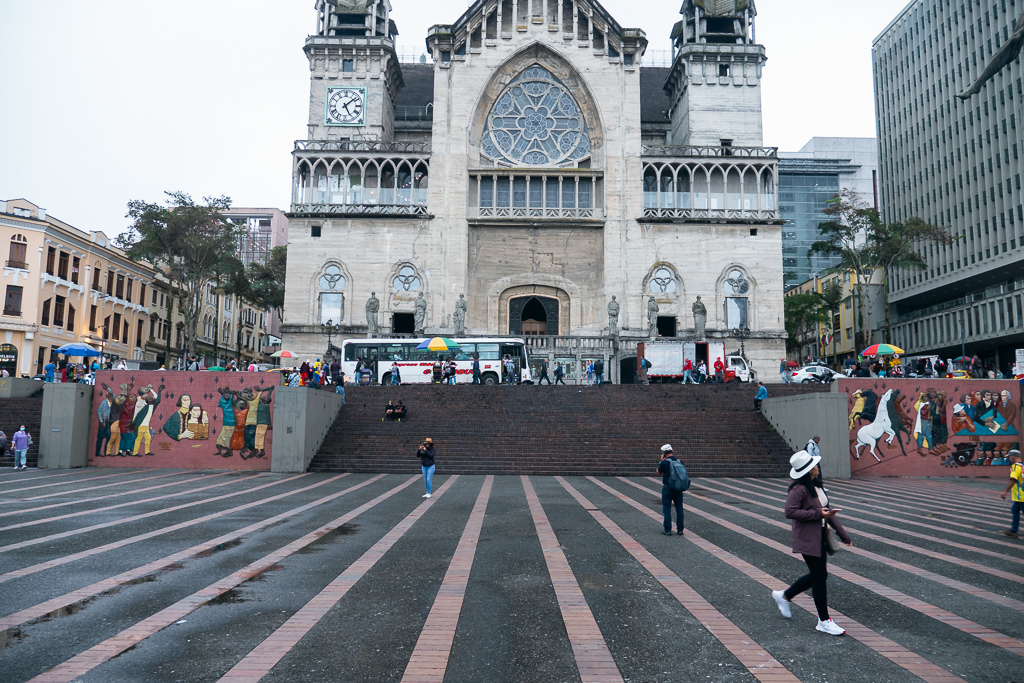
It’s still nice to spend maybe half a day in this non-touristy city in Colombia. You’ll get a taste of “real” Colombia in a city that is generally known for its high safety levels.
Then, you can use it as a springboard to visiting Los Nevados National Park. This is where you can experience the páramo — a unique high-altitude ecosystem located only in the Andes of Ecuador, Peru, and Colombia.
It’s a great change of scenery to suddenly find yourself at 4,450 meters above sea level, looking at rocky Moon-like volcanic landscapes. On the lower misty slopes, you’ll see fields of frailejones, strange tree-like plants that grow up to 3 meters in height and are distant cousins of the sunflower.
You can often see the peak of Quindío volcano in the distance. If you’ve been to the famous Cocora valley in Salento, this whole area is essentially what is beyond the mountains at the end of this valley — a side not everyone gets to see.
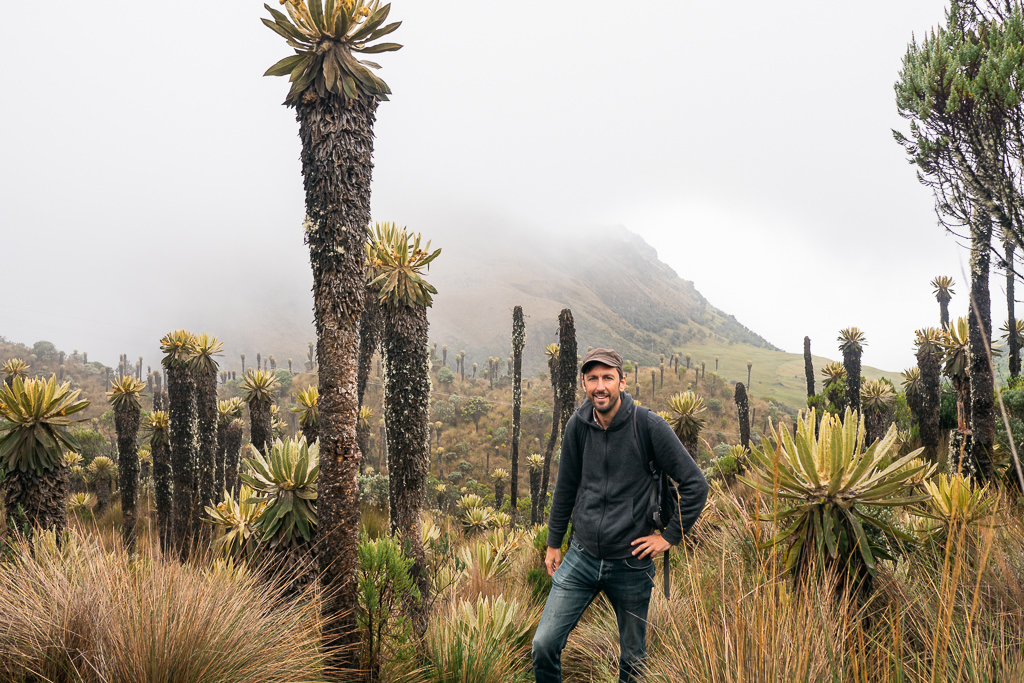 Misty and bitterly cold, nevertheless the remote volcanic landscapes were highly worth it
Trekking, biking, or jeep tours of Los Nevados can be easily booked locally, such as through Ecosystemas Travel. I did a jeep tour with them and loved it. The guides were friendly and were actually knowledgeable and passionate about the flora and fauna (though some Spanish knowledge will be very helpful as the guides generally don’t speak English).
Unlike the mild climates in the coffee zone, the Los Nevados National Park will be mostly very cold and misty, but that makes it an interesting break on your Zona Cafetera route. Many of the tours stop by volcanic thermal baths, letting you relax and warm up before returning to your accommodation. On my tour, I stopped at Eco Termales El Otoño.

What to do in Manizales
- Visit the Plaza de Toros bull ring
- Fet some great views from Chipre Tower
- Ride the cable car connecting the two parts of the city
- Hit up the nightlife; being a big student city it’s known for its many bars near the university areas around Estrella in the east.
- And, of course, you can book a tour of Los Nevados here.
Where to stay in Manizales
- $ I stayed at Hostal de la 57 which was a great budget option. My tour for Los Nevados picked me up right from the doorstep here.
- $$ For a hotel in the centre, check out Quo Quality Hotel (I can’t believe this fancy hotel is just 40 USD a night!)
- $$$ Check out Lodge Paraíso Verde for a beautiful finca in the nearby mountains.
Where to eat in Manizales
There are loads of international food places around Estrella serving trendy food at very affordable prices. Check out Oryza Food Co, Alchile Taquería, or Callejera Street Food.
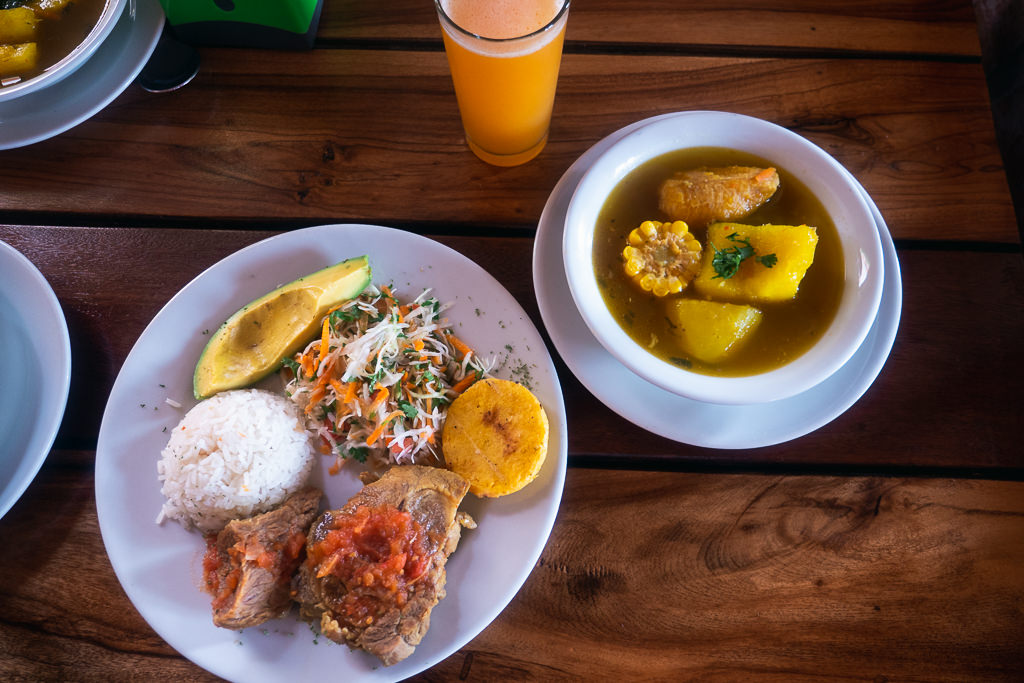 Budget tip: in Colombia the “executive menu”s at lunch offer simple, filling meals
Salamina
Despite being recognized as one of the heritage towns of Colombia, Salamina seems virtually unknown among international tourists. It takes 3 hours to get to Salamina from Manizales; because it’s a bit out of the way it isn’t touristy in the slightest.
If you enjoy straying off the usual path and appreciate the authenticity, then Salamina is one of the most charming stops in the Zona Cafetera.
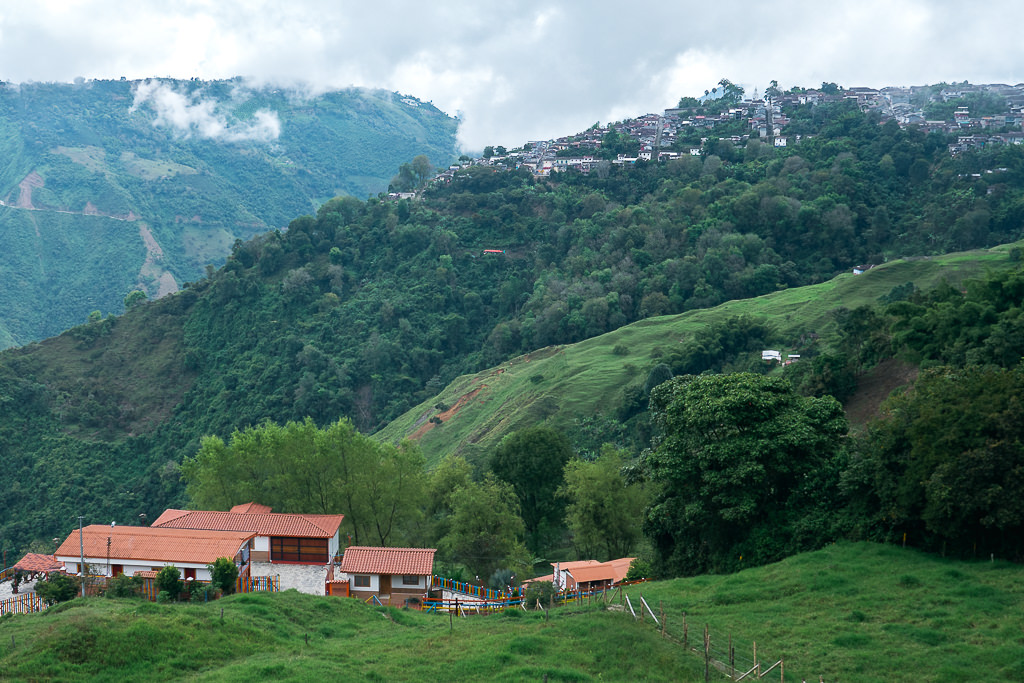 Salamina, perfectly perched on top of a hill, with fantastic views in all directions
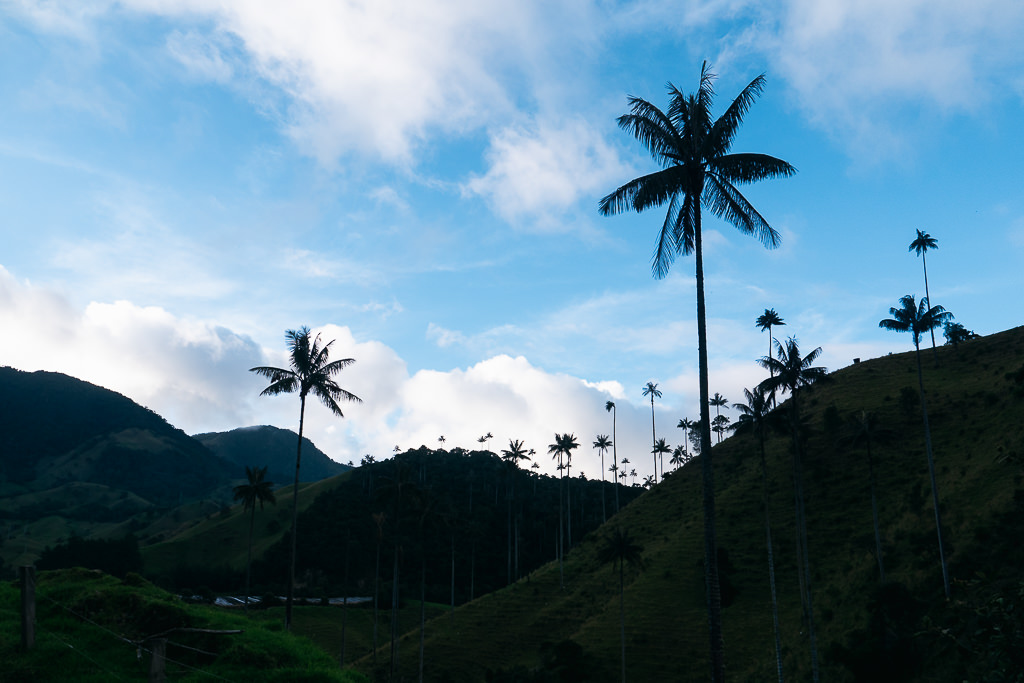
While Salamina itself is pretty low-key, there is one major attraction nearby: the Valle de la Samaria. Much like the tourist hot spot of Valle del Cocora near Salento, you can see towering wax palm trees in this valley, some of which are known to be among the tallest palm trees in the world. The only difference? In Valle de la Samaria you can be virtually alone.
I got to the viewpoint in Samaria during sunset, which was simply glorious. It was utterly tranquil, only hearing the chatter of parakeets and parrots that make this valley their home and that feed off the palm trees.
Located right in the middle of this stunning landscape, Mirador Valle de la Samaria offers several accommodation options, including a dorm, several cabins, and a totally secluded glamping tent offering panoptic views of the valley. Guests are served meals cooked using organic vegetables from the garden. Reservations are via Whatsapp only.
There is no WiFi at the eco-hotel; being in nature with barely another soul around is the main attraction here. Besides enjoying the views from the hotel, you can take a 3-hour circular hiking route around the valley.
How to get to Salamina
It’s easiest to go via the city of Manizales. At the Manizales bus terminal, you can jump on a minibus to Salamina, or take a shared taxi. Four different companies run bus services and the journey usually takes 3 hours. The taxi service has its own desk where the bus tickets are also sold; the price is fixed at a reasonable 26,500 pesos. It takes about 1,5 hours by taxi with departures all day until 5.30 pm.
To get to Samaria valley, you have to take the local Jeep service to San Felix (1,5 hours), then hike or take a taxi. Including Salamina it’s a bit of a complicated sequence of steps to get there. However, now there is also a direct tour from Manizales that takes you here an organized day trip.
What to do in Salamina
Part of the appeal is just to watch local life, maybe go on a hike around the town, and visit the local shops. Then hop on a jeep to the village of San Felix and hike around the Valle de la Samaria.
Where to stay in Salamina
- $ Bonsai Casa Hotel is the main budget-friendly backpacker hotel.
- $$ For a more upscale boutique option, check out either La Estancia or Hotel Boutique La Leyenda 1860. These still offer fantastic deals and value for money.
Filandia
The small town of Salento is the biggest tourist destination in Colombia’s coffee zone, but since it’s been getting crowded in recent years, the nearby town of Filandia has been getting some of the overflow. I love it as an alternative to Salento — it’s more relaxed, but still lively enough to choose it as your base in this area.
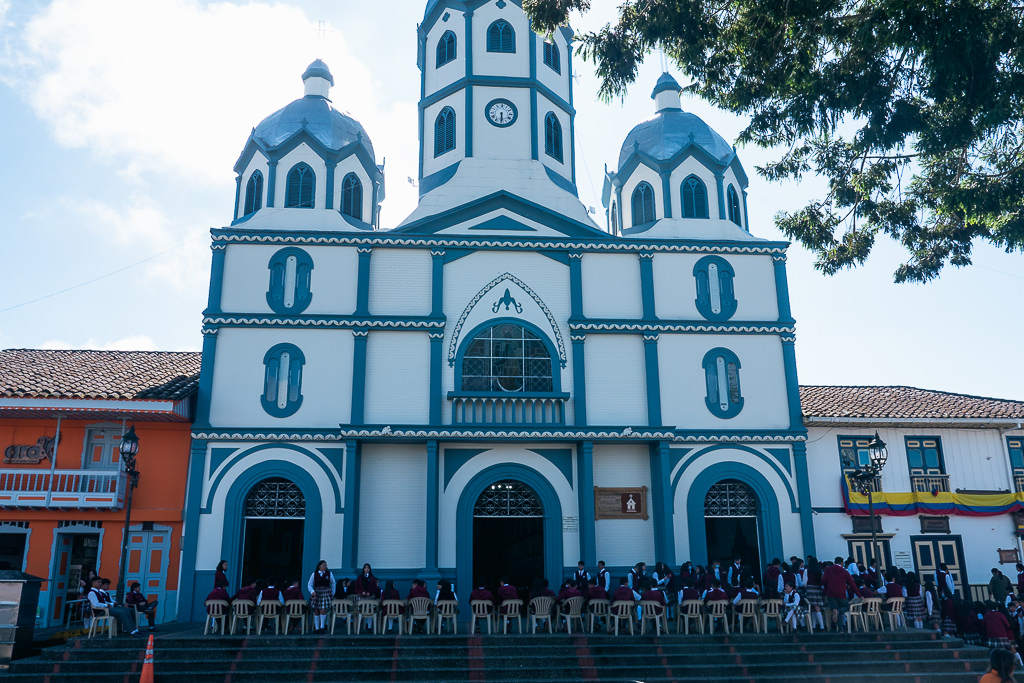
The colorful colonial town of Filandia sits atop a hill overlooking the rolling green hills of the coffee region. Coffee farmers and ranchers are its main inhabitants, but it’s also tourist-friendly with trendy restaurants around the main square, a number of hostels and small hotels, and plenty of fun activities in the area.
One of my favorite activities here is to dive into the Barbas-Bremen Nature Reserve, a small patch of virgin Andean rainforest, where you have a good chance of spotting howler monkeys. Switching so seamlessly from the flowing coffee hills to what felt more like a miniature Amazonian forest was a great experience.

What to do in Filandia
- Mountain bike to Quimbaya, a scenic 16km downhill ride through coffee country. Bikes can be rented in Filandia (I got mine from Bonsai Casa Hostel). You can catch a jeep back up if needed, to save you a stiff uphill ride.
- Visit Reserva Natural Barbas-Bremen – a cloud forest reserve about 30 minutes away, home to howler monkeys, spectacled bears (rarely seen), and hundreds of bird species. I did this on an organized trip and it was great; my guide showed lots of ‘secrets’ of the forest
- Day trip to Valle de Cocora. Colombia’s most iconic landscape of towering wax palms (the world’s tallest palm species) is easily reached by jeep from Salento (45 min from Filandia)
- Climb the mirador – a wooden lookout tower on the edge of town gives 360-degree views over coffee plantations and the Andean foothills
Where to stay in Filandia
- $ I was on a budget and stayed at Bidea Hostel, a somewhat labyrinthine yet cozy hostel with a great atmosphere.
- $$ For a little more upscale accommodation, I suggest the boutique hotel El Reloj Casa.
Where to eat in Filandia
A string of restaurants on the north side offers stunning sunset views of the landscape in addition to some amazing food — in particular, don’t miss Helena Adentro or Cultivar.

 Filandia, beautifully situated on a hilltop
Pijao
The mountain town of Pijao was my final stop on this trip; it was a last-minute addition based on a friend’s recommendation. Located south of Armenia, it’s another highly authentic and quiet destination, similar to Jerico or Salamina.
The town’s name might not seem Spanish and that’s because it refers to the indigenous Pijao people that were living in the present-day department of Tolima, Colombia.
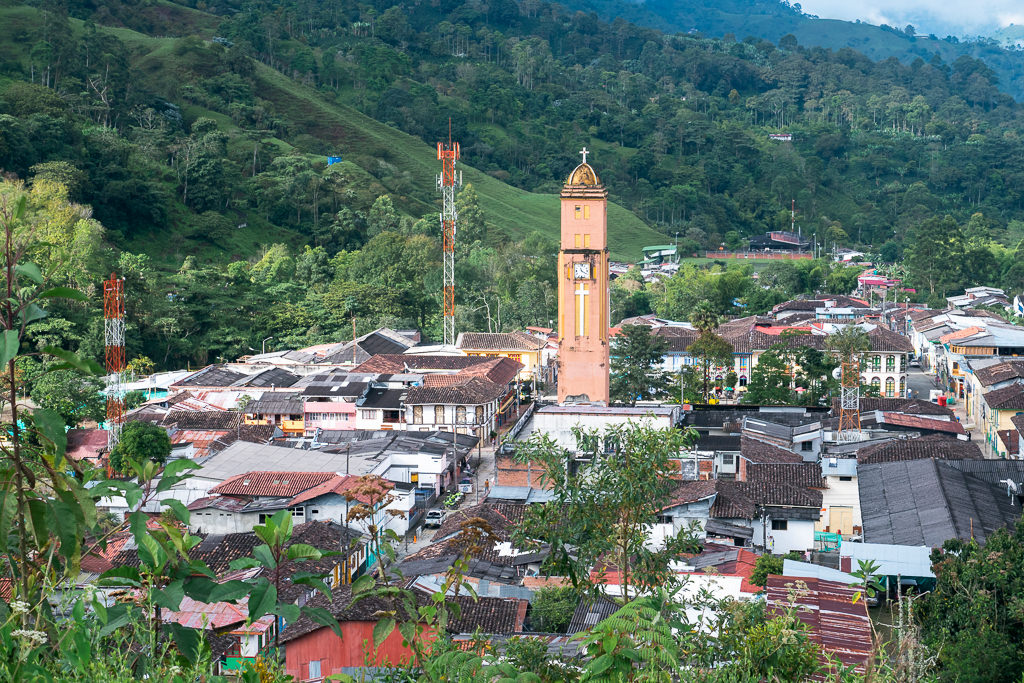
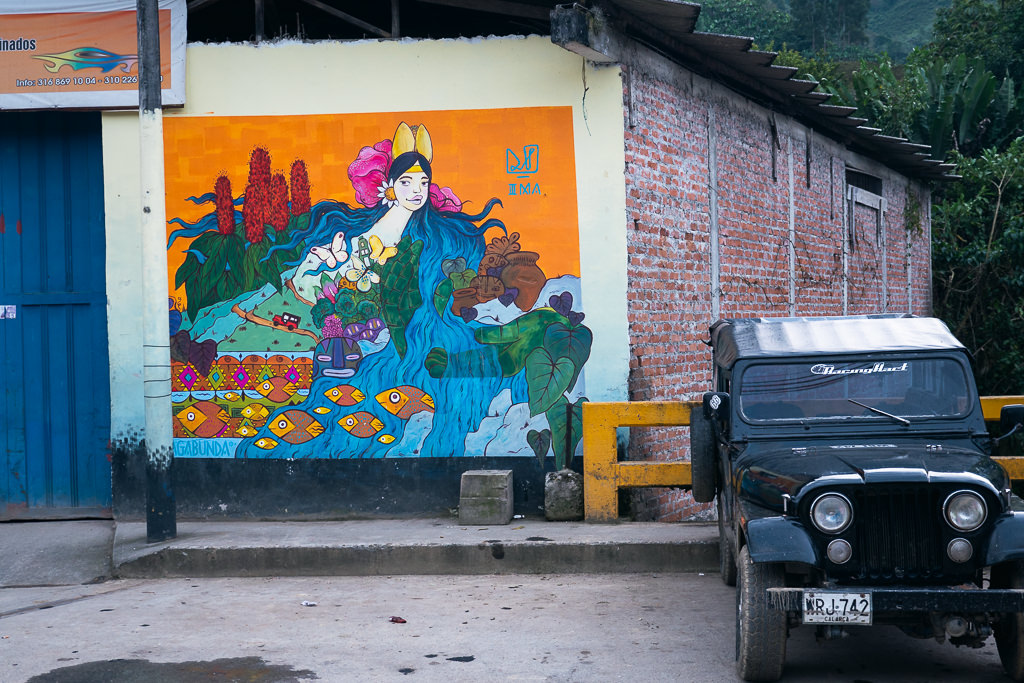
It’s a very peaceful town with barely any foreign tourists, best appreciated if you’re looking for a simple place surrounded by green mountains. You can either stay in the town itself or opt for one of the fincas (converted farms) or eco-cabañas on the nearby slopes.
What to do in Pijao
- There are several mountain hikes you can do in the area. Ask locally for where the trailheads are. Use apps like MAPS.me or Alltrails to help you find the way; there are signs but not that many.
- I did a wonderful day hike along the river (heading south). You can also go up the mountain to the Páramo de Chili — a great opportunity to see this type of ecosystem in a self-guided way.
- This excellent blog on Pijao has more suggestions and I heard some great things about the Wakecup Coffee Tour in Pijao.
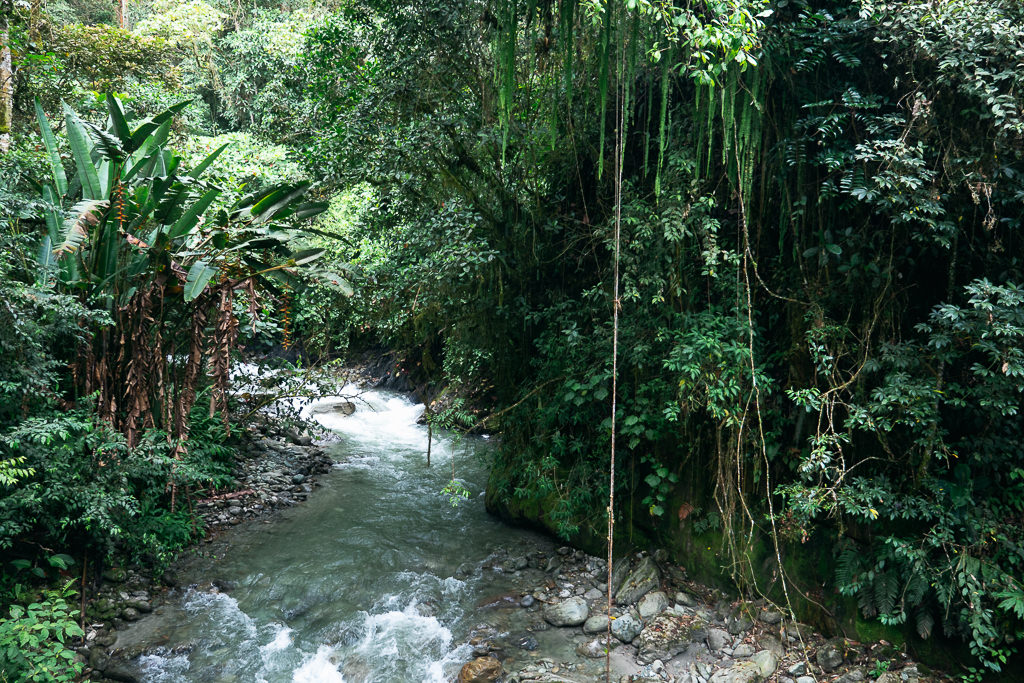 Along my hike following the river south
Where to stay in Pijao
- $$ I stayed in Casa Victoria which was just delightful. It has some very nice rooms and a very friendly and welcoming owner. The terrace looking out towards the river lets you swing in a hammock or chat with other guests. The owner can provide lots of information about hiking trails and other activities.
Where to eat in Pijao
For great lunch set meals go to the food stalls located behind the main plaza on the side of the river. Cafe Montanero does good Colombian dinners and for great coffee be sure to visit La Floresta.
And that wraps it up for my journey through the Zona Cafetera! I know I’ve mentioned a lot of town names here and if you’re researching your trip, they may all start to blend together. While some of them have overlapping things to offer (there are coffee tours just about everywhere) each town did also feel distinct in its own ways.
Whichever towns you decide to pin to your travel map, you will surely have a fantastic time. Travelling here is a truly immersive experience, offering something different from the typical city-centric Bogota/Medellin/Cartegana itineraries that are common in Colombia.
Want to learn about another hidden gem? Then don’t miss my guide to the remote and spectacular Pacific coast of Colombia. It can be reached by plane from Medellin, so can it be perfectly tacked onto a Zona Cafetera trip.
Note: I travelled in 2022 and fully updated and expanded this guide in 2026 with fresh research, local tips, and more detailed activity suggestions. You can read more about approach to updating here.













 English (US) ·