
 3 weeks ago
30
3 weeks ago
30
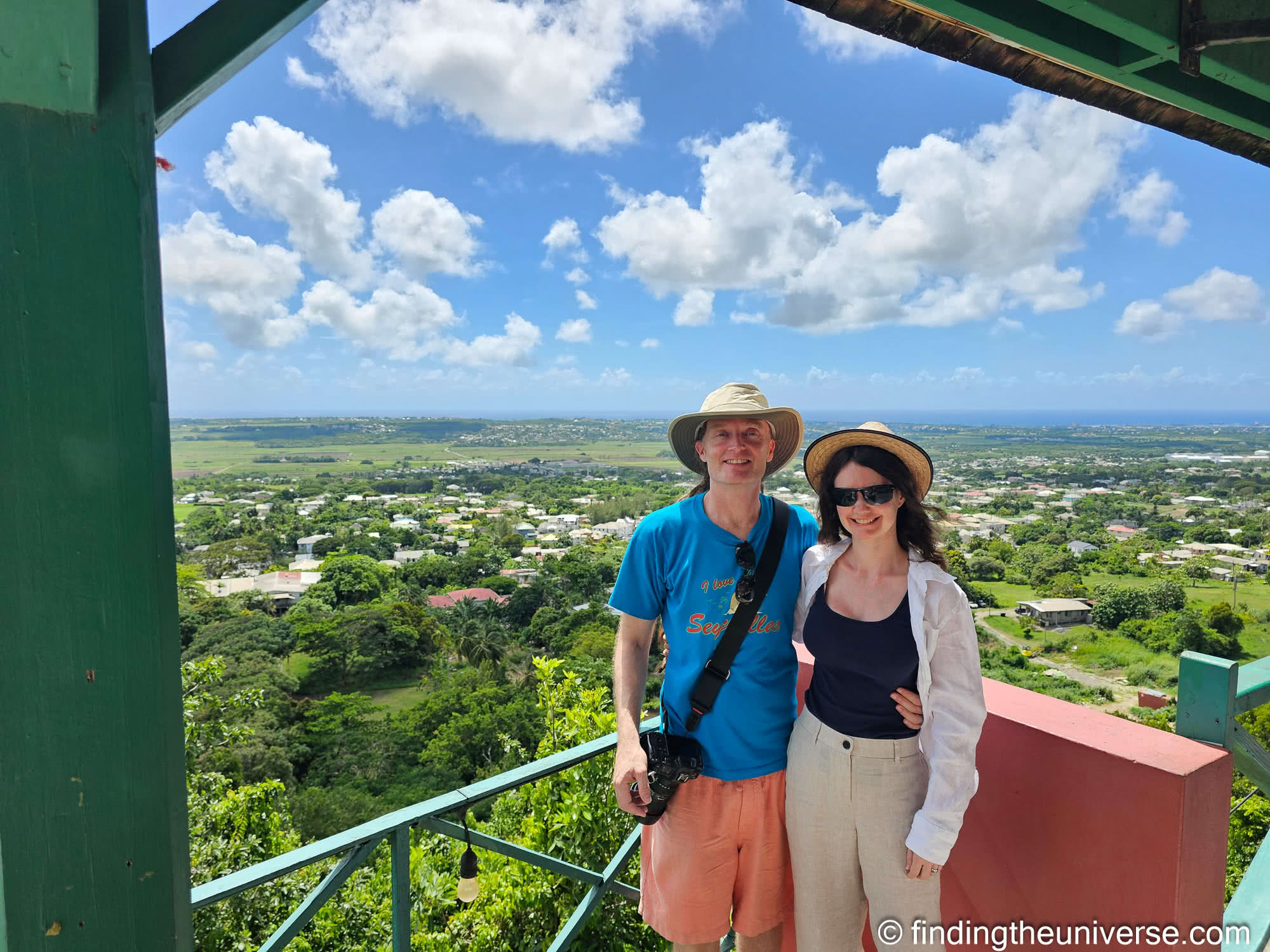
Jess and I have spent a fair bit of time exploring Barbados, and in that time we’ve covered pretty much every corner of the island. We’ve driven the wild east coast, eaten our way through the south, watched the sun set from the west, explored museums in Bridgetown, spotted wildlife, and wandered the beautiful beaches.
The Oistins Fish Fry on a Friday night was a highlight, as were the rum distillery tours and the boat trips with turtles. The evenings spent with friends playing cards over rum punches and local beers are also memories we won’t soon forget. This island gave us some wonderful holiday memories.
But getting the most out of a visit does take a little planning. From knowing which side of the island to base yourself on, to understanding the best time to go and how to get around, there’s a few things to think about before you book. That’s where this guide comes in.
We’ve put together this Barbados travel planning guide to cover everything you need to know before you go. We’ll take you through the basics like getting there and getting around, where to stay, what to pack, and what to expect from the weather. We’ll also of course give advice on what to do and see while visiting Barbados.
We’ll also answer some of the most common questions we get asked about visiting Barbados, including whether it’s worth going in the wetter season, whether it’s good for families, and whether you can do it on a budget.
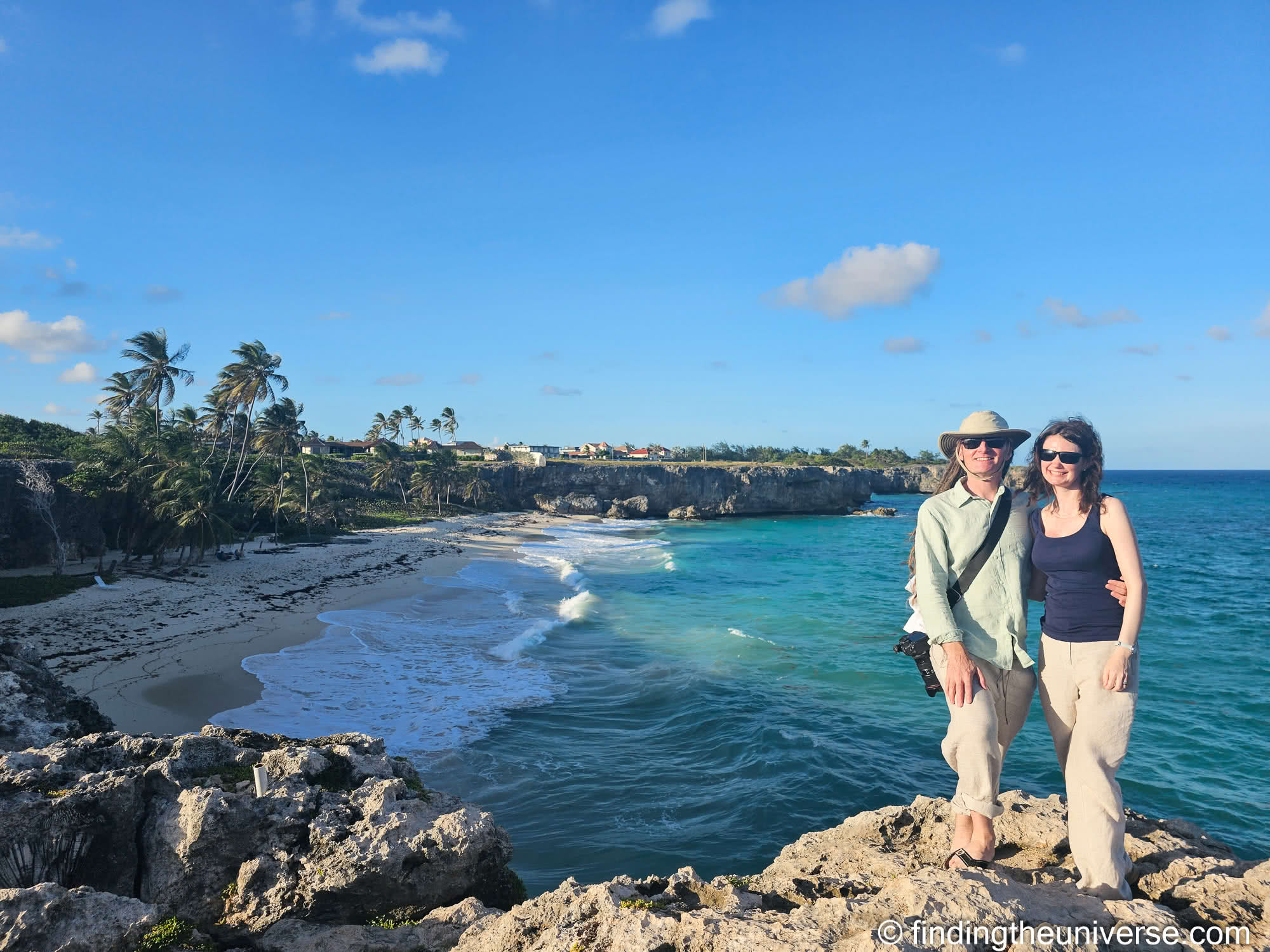
Is Barbados Worth Visiting?
The short answer is yes, and we say that as people who have explored the island from coast to coast. It is one of the safest and most welcoming islands in the Caribbean, with beautiful beaches, excellent food, a fascinating history, and enough to see and do to fill anything from a long weekend to a two-week stay.
That said, it is not the cheapest Caribbean destination, and if you are on a tight budget, other islands may stretch your money further. We go into much more detail on costs later in this guide. For most visitors though, particularly those looking for a combination of beach time, good food, culture, and a genuine sense of relaxation, Barbados is an excellent choice.
We cover who Barbados is (and isn’t) best suited for in more detail in the Is Barbados a Good Destination for Me? section further down.
Barbados at a Glance
Before we dive into the details, here’s a quick overview of the essential facts about Barbados.
- Capital city: Bridgetown
- Currency: Barbados Dollar (BBD), pegged to the US Dollar at 2:1.
- Language: English (British English is the standard)
- Time zone: Atlantic Standard Time (UTC -4), no daylight saving time
- Power outlets: Type A and B (same as USA/Canada), 115V, 50Hz
- Driving: Left-hand side
- International airport: Grantley Adams International Airport (BGI)
- Barbados Guidebooks: Bradt Travel and Fodor’s (both paperback and Kindle versions available)
Basic Planning Information
We’ll now cover the basics for planning your trip to Barbados. This should cover all the essentials you need to know, from getting there and getting around, through to things like currency, language, power outlet information and more.
How to Get to Barbados
There are two main options for getting to Barbados as a visitor, which are by sea or by air. Most visitors who are coming to the island for a vacation will arrive by air, which is how Jess and I visited.
The main international airport in Barbados is Grantley Adams International Airport (code BGI). This is found in the southeast corner of the island, around 20 minutes drive from Bridgetown. There are direct flights to multiple destinations across Europe and the Americas, as well as to other Caribbean islands.
We found the airport to be easy and efficient to navigate, just be sure to check any visa requirements for your nationality. When we visited we had to fill in an online form prior to arrival.
The other main way that visitors arrive at the island is by cruise ship. Barbados is a popular cruise destination, and a number of cruises make stops at the island. This is normally part of a longer cruise, with only a day or so to visit the island. So you will be able to see a few highlights, but not do a deep dive. Still, it’s a good way to get a taste of the island.
Cruises dock at the Bridgetown Cruise Terminal, which is around a 20-minute walk (or a short taxi ride) from downtown Bridgetown.
Visa and Entry Requirements for Barbados
The good news is that most visitors to Barbados do not need a visa. Citizens of the US, UK, Canada, Australia, the EU, and most Commonwealth countries can enter Barbados visa-free for stays of up to six months for tourism purposes.
You will need a valid passport to enter the country. We’d recommend making sure yours has at least six months of validity remaining from your date of travel, which is a standard recommendation for international travel.
All visitors arriving in Barbados are required to complete an online immigration and customs declaration form before arrival. When we visited, this was a straightforward process that took a few minutes to fill in. You will receive a QR code to show at immigration on arrival. We’d suggest completing this the day before your flight and saving a screenshot of the QR code on your phone as a backup.
If you plan to work remotely from Barbados for an extended period, the country offers the Barbados Welcome Stamp, a 12-month visa designed for digital nomads and remote workers. We cover this in more detail in the section on longer stays below.
Entry requirements can change, so we always recommend checking the latest requirements for your nationality before you travel. The official Barbados tourism site is a good starting point.
How to Get Around Barbados
Barbados is not a giant island, and you can circumnavigate the whole island by car in between 2 – 4 hours depending on traffic. The main options for getting around the island are buses, private minivans, taxis, or by renting a car.
Taxi
The first option you have is to take taxis. We used the pickUP app during our time on the island if we needed a taxi. It worked just like any other ride-hailing app, but only links you directly to a licensed taxi driver. The last time we visited the island Uber was in the process of launching but when we tried to use it it never connected us with any actual drivers. So we’d suggest sticking with pickUP.
Public transport
Another option is to take a bus or minibus. There are both public and private bus options. You can see the public bus routes on the Barbados transport site here. Fares as of 2026 are BBD $3.50 per ride. Change is not available, money is placed into a fare box, so it is best to have exact change in the local currency. You can get pretty much all over the island including to most tourist locations with the bus, just expect it to take a bit longer than in a car. This is a very affordable option.
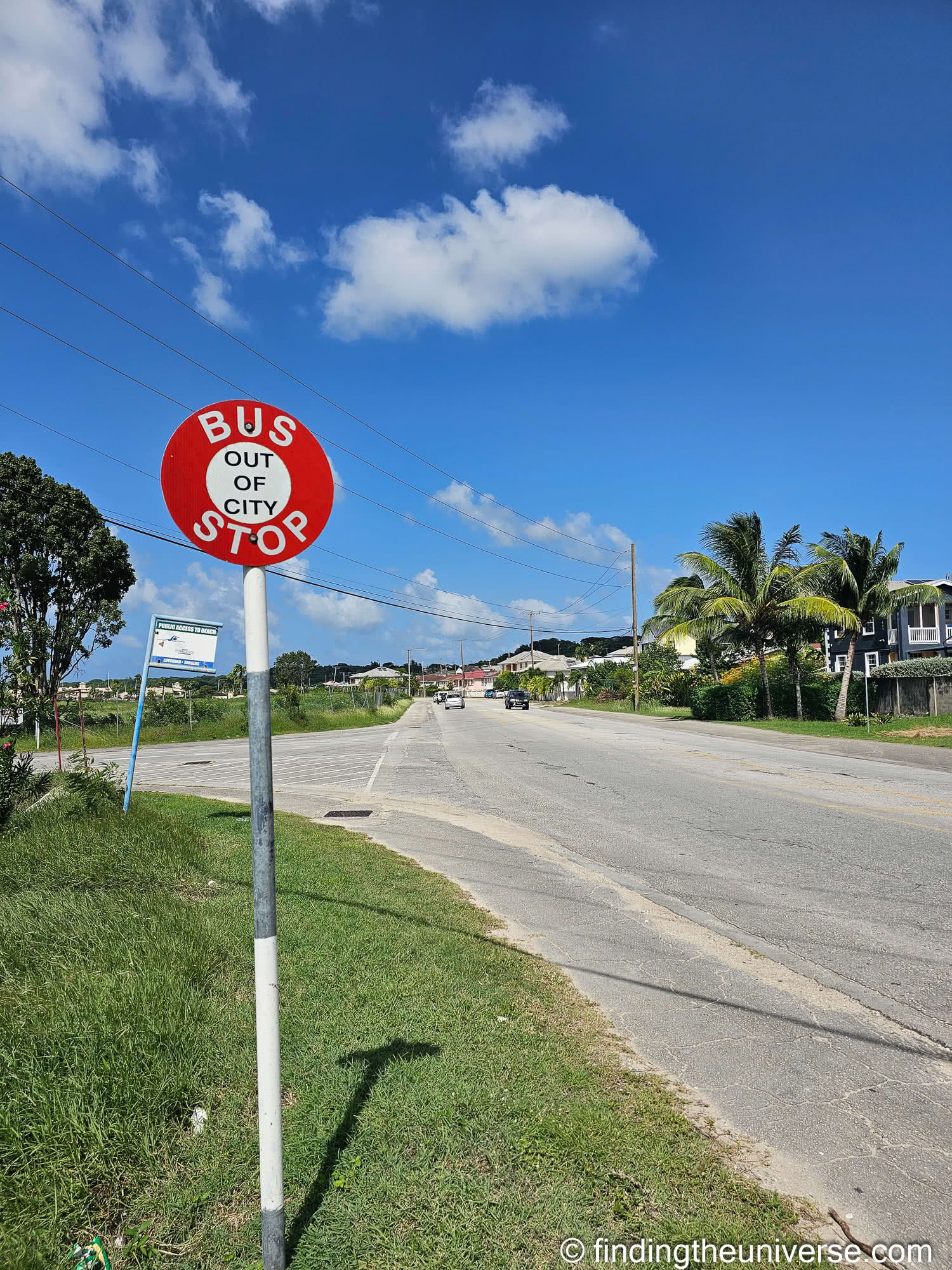
Bus stops are helpfully labelled as being “to city” or “out of city” so you know if you’re going towards Bridgetown or away from it.
Another transport service to consider for the experience are the private minivans known as ZR. These run in predominantly high traffic areas such as between Oistins and Bridgetown. They tend to have loud music, are crowded, and have a habit of stopping and starting on a dime. These can be found at the Cheapside Terminal and River Road Terminal in Bridgetown, as well as the Oistins terminal.
Car rentals
Finally, if you want full flexibility for your time on the island, then the best option is going to be to rent a car. This is what we did during our time on the island. There are car rental services available at the airport and many providers will also drop a car off at your hotel. You can rent a car for the duration of your visit, or just for a few days of sightseeing, it’s up to you.
We’ve rented with a couple of rental offices including Stoutes Car rental and Sun Cars, both of which offered a good experience. We also recommend comparing car rental prices across providers on Discover Cars to get more options.
To drive in Barbados you will need to bring a valid driver’s license (most visitors do not require an International Drivers Permit) and to obtain a Visitors Driving Permit. The Visitors Permit is normally provided by the local car rental agency, or one can be obtained from the Barbados Licensing Authority.
Just remember that they drive on the left in Barbados, and be aware that the roads are famed for potholes. Traffic, especially around Bridgetown and up and down the east coast can also be quite bad, particularly around school hours, during the morning and evening commutes, and if there’s a large cruise ship or two in port.
For navigation, we used Google Maps on our phone when we were driving and it worked well most of the time. Just note that it won’t always be fully up to date with any road closures, and it doesn’t always pick the most pot hole free route!
Google Maps did try to steer us wrong a couple of times when trying to reach attractions. The good news is that nearly every attraction on the island has good road signs, and we highly recommend using your common sense and following road signs where available instead of any navigation app!
We also kept a physical map of the island in our car and that helped us plan out our routes. You can pick up a free map at most hotels, resorts, and visitor centers.
Is Barbados Safe?
This is one of the questions we get asked most often about Barbados.
Barbados is considered one of the safer destinations in the Caribbean, and we always felt comfortable and welcome. Violent crime against tourists is rare, and the atmosphere around most tourist areas is relaxed and friendly.
That said, like anywhere in the world, a bit of common sense goes a long way. Petty theft does occur, so keeping an eye on your belongings on the beach, locking doors, and not leaving valuables in a parked car is recommended.
We’d also suggest using caution after dark in unfamiliar areas, particularly around Bridgetown. The worst thing we saw on the island was some drunken and obnoxious behavior (by both locals and tourists) in the evenings.
The sea can present hazards worth knowing about too. The east coast has strong currents and rip tides which make it unsafe for swimming, and even on calmer beaches, it’s always worth paying attention to any flags or lifeguard advice. Many of the beaches can be unsafe for children.
Barbados is a well-governed, stable country with a functioning healthcare system and a long history of welcoming visitors. It’s not a destination we’d hesitate to recommend to solo travellers, couples, or families.
Language in Barbados
The official language of Barbados for written and spoken communication is English. As Barbados was under British rule for centuries, British English is the standard. Pretty much everyone in Barbados speaks English, so this is definitely the easiest language to use as a visitor.
There is also the unique “Bajan Dialect”, also just called “Bajan”, which you will often hear locals speaking. It’s effectively a slang based version of English, which evolved with the enslaved people who were brought to the island to work on the sugar plantations. So there may be some words or phrases you may not understand, but you should have no trouble communicating in English.
The majority of visitors we met were English speakers from the UK, USA, Canada, or other islands of the Caribbean.
If you don’t speak English, then it might be a good idea to hire a local tour guide who speaks your language for some of your tours and activities.
Currency in Barbados
The official currency of Barbados is the Barbados Dollar, which has the official abbreviation of BBD. This currency was introduced in 1972. Since 1975 it has been pegged to the US dollar.
Officially, the rate of exchange is 1.98 Barbados dollars to 1 US dollar, however, most businesses just use a conversion rate of 2:1 for simplicity. So if you see a price in Barbados dollars, you can halve it for the US dollar equivalent.
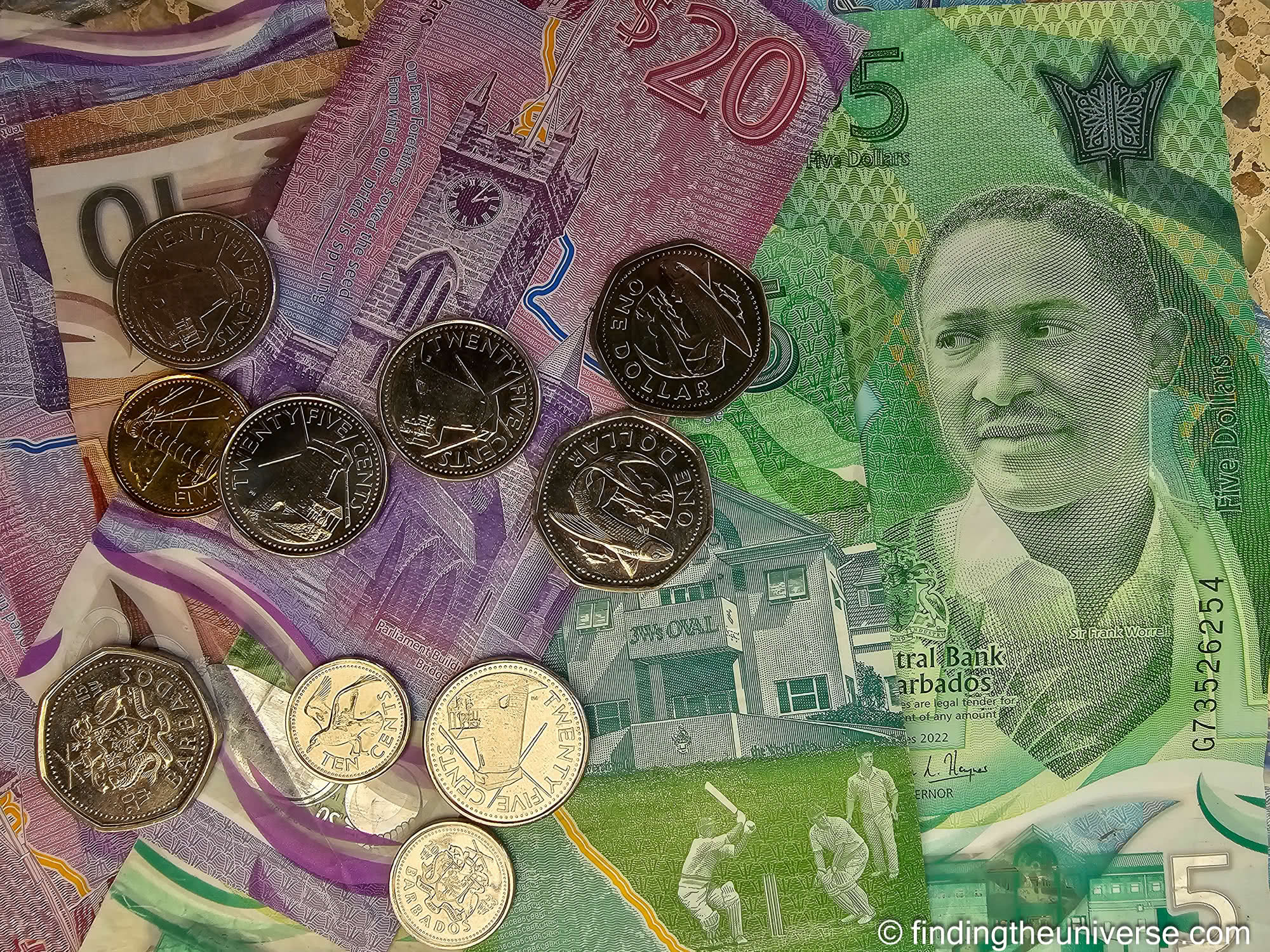
In terms of using currency, obviously everywhere accepts the Barbados dollar. This comes in coins as follows: 5 cent, 10 cent, 25 cent and 1 dollar. There is also a 1 cent coin but this is being phased out.
Notes come in 2, 5, 10, 20, 50 and 100 dollar denominations. Many locations around the island will also accept US dollars as currency, with an exchange rate of 2:1. This is particularly the case with tourist focused locations like restaurants, gift shops and attractions. You will also often get change in USD, but this is not a given.
Finally, the majority of locations you visit as a tourist, including restaurants, hotels, grocery stores and tourist attractions accept major credit cards. There are some exceptions of course – smaller vendors will likely only take cash, and in our experience many of the food stalls at Oistin’s Fish market only took cash. So it is worth having some cash on you.
If you want to withdraw cash in Barbados, there are a number of ATMs around the island. Note that many of these charge a fee of around $5 BBD for foreign visitors. A notable exception in our experience were the Republic Bank Blue Machine ATMs, which are found all around the island.
Given how easy it is to get BBD on the island there’s no real advantage to stocking up in advance of your visit. We also recommend changing any remaining BBD back to your home currency before leaving. Or, you can do what we did, and spend your last few notes at the airport gift shop before you leave.
For visitors we recommend keeping some local currency on you as you will likely need this for places like food stalls, some local restaurants, craft stands, and for bus fares and tips. But for most purchases you will be able to use USD or a credit card. We kept a mix of BBD, USD, and credit cards on us throughout our visit.
Tipping in Barbados
Tipping is fairly common in Barbados, but there are a few things to be aware of.
First, you should know that many restaurants will automatically include a service charge of 10 to 15% on your bill. So, before you tip, always check if a tip or service charge has been added.
If no service charge has been added and you’ve had good service, leaving around 10% is the norm.
Taxi drivers customarily receive around a 10% tip, though this is at your discretion. If you’re using a ride-sharing or taxi booking app, you should be able to add a tip when you finish the ride.
If you’re staying at a hotel with porters, $1 to $2 USD per bag is a reasonable amount, and for housekeeping, $2 USD per room per day is the generally accepted norm. For tour guides, around 10% of the tour cost is a fair guide.
With all tips, cash tips given directly to the person are generally preferred over anything added to a card payment. For this reason, it can be a good idea to have some small notes in BBD (you can use USD if you run out of BBD) for tipping purposes. This way you can be certain your tip goes directly to the person you are giving it to.
Weather in Barbados
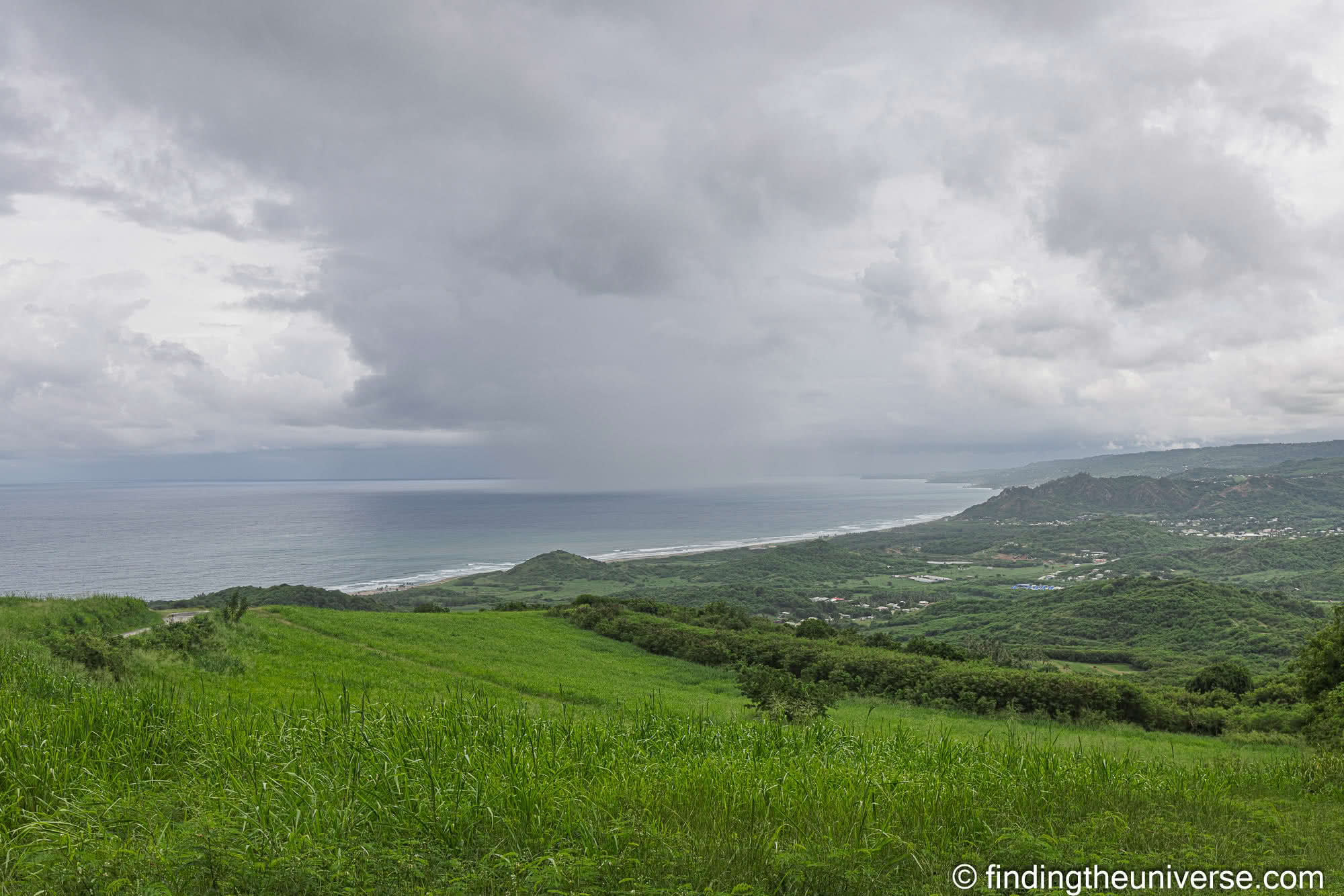
Barbados is a tropical destination found about a thousand miles north of the equator. So it’s going to be warm and humid pretty much year round, with a warm sea to swim in. Temperatures generally range from 28C – 35C (82F – 95F).
That said, the weather does change over the year, with the main variables being how hot it’s likely to be, how humid it’s likely to be, and how much rain you can expect. The driest and coolest time of the year is from December to May. This is the most popular time of year to visit as the heat is less oppressive and there’s a lower chance of rain. It’s also the most expensive time of year to visit.
The hottest and wettest months are generally from June to November. It’s a few degrees hotter, there’s a higher chance of rain, and humidity is also higher.
This time of the year, specifically August through October, are when the chance of more serious tropical storms and even hurricanes are higher. In the last couple of hundred years Barbados has rarely suffered a direct hit from a hurricane, but strong winds and heavy rainfall from nearby hurricanes has happened a number of times.
We’ve visited in the “hotter” time of year, between October and November, and while we did get a bit of rain, it didn’t normally last too long. It was certainly very hot and humid though!
Electricity in Barbados
Barbados uses the same style plugs as you will find in the USA / Canada, which are Type A (2 pin) and Type B (3 pin) plugs. The voltage is 115V and the frequency is 50Hz.
This is similar to the US, the only difference being that in the US the frequency is 60Hz. Travelers from the US and Canada and any other country that uses Type A/B plugs won’t need a travel adapter for their electronics.
However, you should check the power requirements of your device to be sure it is compatible with the 50Hz frequency. This should be written on the devices power plug, where it will often be denoted as “100 – 240V 50/60Hz” to demonstrate its capabilities.
Travelers from any other part of the world that uses a 220-240v system, including the UK, Europe and Australia, will need a travel adapter like this. You will also need to check your devices for voltage compatibility. Most smaller electronics such as phone USB chargers, laptop chargers and camera chargers are compatible with the full range of voltages from 100-240, as well as both 50 Hz and 60 Hz systems.
However, larger devices like hair dryers and hair straighteners might not be compatible unless they are travel specific models. It can be quite dangerous to use a device that is not properly rated for the voltage being supplied, so do be sure to check your devices, and note that the majority of travel adapters do not convert voltage, they just change the plug shape.
You can read more about travel adapters and see some recommendations, including models which do convert voltages, in our guide to travel adapters.
When we visited, we were coming from the US and so didn’t need any adapters or voltage convertors, which made packing easier!
Staying Connected in Barbados
Barbados has decent mobile coverage across most of the island, with 4G available in and around the main towns and tourist areas. Coverage can be patchy in more remote spots on the east coast, but for the most part we had no trouble staying connected during our visits.
For getting online, we use a travel eSIM, which we set up before leaving home. If your phone supports eSIM (most phones made since 2020 do), it’s by far the simplest option. We use and recommend Airalo, which offers Caribbean data packages that cover Barbados. You can read our full review of the service, which includes some free credit to get you started, at the link.
If your phone doesn’t support eSIM, you can pick up a local SIM card on arrival. Digicel and Flow are the two main providers on the island, and both have shops in Bridgetown and at the airport. Prepaid data packages are available and straightforward to set up.
Free WiFi is available at most hotels, many restaurants, and some cafes, though speeds vary. We found hotel WiFi generally reliable enough for browsing and messaging, but if you need to do anything data-heavy like uploading photos or video calls, having your own mobile data is a much better bet.
Having a working data connection is particularly useful in Barbados if you plan to drive, as Google Maps works well for navigation on the island. It’s also needed for the pickUP taxi app, which we relied on when we weren’t driving.
Time Zone in Barbados
Barbados is on Atlantic Standard Time, which is four hours behind GMT/UTC. Barbados does not observe a daylight savings time, so the time stays the same year round.
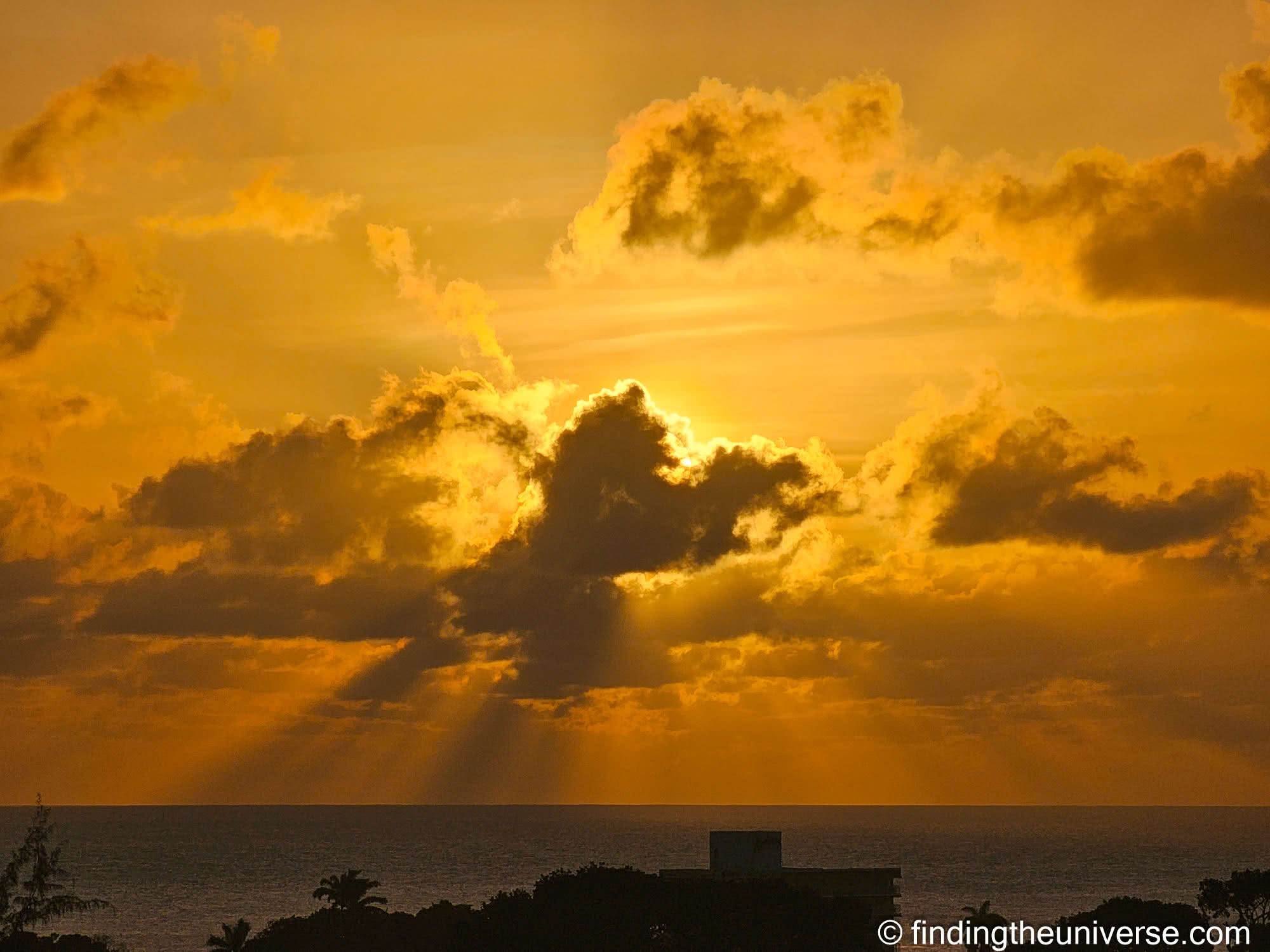
In terms of hours of daylight, this is fairly consistent year-round. Sunrise varies from around 5.30am to 6.30am, and sunset is going to be between around 5.30pm and 6.30pm.
If you want the absolute most amount of daylight, the longest days are in June, while the shortest days are in December. This is the same for all destinations on the northern hemisphere.
Health and Vaccinations for visiting Barbados
Barbados is a well-developed country with a generally good standard of healthcare, particularly in and around Bridgetown. That said, it’s still worth thinking through a few health considerations before you travel.
Vaccinations
There are currently no vaccinations required to enter Barbados from most countries, with one exception: if you are travelling from a country where yellow fever is present, you will need to show proof of yellow fever vaccination on arrival. If you’re travelling directly from countries like the US, UK, Europe, Canada, or Australia, this won’t apply to you.
While no vaccines are technically required for most travellers, it’s always good practice to make sure your routine vaccinations are up to date before any international travel. Hepatitis A is recommended for most travelers to Barbados, as it can be transmitted through contaminated food and water, and it’s a straightforward vaccination to get in advance.
We recommend speaking to your doctor or a travel health clinic before you go, ideally six to eight weeks before your trip, to get personalized advice based on your health history and itinerary.
Always check vaccination requirements and health risks well before your trip as this information is all subject to change.
Mosquito-borne illnesses
Mosquitoes are usually present year round in Barbados. Luckily malaria is not considered a risk in Barbados, but Dengue and Zika viruses are both present in Barbados. These can’t really be vaccinated against, so prevention is the main approach.
Using a good insect repellent (particularly one containing DEET), wearing loose, covering clothing (especially from sunset to sunrise), and sleeping in air-conditioned rooms with a mosquito net all help reduce the risk.
Pregnant travelers or those planning pregnancy should be particularly aware of the Zika risk and should seek medical advice before travelling.
Water and food safety
The tap water in Barbados is safe to drink across the island, which we appreciated as we drank a lot of water to combat the heat! Food hygiene standards at restaurants are also good and we had no issues with food.
Of course, use common sense and stick to well reviewed popular locations when eating out to minimize risks.
Travel insurance
We always travel with comprehensive travel insurance. Medical treatment can be very expensive if you’re not covered, and evacuation costs for anything serious can run into the tens of thousands.
Always travel with comprehensive travel insurance that includes medical coverage. It’s one of those things you hope you’ll never need, but you’ll be very glad you have it if something does go wrong!
Best Time to Visit Barbados
Barbados can be visited year-round and there’s no truly bad time to go. But depending on your priorities, some times of year will suit you better than others.
December to May
This is the most popular time of year to visit, and it’s not hard to see why. The weather is about as good as it gets: warm and sunny, with lower humidity and a much lower chance of rain. Temperatures generally sit around 28 to 30 degrees Celsius (82 to 86 Fahrenheit), and the prevailing trade winds help make it feel more comfortable.
The flipside is that this period coincides with winter in the Northern Hemisphere, when people are most desperate for sunshine. As a result, it’s the most expensive and busiest time to visit. If you’re visiting over Christmas, New Year, or the UK’s February half-term period, booking well in advance is strongly advised.
June to November
The months from June through November fall within what is technically the Caribbean rainy and hurricane season. This means it’s a few degrees hotter, more humid, and there’s a higher chance of rain. The rain tends to arrive in short, sharp bursts rather than long grey days, so it’s not actually as bad as it sounds.
August through October are the most weather-sensitive months, when the risk of tropical storms is at its highest. Barbados sits far enough south to be largely outside the main hurricane belt, so direct hits are historically rare (although not impossible!). The island can still be affected by heavy rain and rough seas from storms passing to the north, though.
We’ve visited during this season, in October and November, and while we did get some rain, it rarely lasted more than an hour or so at a time. It was hot and humid, but manageable. The island was noticeably quieter, prices were lower, and things moved at a more relaxed pace.
Just note that some hotels and guesthouses and seasonal attractions do close during the quieter times, you’ll want to check availability if you’re considering a visit then. This is more common for places in the north and east parts of island.
The shoulder months
If you want a balance of decent weather, lower prices, and fewer crowds, May and November are worth considering. You get most of the benefits of the dry season without the full peak-season price tag. May is a particularly nice time to visit, with good weather and the added bonus of the Barbados Reggae Festival.
Visiting during a festival
If you’d like to time your visit around one of the island’s festivals, Crop Over is the big one. Running through July and August, it’s a vibrant celebration of Bajan culture that culminates in the Grand Kadooment parade in early August. This is a popular time of the year where expats living abroad like Rihanna often return to the island to see family and friends.
Just be aware that this falls during the hotter, wetter season, so you’re trading some weather reliability for cultural richness. Most visitors find it well worth it.
Major Festivals in Barbados
Barbados is a country that loves festivals, and visiting during a festival can be a great way to get an awesome Bajan experience. There are many festivals through the year, but the most popular festivals are the following:
- Crop Over – the largest festival on the islands, this annual summer festival runs through July and August and celebrates the music, food and heritage of the island. Its origins date back to the 1780s, when it began as a celebration marking the end of the sugar cane harvest, and it is by far the most popular and busiest festival. If you only plan to make it to one festival in Barbados, this is a solid option!
- Holetown Festival – this festival runs for a week in February in the town of Holetown, and celebrates the arrival of British settlers to the island in the 17th century. Expect live music, street food, craft stalls, street parades, and more.
- Barbados Reggae Festival – this takes place in May each year and as the name suggests, it’s all about Reggae music and culture, with both local and international artists performing to crowds.
- Barbados Food & Rum festival – this takes place every October with a focus on the food and drink on the island. World-class chefs and mixologists come together to serve up Bajan cuisine and rum cocktails, with cooking demonstrations, rum tastings, and beachfront dining experiences across several days.
- National Independence Festival of Creative Arts (NIFCA) – running in November each year, this festival is all about showcasing the artistic talents of the Bajan community. It started in 1973 to celebrate Barbados independence, and today covers creative arts including drama, dance, music, literary arts, culinary arts, visual arts, photography, and arts and crafts.
Avoiding Crowds in Barbados
If you are wanting to visit Barbados when the island is at its quietest and least crowded, we’d recommend visiting outside of the main season, which runs from end of November to beginning of June. December through May are the most popular time for visitors.
If visiting outside of the main tourist season, just be prepared for potentially worse weather (pack for the weather forecast) and know that some seasonal attractions and hotels may be closed.
To avoid crowds, we’d also recommend avoiding visiting during major holidays and festivals, including Christmas and Crop-Over, which attract a higher number of visitors.
Cruises to Barbados are popular year round and each cruise ship means that thousands of visitors are arriving all at the same time. So even during quieter periods, the arrival of a big cruise ship (or three!) can quickly overwhelm some of the attractions and popular hotspots. If you want to avoid cruise crowds, check the Barbados port cruise schedule so you’ll be able to anticipate when attractions will be busier so you can plan accordingly.
How Long to Spend in Barbados
Obviously, you can spend however long you want in Barbados. Some people visit just for a day as part of a cruise, others come for multi-week adventures year after year.
That said, in our experience and from talking to other visitors to the island, the majority of people visiting Barbados for tourism stay for somewhere between 4 days and 2 weeks.
We would probably recommend a visit that lasts from one to two weeks. This will give you enough time to explore the majority of the sights in Barbados, have time to enjoy the beaches, and not feel too rushed. After all, you’re supposed to be on vacation!
Here’s how different trip lengths tend to play out in practice.
Three to four days in Barbados
A very short trip like this is enough to give you a flavor of the island, but you’ll feel rushed and will likely leave with a list of things you didn’t get to.
If this is all the time you have, we’d suggest basing yourself on the south coast, spending at least one day on the beach, doing a boat trip, and fitting in an evening at Oistins. You won’t see everything, but you’ll come away with a sense of what Barbados is about.
Five to seven days in Barbados
A week is probably the most common trip length, and it’s definitely enough time to see the highlights without feeling like you’re constantly on the move.
In a week, you can comfortably cover the south coast beaches and nightlife, spend some time exploring Bridgetown and other cultural attractions, visit the west coast beaches, take a boat trip, do a rum distillery visit. You’ll have time to find a beach you love and actually spend a couple of lazy days on it, which for many people is the main point of coming here in the first place!
Ten days to two weeks in Barbados
If you have this much time, Barbados will reward you for it. Two weeks allows you to slow right down and actually settle in. You can split your stay across different parts of the island like we did (for example a week on south coast and a week on the west coast).
You’ll have plenty of time to revisit a beach you loved, try more restaurants, take the longer sightseeing tours, visit all the museums and cultural attractions you want, and generally stop watching the clock. This is probably our preferred trip length for Barbados.
More than two weeks in Barbados
It’s certainly possible to spend longer in Barbados, and some visitors do. The island has become increasingly popular with remote workers and digital nomads, thanks in part to the Barbados Welcome Stamp programme.
Launched in 2020, the Welcome Stamp is a 12-month visa that allows remote workers to live and work from Barbados. You need to demonstrate an annual income of at least $50,000 USD (or sufficient means to support yourself), have valid health insurance, and be employed by or working for a company based outside Barbados. The visa fee is $2,000 for an individual or $3,000 for a family, and it can be renewed. As of 2026, the programme has been confirmed to continue through at least the end of the year.
The island’s internet infrastructure is solid, with good fiber broadband available in most areas and reliable 4G mobile coverage. We found connectivity perfectly adequate for everyday work tasks during our visits, though the east coast can be patchier.
If you’re not on the Welcome Stamp but just want an extended vacation, Barbados is a very comfortable place to base yourself for a month or so. Many rental apartments and guesthouses offer weekly or monthly rates that bring the cost down considerably compared to nightly pricing.
That said, if you’re the type of visitor who likes constant novelty, you may find yourself feeling like you’ve ticked most boxes after two weeks. The island is not huge, and repeat beach days start to make up a larger proportion of your time. That’s not necessarily a bad thing, of course.
What to Do in Barbados
The main draw for many visitors to Barbados are of course the spectacular beaches. However, if you are more inclined towards activities and sightseeing rather than lying on the beach or by the pool, Barbados will still provide opportunities for you to keep busy.
What is there to do and see in Barbados?
Barbados is probably best known for its beaches, but there are lots of other things to do and see here. We go into great detail on things you can do in Barbados in a prior post, but we’ll give a brief overview here. But we’d recommend using that article to plan your itinerary.
You have museums and cultural attractions such as the Barbados Museum in Bridgetown, the Sunbury Plantation, and St. Nicholas Abbey. Take in the history of the capital city of Bridgetown, attend a cricket game, and see a horse race.
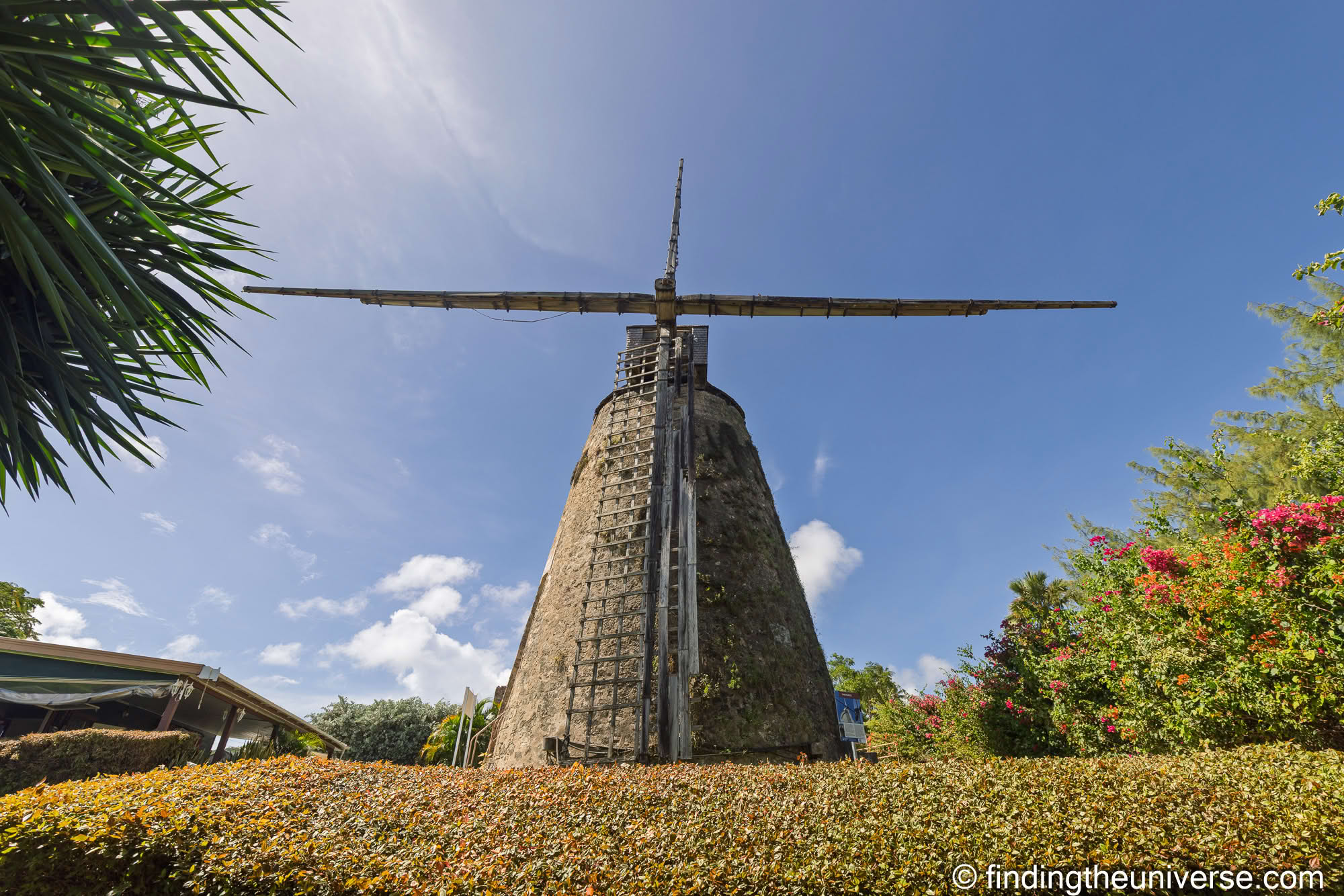
You can take a tourist train ride, explore a big cave, or wander a number of tropical gardens. You can visit signal stations. lighthouses, old parish churches, and a historic windmill. In museums, you can learn about Bussa’s Revolt, George Washington’s visit to the island, and the history of cricket.
Try the local food, get a fish cutter, visit a rum distillery, and party at Oistins Fish Fry.
You might go looking for hummingbirds, sea turtles, or monkeys. Or get up early to see the horses at Pebbles Beach.
You can get on the water and go on a catamaran cruise or charter a boat to go fishing. You can take surf lessons or go snorkeling. Or spend the day on the golf course or go shopping.
Or you can rent a sun lounger and umbrella on the beach for the day, get a massage and have a spa day, or enjoy a day reading and drinking tropical drinks next to the pool.
Some of our favorite activities on the island included learning about the history of rum, the boat cruises we took, and experiencing the Friday night fish fry. We also enjoyed visiting many of the historical properties on the island and seeing the wildlife and tropical gardens.
Of course, there’s plenty more to see and do in Barbados. We recommend reading our guide to things to do in Barbados, which covers a wide range of topics and interests, and goes into a lot more detail.
Visiting Barbados with Kids
We don’t personally have children, but on a recent visit to Barbados we went with some friends of ours who have two kids. At the time we visited their children were aged six and eight.
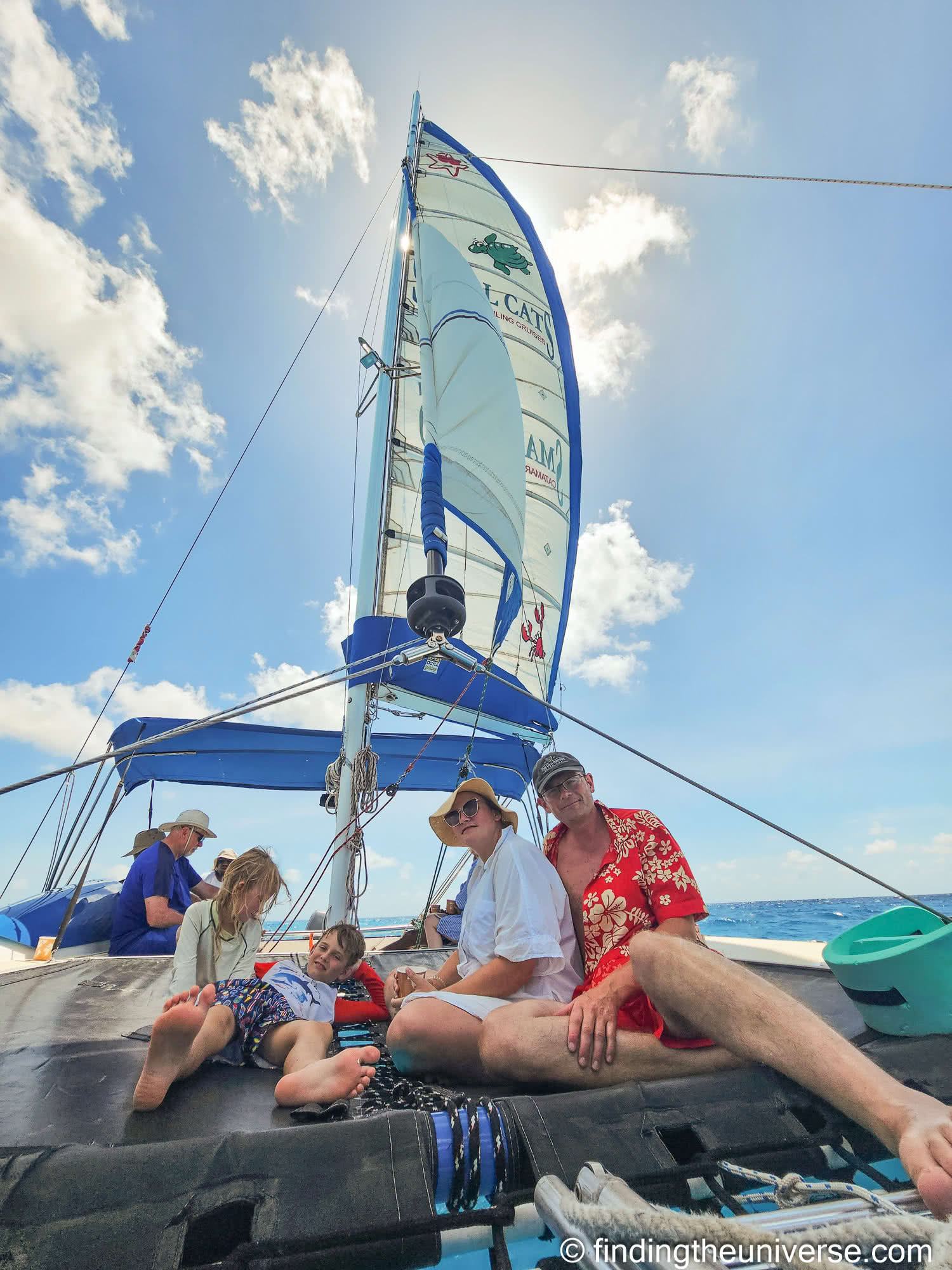
Overall they had a really good time. They loved being able to spend time on the beach and going snorkeling, and the boat excursions we did were a real highlight. They also enjoyed seeing the monkeys and some of the tropical gardens.
Of course, not every attraction on the island is going to fit every kid’s interests and some hotels and activities are adults only. But there are certainly enough attractions and activities to keep most kids entertained for a visit. It just depends on your kids and their specific ages and interests.
The beaches are the obvious starting point, and the calm, clear waters of the south and west coasts are ideal for younger swimmers. Dover Beach in St. Lawrence Gap and the beaches around Holetown on the west coast are particularly well suited to families, and our friends spent many days on their trip at these two locations. Lifeguards are on duty at certain spots and the surf is more gentle. Some beaches have tide pools that kids love to explore.
Most hotels and resorts have at least one pool, some have multiple pools and some places have kids pools designed for young kids.
Beyond the beaches and pools, there’s plenty to keep kids entertained. The catamaran boat excursions to swim with sea turtles were a real hit with our friends’ children (and us too!). Other water based activities kids might enjoy are surf lessons, stand up paddle boarding, water tubing, and fishing.
Popular local attractions for families on the island include Harrison’s Cave, St. Nicholas Abbey (particularly the steam train), Folkstone Marine Park, and the Barbados Wildlife Sanctuary (good place to see green monkeys). If your kids like flowers and plants, then there are a number of tropical gardens you can explore on the island, including Hunte’s Garden and the Flower Forest Botanical Garden.
The Rascals Water Park is an inflatable water park that is popular with families. Park entrance also includes beach chair and umbrellas, and there is a restaurant and bar as well so you can make this an all day family outing. Other places geared to kids are the indoor playparks (including one at Chefette) and outdoor playgrounds (such as play park at ArtSplash) around the island.
Food-wise, Barbados is fairly kid-friendly. The Oistins Fish Fry is a wonderful experience on a Friday evening, though the crowds and noise may be a bit much for very young children. In our experience most restaurants along the south and west coasts are happy to accommodate kids, and many had kid versions of their menu. If all else fails, the fried chicken from local fast-food chain Chefette is a reliable fall back!
The main practical consideration for families visiting Barbados is the heat and sun. It’s significant, and young children can feel it more acutely than adults. Keeping everyone well hydrated, applying sunscreen regularly, and building in some downtime during the hottest part of the day will make the trip considerably more enjoyable for everyone. Finding a naturally shaded spot on the beach, or bringing a beach umbrella, is well worth the effort. Focusing on beaches or hotels which offer lifeguards is also likely to be a sensible option.
Barbados is a destination we’d happily recommend for most families. It’s safe, welcoming, and has enough variety to keep both parents and children happy for a week or two.
Visiting Barbados by Cruise
Barbados is a popular cruise destination, and during our time on the island we saw a number of cruise ships come and go.
Cruise ships dock at the Bridgetown Cruise Terminal, which is right in the heart of the capital. From there it’s around a 20-minute walk, or a short taxi ride, to downtown Bridgetown, making it easy to explore the city on foot. The Garrison Historic Area, the Parliament Buildings, and the waterfront are all within reasonable reach.
If you’re arriving by cruise and want to make the most of your time, we’d suggest either booking an organised tour or arranging a taxi driver for the day. This will let you cover more ground than you could relying on public transport, and a good local driver will often take you to spots you wouldn’t necessarily have found on your own. We’d suggest doing some research and booking in advance rather than just grabbing the first tour being sold at the dock, as prices and quality can vary quite a bit.
In terms of what’s achievable in a day, a popular and manageable itinerary would be to head to one of the west coast beaches, have a look around Bridgetown, and squeeze in a rum tasting at one of the distilleries near the capital. If a beach day is the priority, the south coast beaches around Oistins and St. Lawrence Gap are also reasonably accessible from the port.
If you are arriving by cruise ship and are wanting to explore the island and don’t have an island tour booked with your cruise, there are a number of tours and activities you can book via GetYourGuide or Viator. Many of these include transfers and transportation.
One important thing to be aware of: when the cruise ships are in port, the island gets considerably busier. Popular attractions, activities like boat cruises, and the roads around the southwest in particular can become congested as thousands of passengers head to the same handful of sites. Planning ahead can help.
Is Barbados a Good Destination for Me?
Whether Barbados is the right destination for you will depend on what you’re looking for from a trip. Here’s an honest take based on our own experiences.
If you love beach destinations, Barbados is probably going to be perfect for you. It’s a beautiful island, the people are friendly, and there’s a sense of safety and stability that makes it easy to properly relax.
It’s a great place for couples and honeymooners. Lots of beachside resorts and hotels in Barbados cater to couples looking for a leisure trip with lots of sun, sand, and good food. Many have numerous restaurants, pools, and bars, and they will help you book spa treatments, island tours, rum tasting, and boat cruises. Some places are also adults-only (or have adults-only areas) if you are looking for a kid-free spot.
If you’re travelling with kids, Barbados can also be an excellent choice. There are calm, safe beaches, plenty of activities for kids including boat trips, wildlife encounters, caves, and tropical gardens, and the kind of welcoming atmosphere that makes travelling with children feel easy rather than stressful.
If you’re on a tight budget, Barbados probably isn’t the easiest destination to make work. Like many Caribbean islands, accommodation costs are generally high and eating out at tourist-focused restaurants can add up quickly. It’s not impossible on a tighter budget, but you’ll need to be strategic about it and plan ahead. We cover some tips on keeping costs down in the accommodation and budget sections elsewhere in the guide.
If you’re the type of traveller who needs to be constantly on the move and ticking off new sights every day, you may find yourself running out of things to do after a week or so. The island is relatively small, and while there’s plenty to see and do, it’s not a destination with an endless list of museums, cultural attractions, and entertainments.
For most visitors though, particularly those looking for a safe Caribbean destination offering a mix of beach time, good food, some cultural exploration, and the chance to properly unwind, Barbados is going to be a good choice.
Best Beaches in Barbados
Barbados has over 80 beaches, all of which are free and open to the public. The only thing you’d pay for is a sun lounger or umbrella rental if you want one.
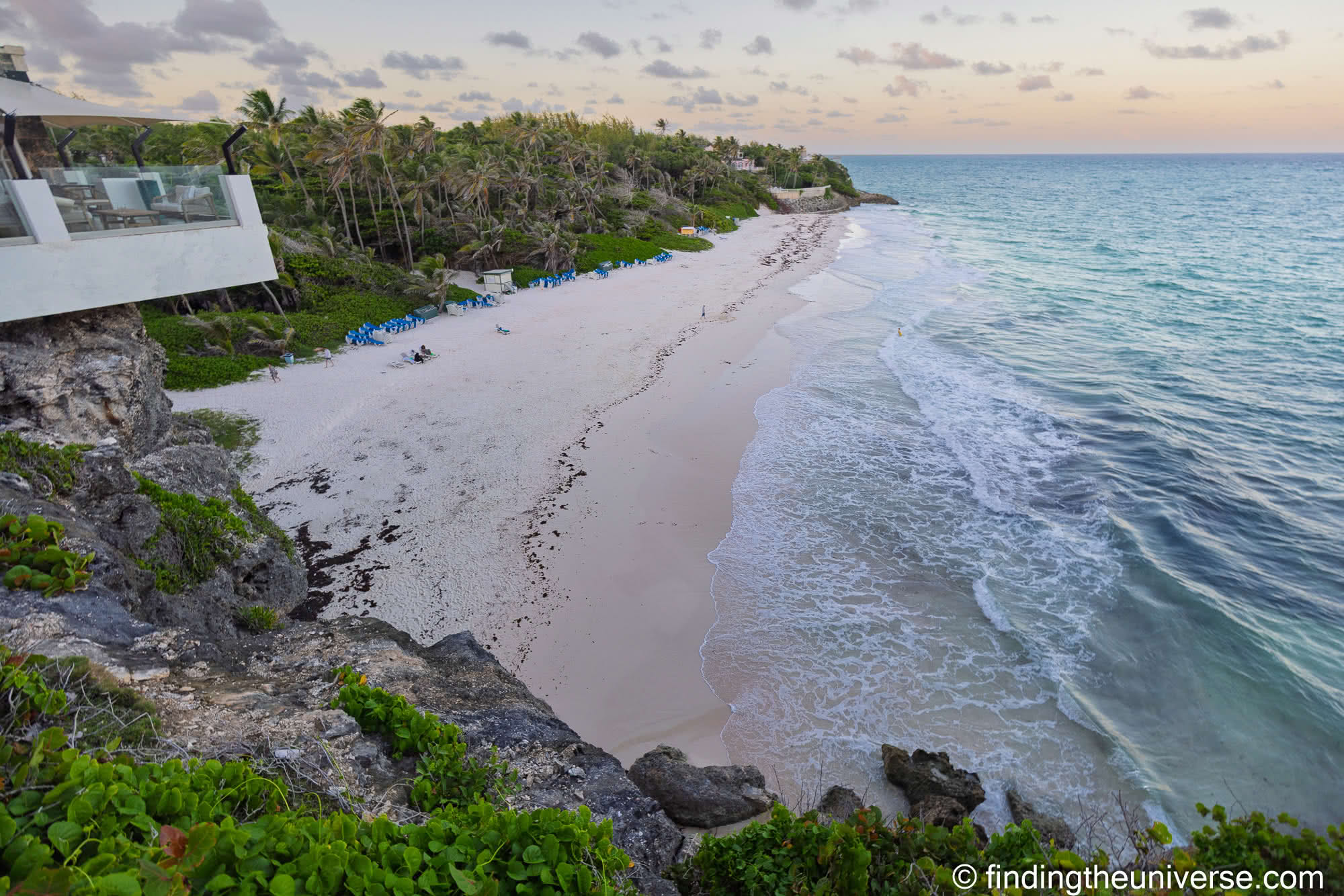
The best beaches for swimming and sunbathing are along the south and west coasts, where the water is calm and the sand is soft and white. This is where you’ll find the classic palm-fringed Caribbean beach experience, and where most visitors spend their time.
The east coast is a different story. It’s wild, rocky, and the currents make swimming dangerous at most spots. But if you like dramatic scenery and crashing surf, it’s spectacular to walk along, and Bathsheba in particular is well worth the drive.
Some of our favourites include Dover Beach on the south coast for its safe swimming and easy access to restaurants, Pebbles Beach in Bridgetown where you can watch the racehorses swimming in the mornings, Paynes Bay on the west coast if you want to feel like a celebrity, and Bottom Bay in the southeast for its dramatic coral cliffs and coconut palms. For families, Dover Beach on the south coast and Mullins Beach on the west coast are both solid choices with lifeguards and gentle surf.
One thing to be aware of is that some beaches, particularly on the south and east coasts, can be affected by Sargassum seaweed between roughly March and October. It can pile up and smell fairly bad. The west coast beaches tend to get much less of it, so you can almost always find a seaweed-free option.
We’ve written about our favourite beaches in much more detail, including specific tips for each one, in our guide to things to do in Barbados.
Where to Stay in Barbados
Barbados is a popular tourist destination, and as such it has a wide range of accommodation options available. These range from self-catered apartments through to hotels and all-inclusive resorts.
We have stayed in various accommodation options from apartments to hotels, located in different areas of the island. Based on our experiences, we feel that different areas of the island are going to be more suitable for different types of traveller. Here are our suggestions for where to stay on Barbados.
South Coast (St. Lawrence Gap / Oistins)
For your first visit to Barbados, the south coast area known as St. Lawrence Gap makes for an excellent location to stay. You get easy access to the spectacular palm fringed Dover Beach, and there are countless bars and restaurants along “the Gap”, which is a pedestrian friendly area.
There’s also a reasonably sized grocery store, and you’re within an easy 10-15 minute taxi ride to Bridgetown, the airport and Oistins.
We stayed in an apartment in St. Lawrence on our first trip to Barbados for a few nights, and it made for an excellent base. Here are some recommended places to stay across a range of price points for you to consider.
- Melbourne Inn – this is a well-rated good-value option which is about five minutes walk from Dover Beach in St.Lawrence Gap. It has its own swimming pool, garden and restaurant. Rooms are all private en-suite with free WiFi and air-conditioning.
- South Gap Hotel – this waterfront 3* option (note, no beach) is right on the strip of St. Lawrence gap, so there’s plenty to do within walking distance. It’s just a couple of minutes walk to Dover Beach and has its own pool and restaurant. All rooms have ocean views as well as a kitchenette with stove, microwave, kettle and fridge.
- Coral Mist Beach Hotel – this 3* hotel has a beautiful location on the end of Worthington Beach. Rooms are air conditioned and have a kitchenette with a microwave, fridge and coffee maker. There’s a restaurant and pool on site. It’s about a mile to St. Lawrence Gap, but there are many restaurants within close walking distance
- Little Arches – this highly rated adults only 4* boutique hotel in Oistins is just moments away from the lovely Enterprise Beach. There are only 10 rooms, each uniquely styled and featuring a king-size bed, sitting area, ensuite bathroom, smart TV, mini fridge and AC. There’s also an on-site rooftop restaurant with lovely views over the sea.
- Yellow Bird – found at the end of St. Lawrence gap a five minute walk from both Worthing Beach and Dover beach. All rooms have a seaview and there’s a restaurant on site. Note that it’s technically next to a beach but it’s a very small stretch of sand that largely disappears at high tide.
- Bougainvillea – found right on beautiful Maxwell beach in Oistins, this lovely 4* property offers spacious suites with kitchenette which includes a microwave, refrigerator and stove top. There’s a pool and two restaurants on site, as well as a spa and fitness center.
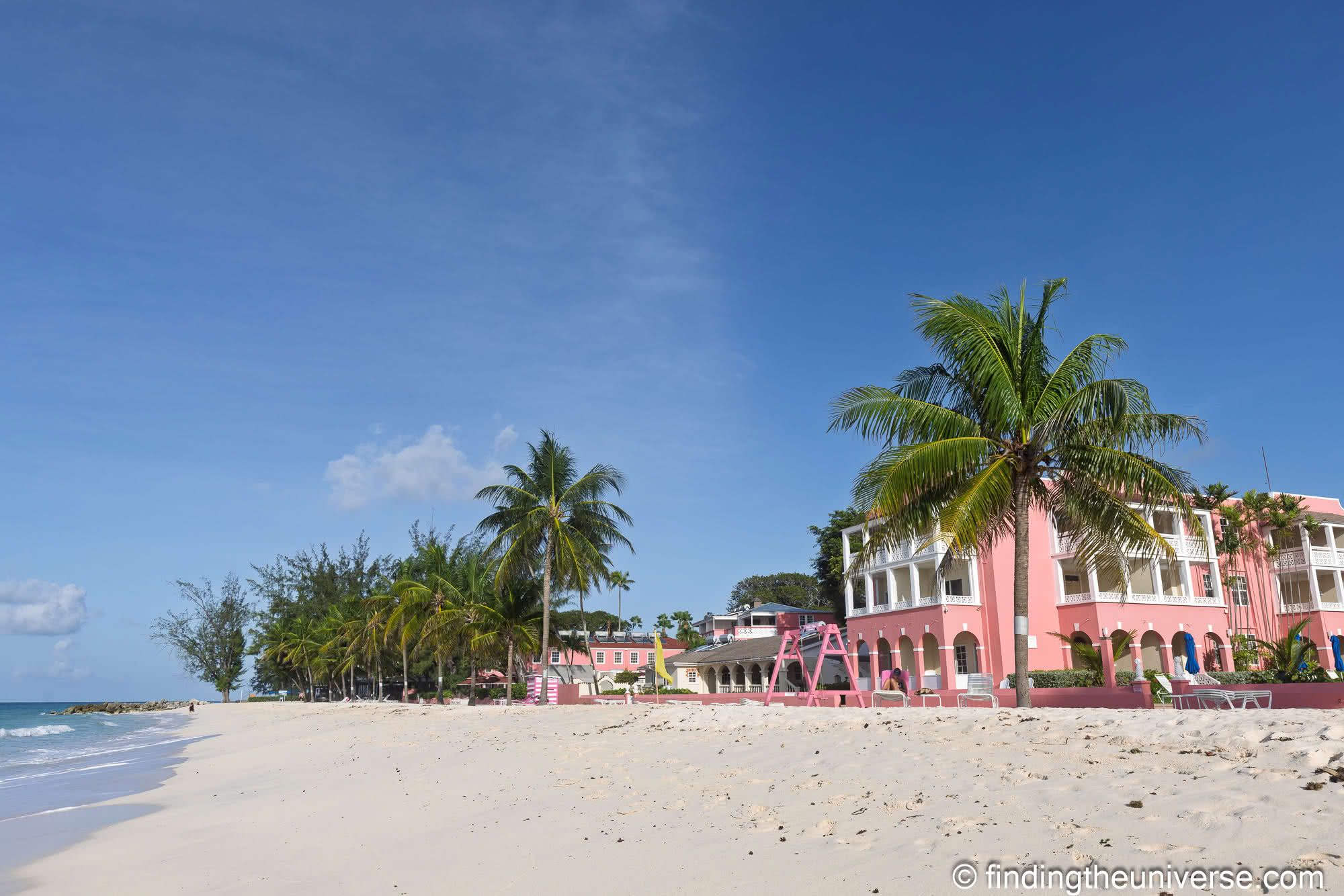
- Southern Palms Beach Club – this spectacularly pink property sits right on gorgeous Dover beach. It has two outdoor pools, two tennis courts, mini golf and shuffleboard, as well as free use of non-motorized watersports equipment. Restaurants are available on site, and you can book a package which includes your meals
- Sandals Barbados All Inclusive – this couples only 5* all-inclusive resort has its own private beach area, a rooftop pool, swim-up suites, a variety of restaurants, inclusive watersports, spa and fitness center, free diving lessons… the list goes on! It is definitely not a budget option, but you do get a lot for your money.
Bridgetown
If you want to explore some of the cultural highlights of Barbados, then basing yourself in the capital of Bridgetown is a good idea. You’re also not necessarily sacrificing beach access as Bridgetown has a gorgeous stretch of white sandy beach to enjoy, with some hotels right on the beach front.
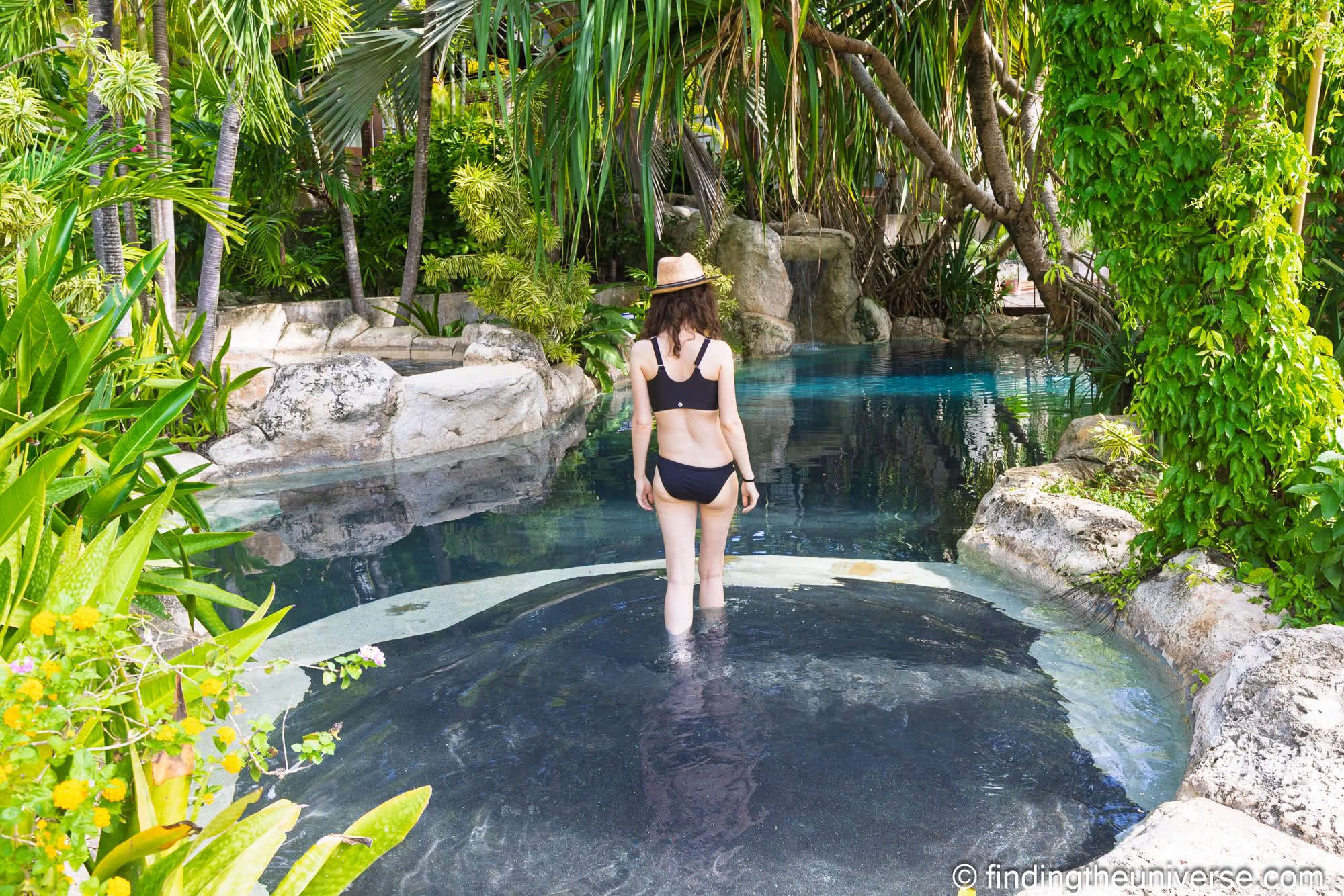
- Sweetfield Manor – On a recent trip to Barbados we spent four nights at this lovely boutique hotel in the city. There’s a gorgeous lagoon style pool and views across the city (particularly at sunset). It’s not close to the beach, but it is quiet and the on-site restaurant is excellent. The peacocks are also fun to see!
- Hotel Indigo – opened in 2026, this brand new 5* hotel is right on the waterfront and has easy access to the Richard Haynes boardwalk which is a pleasant place for an oceanfront stroll. It also provides quick access to nearby Rockley beach. There are a couple of pools, including a rooftop pool, a gym, on-site restaurants and bars
- Sugar Bay – this is a beach-front all-inclusive 5* resort just moments from the garrison historic area in Bridgetown. The hotel has good beach access, pools and a number of on-site restaurants and bars.
West Coast
Barbados’s west coast is also known as the “Platinum Coast” (the nickname was upgraded from “Gold Coast”), and for good reason. This is the playground of the wealthy, a place where billionaires snap up property and the hotels are of the luxurious, wallet emptying kind.
There is of course good reason the wealthy come to this part of Barbados – the beaches are spectacular, the water is very safe for swimming, and it’s the best place to watch the sun set over the sea. There’s also no shortage of high-end accommodation options to choose from, as well as luxury shopping malls and good restaurants.
Suffice to say, if you choose to stay on this side of the island you are likely to be looking at more upscale resorts, but there are still some more reasonably priced options. Here are some options to consider across a range of price points.
- The Palms Resort – this 3-star hotel in Holetown has a range of accommodation options, including one and two bedroom apartments with full kitchens. There’s an on-site pool and coffee shop, but no restaurant. It’s about a ten minute walk to downtown Holetown, or 15-20 minutes walk to the nearest beach.
- Little Good Harbor – tucked away towards the north end of the west coast, just past historic Speightstown, this is a beautiful boutique four-star hotel offering lovely suites with balconies and their own kitchen / living area. We stayed here for a couple of nights on a recent trip to Barbados and really enjoyed our stay, particularly the two pools and the close proximity to the excellent Fish Pot restaurant, where we watched the sunset over dinner.
- Mango Bay – this all inclusive four star hotel is right on the beach in Holetown. There are a number of room types to choose from, as well as an on-site restaurant and bar as well as a pool. Watersports activities and diving are also available.
- Sandy Lane – Arguably the most famous hotel in Barbados, this is an iconic five star hotel with all the amenities you could ask for including golf courses, a gorgeous stretch of beach, spacious rooms, a variety of restaurants, a spa and more.
- Treasure Beach Art Hotel – an all inclusive adults only five star hotel right on famous Paynes Bay beach just to the south of Holetown. Enjoy complimentary watersports, on site restaurants and bars, pool
East Coast (Bathsheba)
The east coast of Barbados is wild, rugged, and largely undeveloped compared to the west and south coasts. There are also very few beaches that are safe for swimming, so it’s not as popular with visitors. It was actually our favorite part of the island, and the hotel we stayed at was one of our favorites in Barbados.
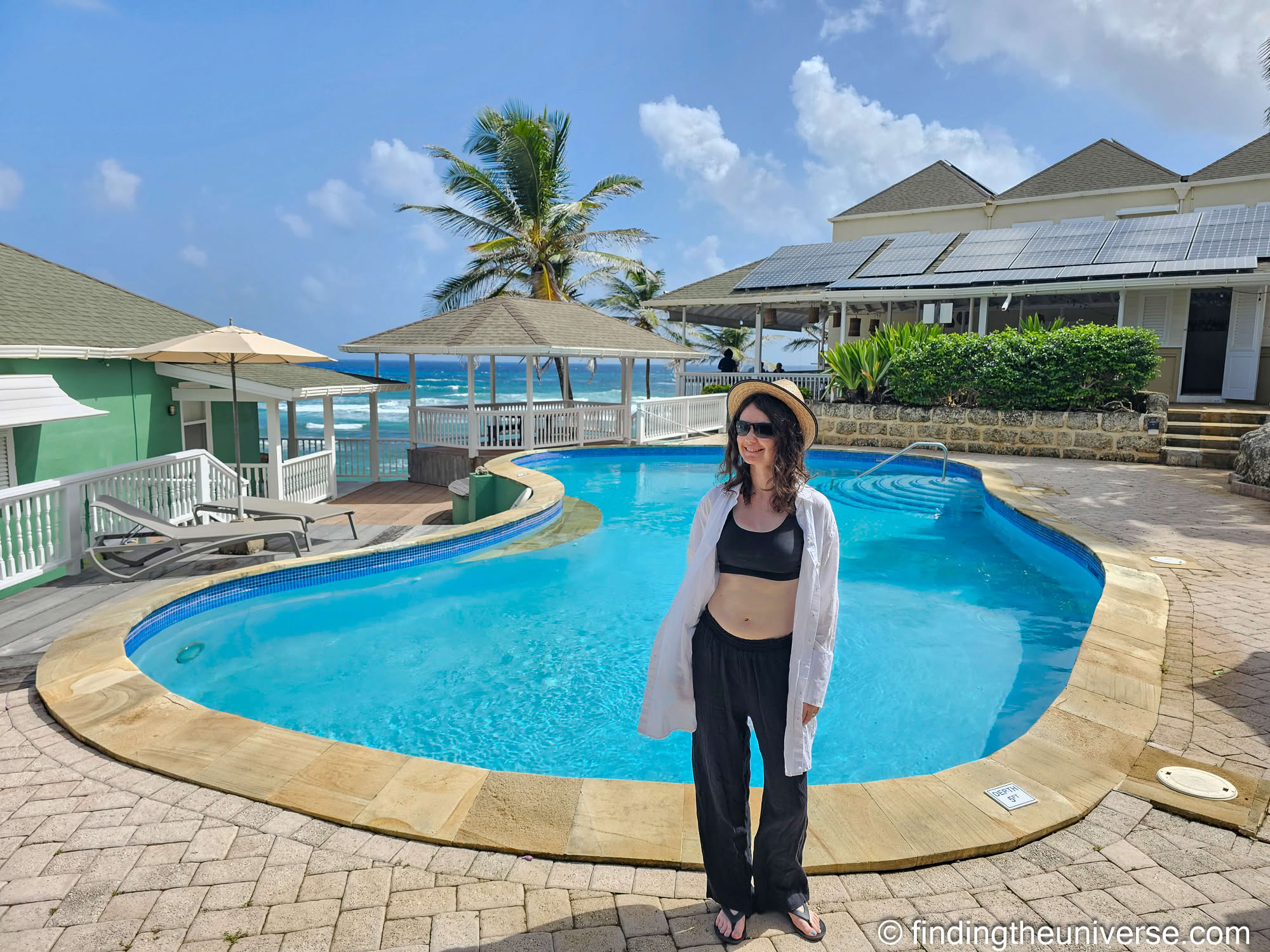
- The Atlantis Historic Inn – one of the very few accommodation options on this part of the island, this hotel has been here since the 19th century, when the railway brought visitors right to the front door. Unfortunately, the Barbados railway is long gone, but this hotel endures. Rooms have either coastal or direct sea views, and there’s a large and well-equipped kitchen on site, as well as an excellent restaurant. A coastal path extends in both directions, and it takes about 10 minutes to walk to Bathsheba bay. There’s also a lovely pool here. Just be aware the roads to get here can be a bit rough, and it is a little remote so if you plan to cook for yourself you’ll want to stock up at a larger grocery store.
Where to Stay in Barbados on a Budget
Barbados is not a budget destination, and there are few budget options like hostels.
If you are on a budget, your best option is to try and visit during the off-peak season (June through November in general), and consider booking accommodation which offers a kitchen so you can cook some of your own meals.
Accommodation which is found further from the beach is also normally going to be lower cost than beach front options, and even small changes like choosing a room which doesn’t have a sea view can save you significant sums.
You can save money by focusing on free and low cost activities like spending time at the beach, hotel pool, parks, and playgrounds. Consider going on a hike or planning a walking tour around Bridgetown. Food stalls, markets, and small local restaurants all sell reasonably priced food. Seek out free or low cost activities and entertainment going on during your visit.
What to Pack for Barbados
Whatever time of year you visit, Barbados is likely going to be hot and humid. So you’ll want to pack accordingly. Here are some suggested packing items for your trip.
- Clothing: Pack light, breathable fabrics in lighter colors. Linen, cotton, and other lightweight materials are best suited for the tropical climate. Think shorts, t-shirts, chinos, sundresses, flowy skirts, and swimwear. You’ll also want a couple lightweight long sleeves shirts and pants/skirts to cover up for sun protection during day and at night to protect against mosquitoes.
- Even in the cooler months from December to May, it’s warm enough that you’ll rarely need anything heavier than a light layer in the evenings. We’d also suggest packing at least one slightly nicer outfit if you plan on heading to any of the nicer restaurants on the west coast, as many have a smart casual dress code.
- Most visitors dress pretty casually, but most places do require a shirt and shoes. It is considered inappropriate and disrespectful to wear swimwear or revealing clothing outside of pool and beach areas. So when you leave the beach or your hotel, it is a good idea to cover up a bit more.
- Do not pack any camouflage clothing or accessories as these items are illegal if worn (except by local military). This includes both the traditional green camouflage as well as any other camo prints in any other color. These may be confiscated from you and you could receive a fine, so be sure to leave these at home.
- Rain gear: If you’re visiting between June and November, a light packable rain jacket, poncho, or a travel umbrella is worth having. The rain tends to arrive quickly and leave just as fast, but without any cover you can get thoroughly soaked in a matter of minutes. This happened to us on a couple of occasions, and we always put our rain coats in the car just in case! Check out this jacket for men and this jacket for women.
- Sun protection: The Caribbean sun is intense, and the reflective effect of the water and sand makes it even stronger than you might expect. We recommend packing a large bottle of sunscreen (at least 30 SPF), a wide brimmed hat, sunglasses, swimwear cover ups, and SPF rashguards to protect yourself from the sun. We have a rashguard like this as well as this lower cost one, they both work well in our experience, and are great for use when in the water or on a boat.
- Insect repellent: Mosquitoes are present on the island year round, particularly in the evenings and early mornings. You’re going to want to pack a good insect repellent like this to avoid being bitten. Long, loose-fitting clothing is also a good idea to prevent mosquito bites.
- Footwear: We’d recommend packing a pair of sandals and a comfortable pair of closed toe walking shoes for the trip. Closed toed shoes are required for some tours. Depending on where you are staying and your dining plans, you may also want a nicer pair of shoes if you’re heading out for a nice dinner.
- Power adapter: If you’re travelling from outside the US or Canada, you’ll need an adapter for the Type A/B outlets, such as this one. We cover this issue more in the electricity section.
- Other useful items: A reusable water bottle (staying hydrated in the heat matters more than you might think, we love our Klean Kanteen stainless steel water bottles), books to read, a beach tote bag, and a dry bag for keeping your phone and valuables safe on boat trips or at the beach were also things we liked having on our trip. Depending on what activities you have planned, you may also want to pack snorkeling gear, surfing gear, fishing gear, or golf clubs.
How Much Does a Trip to Barbados Cost?
In our experience, Barbados is not a cheap destination. It consistently ranks as one of the more expensive islands in the Caribbean, and it’s best to understand this before planning your trip so as to avoid sticker shock!
That said, how much you spend varies enormously depending on your travel style, where you stay, and when you visit. Here’s a rough breakdown to help you plan.
Accommodation costs
This is usually the biggest cost of a trip, and Barbados is no exception. How much you spend will depend on factors including where you stay and when you visit.
On the south coast, you can generally find decent guesthouses and smaller hotels from around USD $100 to $150 per night. Mid-range hotels across the island generally sit in the $150 to $300 range per night for a double room.
On the west coast, prices rise considerably, with most hotels starting around $300 per night and going well beyond that for the more prestigious properties.
All-inclusive resorts typically run from around $300 to $500 per person per night, though again the west coast options can be much higher. Visiting during the off-peak season from June through November will bring these prices down noticeably.
Food and drink costs
Food prices vary, depending on if you’re cooking for yourself, dining at a local Bajan spot, or eating at high end restaurants.
As a rough guide a plate from a local eatery can be had for USD $10 to $20 in most cases. If you want to have dinner at a mid-range restaurant, expect to pay around $35 for a main course. At the more high-end restaurants on the west coast, a meal for two with drinks can easily reach $150 or more.
Grocery shopping is another option worth considering, particularly if your accommodation has a kitchen. We cooked several of our own meals on our visits and it made a meaningful difference to our overall spend. However, be aware that grocery prices are still going to be higher than you may be used to at home, as nearly everything has to be imported.
Activity costs
Many of the best things to do in Barbados are free or very low cost. That said, there are also plenty of paid activities, for which pricing varies. As an example a catamaran boat tour typically runs around $100 to $130 per person including food and drinks, a rum distillery tour is roughly $30 to $60 depending on the package, and a guided cave visit at Harrison’s Cave is around $30 per adult.
If you’re doing several activities, it adds up, so be sure to prioritize the ones that matter most to you.
Transport costs
Buses are very cheap at BBD $3.50 per ride, but they can take a bit longer than a car depending on your destination, and they don’t cover absolutely every location.
Taxis and ride-hailing via the pickUP app are reasonably priced for short trips but can add up if you’re using them a lot. Renting a car for part or all of your trip tends to work out well for value if there are two of you sharing the cost, and gives you far more flexibility.
Rough daily budget for Barbados
As a very rough guide, based on our experience as a couple travelling on a moderate budget, staying in a mid-range south coast hotel, cooking some of our own meals and eating out at local spots for others, and doing a couple of paid activities, we spent around $300 to $400 USD per day.
At the mid-to-upper end, a couple staying in a nicer hotel, eating out for most meals and doing more activities, would more likely be looking at $500 to $800 per day. West coast luxury resorts and fine dining push well beyond that.
The single most effective way to reduce costs is to visit in the off-peak season, choose accommodation with a kitchen, and eat local as much as possible. Barbados has some fantastic local food spots where you can not only get authentic delicious food, but you can also spend considerably less than at a fine dining establishment!
Popular Day Tours and Guided Activities in Barbados
There are a lot of options when it comes to day tours and activities in Barbados. You can plan many of these activities yourself, or you can book a tour that includes a guide and round-trip transport.
- Catamaran and boat cruises are probably the most popular organized activity on the island, and the tours we’ve taken have definitely been highlights of our trip. A tour generally involves sailing along the west coast, stopping to snorkel with sea turtles, and around shipwrecks, as well as time sailing along the west coast. Most tours include food and drinks, and the atmosphere tends to be relaxed and fun. We’ve done this a couple of times now and have always had a great time. These can be booked through various operators directly, or via platforms like Viator and GetYourGuide.
- Rum distillery tours are another popular option. Barbados after all has a good claim to having invented rum. The main options are the Mount Gay Rum Distillery, the oldest commercial rum distillery in the world. This has two locations, the actual distillery in the north of the island, and the visitor center in Bridgetown. The other option we recommend is the Foursquare Rum Distillery, which many rum enthusiasts consider to be among the finest on the island. Both offer tours and tastings, and both are worth your time.
- Bridgetown food walking tour – this 3-hour walking food tour in Bridgetown has multiple stops at markets, eateries and restaurants across the capital to try a number of Bajan foods and give you a history of Bajan cuisine. It’s a good way to learn about Bajan cuisine and try a number of popular foods and local dishes like flying fish and cou-cou.
- Island sightseeing day tours are a good option if you want an overview of the whole island and would prefer not to drive yourself. Sights will vary, and many tours (like this one) are customisable, but you can expect to have options including seeing the wild east coast, historic plantation houses, caves, tropical gardens and the highlights of Bridgetown. These can be a good option if you’re on the island for a shorter visit, such as during a cruise, and want to cover as much ground as possible.
- Harrison’s Cave is one of the more popular attractions on the island and worth booking in advance, as slots fill up particularly during peak season and during cruise ship visits. For this one you travel through the underground cave system on an electric tram, which makes it accessible for most people. There are various photo stops, and it’s a great way to learn about a cave without having to expend too much physical effort! You can buy tickets on site for just the cave, or you can buy an all inclusive ticket like this which includes other activities like zip-lining and rum tasting, as well as hotel pickup.
- Oistins Fish Fry transfer – If you don’t have a car and don’t want to take a bus, you can book this round-trip transfer service. It includes round trip transfer from your hotel, a drink, and reserved seating. This is nice as a local will introduce you to the Fish Fry and you won’t have to wait in line to get a seat or order.
- Surfing lessons are worth considering if you’ve always fancied giving it a go. The south coast of Barbados is known as a good learning spot, and several surf schools on the island offer beginner lessons. The waves are forgiving enough that most people manage to get up on the board at least once, and when we watched surfers learning many of them got the hang of it very quickly!
- Other popular water based activities you can book and try in Barbados include fishing, water skiing, jet skiing, windsurfing, and Scuba diving.
For booking tours and activities, Viator and GetYourGuide are both solid starting points with a good range of options and verified reviews. You can see a full list on Viator here and on GetYourGuide here.
Frequently Asked Questions About Visiting Barbados
Here are answers to some of the most common questions we get about visiting Barbados. We’ve covered most of these in more detail earlier in the guide, but this should give you a quick overview.
Is Barbados expensive?
Yes, Barbados is one of the more expensive islands in the Caribbean. Accommodation is the biggest cost, particularly on the west coast and during peak season from December to May. That said, it’s possible to manage costs by visiting during the off-peak months, choosing accommodation with a kitchen, and eating at local spots rather than tourist-facing restaurants. We cover this in more detail in the budget section of this guide.
Is Barbados safe for tourists?
Barbados is considered one of the safer destinations in the Caribbean. Violent crime against tourists is rare, and the general atmosphere is welcoming and relaxed. Common sense precautions apply, such as keeping an eye on your belongings on the beach and being cautious after dark in less familiar areas. We’ve never had any issues and have always felt comfortable on the island.
Do they accept US dollars in Barbados?
Yes, US dollars are widely accepted across the island, particularly at tourist-facing restaurants, shops, and attractions. The exchange rate used is generally 2:1 (two Barbados dollars to one US dollar), which makes converting prices straightforward. However, not every place accepts USD, so it’s a good idea to have some local BBD cash and a credit card on you as well.
Do I need a visa to visit Barbados?
Most visitors from the US, UK, Canada, the EU, and Australia do not need a visa for stays of up to six months. You will need a valid passport, and all visitors must complete an online immigration form before arrival. Requirements can change, so check the current rules for your nationality before you travel.
What is the best area to stay in Barbados?
It depends on what you’re looking for. The south coast around St. Lawrence Gap is a great all-rounder for first-time visitors, with good beaches, restaurants, and easy access to Bridgetown. The west coast suits those after beautiful beaches and a more upscale experience. Bridgetown is ideal if you want to focus on cultural highlights. The east coast is for visitors who want something wilder and quieter, and we’d recommend at least a night there if you can manage it.
What language do they speak in Barbados?
English is the official language and is spoken by everyone on the island. You’ll also hear Bajan dialect among locals, which is an English-based creole language. Visitors will have no trouble communicating.
Do I need a car to get around Barbados?
Not necessarily, but it makes life considerably easier, especially if you’re staying for more than a few days. Buses are cheap and cover most of the island, but they can be slow and don’t always run on convenient schedules for sightseeing. Taxis via the pickUP app are reliable for shorter trips. If you want to explore freely, particularly the east coast and more remote areas, renting a car for at least part of your trip is well worth it. Just remember that driving is on the left.
What side of the road do they drive on in Barbados?
Barbados drives on the left-hand side of the road, which is a holdover from its time as a British colony. If you are renting a car and are used to driving on the right, give yourself a little time to adjust. Roundabouts can be particularly confusing at first. The roads are generally in reasonable condition, though potholes are common and traffic around Bridgetown can be heavy.
Is the tap water safe to drink in Barbados?
Yes, the tap water in Barbados is safe to drink across the island. Barbados has a well-maintained water supply system, and we drank tap water throughout our visits with no issues. It’s one less thing to worry about, and means you can fill up a reusable water bottle rather than buying bottled water.
Is Barbados good for families?
Yes, Barbados is a good destination for families with children. The south and west coast beaches are calm and safe for swimming, there are plenty of family-friendly activities including boat trips, cave visits, and wildlife encounters, and the island is generally welcoming to families. We’ve visited with friends who have young children, and they had a wonderful time. We cover this in more detail in the families section of this guide.
What is the best time of year to visit Barbados?
The most popular time is December to May, when the weather is at its driest and coolest. This is also the most expensive and busiest period. For quieter and cheaper travel, June through November works well, though it’s hotter, more humid, and there’s a higher chance of rain. The shoulder months of May and November offer a good balance of reasonable weather and lower prices. We have a full breakdown in the best time to visit section above.
Further Reading
That wraps up our Barbados planning guide. If you found this useful, we have a number of other guides covering Barbados and travel in general that you might want to take a look at as you plan your trip.
Things to do in Barbados – If you’re looking for ideas on how to fill your days, our dedicated guide to the best things to do in Barbados covers everything from rum tours and catamaran excursions to caves, wildlife encounters, historic plantation houses, and of course the beaches. It’s the natural companion piece to this guide.
Airalo eSIM Review – We mentioned Airalo earlier in this guide as our recommended option for staying connected in Barbados. Our full review covers how it works, what it costs, and how to set it up before your trip. It includes some free credit to get you started.
Guide to Travel Adapters – If you’re traveling from outside the US or Canada, you’ll need an adapter for Barbados. Our guide covers everything you need to know about travel adapters, including models that also convert voltage.
Alternatives to Airbnb – If you’re thinking about renting an apartment or vacation home in Barbados rather than staying in a hotel, our guide to the best Airbnb alternatives covers the platforms and booking sites we actually use.
Best Travel Camera – Barbados is a photogenic island, and if you’re thinking about upgrading your camera before your trip, our guide to the best travel cameras covers options across every budget and experience level.
If you’re considering a guidebook to take with you, we suggest either Bradt Travel or Fodor’s (both paperback and Kindle versions available). We liked the Bradt option in particular. It’s pretty small but it covers a lot!
If there’s anything we haven’t covered here, or if you have a question about visiting Barbados, feel free to leave a comment below. We read every one and do our best to help. And if you’ve visited Barbados yourself and have tips to share, we’d love to hear them.







 English (US) ·